
Monday, November 2, 2026Nov 2

This story is free to read.

Satellite images show sprawling Rohingya refugee camps

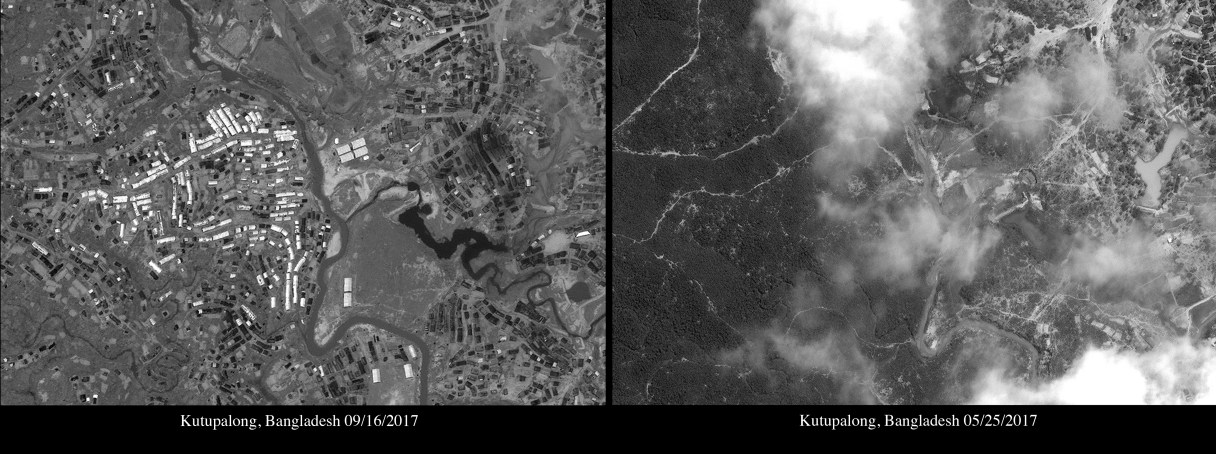
This combination of satellite photos provided by DigitalGlobe, Sept. 16, 2017, left, and May 25, 2017, right, show the thousands of temporary shelters that have been erected in the Kutupalong area of Cox's Bazar, Bangladesh. The photos show refugee camps in Bangladesh growing dramatically since Rohingya Muslims began fleeing violence last month in their nearby homeland of Myanmar. (DigitalGlobe via AP)
This combination of satellite photos provided by DigitalGlobe, Sept. 16, 2017, left, and May 25, 2017, right, show the thousands of temporary shelters that have been erected in the Kutupalong area of Cox's Bazar, Bangladesh. The photos show refugee camps in Bangladesh growing dramatically since Rohingya Muslims began fleeing violence last month in their nearby homeland of Myanmar. (DigitalGlobe via AP) This combination of satellite photos provided by DigitalGlobe, Sept. 16, 2017, left, and May 25, 2017, right, show the thousands of temporary shelters that have been erected in the Kutupalong area of Cox's Bazar, Bangladesh. The photos show refugee camps in Bangladesh growing dramatically since Rohingya Muslims began fleeing violence last month in their nearby homeland of Myanmar. (DigitalGlobe via AP)

Before-and-after satellite images released to The Associated Press show refugee camps in Bangladesh growing dramatically since Rohingya Muslims began fleeing violence last month in their nearby homeland of Myanmar.

Imagery from satellite imagery and analytics company DigitalGlobe shows that in a matter of weeks, thousands of temporary shelters were erected in and around the Bangladesh district of Cox’s Bazar. One photo showed a long traffic jam of cars going through the area, possibly relief workers on their way in, or government workers trying to install water or shelter systems.

Existing shelters for past waves of refugees are overwhelmed by streams of desperate families who fled by boat or over land out of fear for their lives, following attacks that some world leaders call ethnic cleansing.