
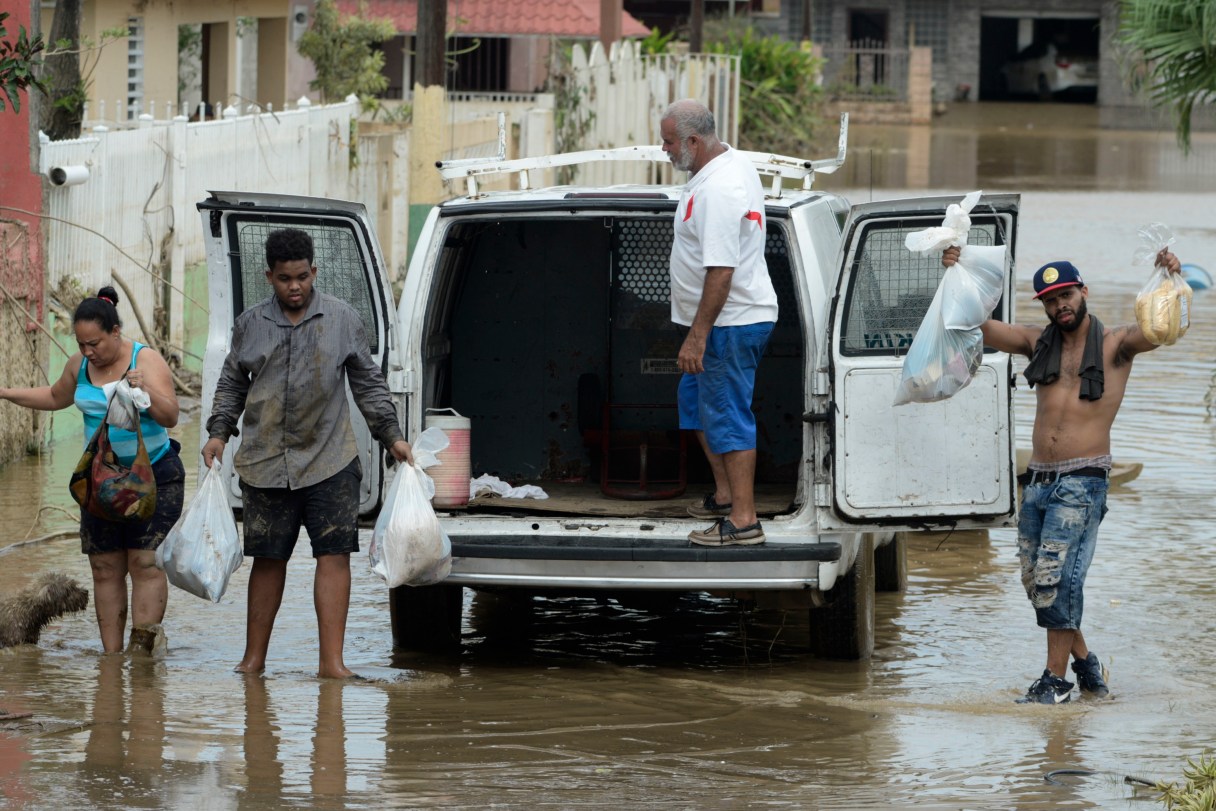
SAN JUAN, Puerto Rico (AP) – Puerto Rican officials could not communicate with more than half the towns in the U.S. territory as they rushed to evacuate tens of thousands of people downstream of a failing dam and the massive scale of the disaster wrought by Hurricane Maria started to become clear.
Authorities launched an evacuation of the 70,000 people living downstream from the Guajataca Dam in northwest Puerto Rico, sending buses to move people away Friday and posting frantic warnings on Twitter that went unseen by many in the blacked-out coastal area.
“This is an EXTREMELY DANGEROUS SITUATION,” the National Weather Service wrote. “All the areas around the Guajataca River must evacuate NOW. Your lives are in DANGER.”
The 345-yard (316-meter) dam, which was built around 1928, holds back a man-made lake covering about 2 square miles (5 square kilometers). More than 15 inches (nearly 40 centimeters) of rain fell on the surrounding mountains after the Category 4 Maria left the island Wednesday afternoon, swelling the reservoir behind the nearly 90-year-old dam.
An engineer inspecting the dam reported a “contained breach” that officials quickly realized was a crack that could be the first sign of total failure of the dam, U.S. National Weather Service meteorologist Anthony Reynes said.