
WASHINGTON – Here is the issue raised by Facebook’s revelations this week about disinformation that we need to face squarely: The political interests of the president of the United States coincide with the purposes of foreign forces using social media to divide us along the lines of race and culture.
President Trump’s refusal to make combating Russian interference a high priority, despite warnings from inside his own administration about the dangers, is obviously a scandal. It is also a telltale sign that our commander in chief is not at all motivated to turn back this threat.
This view is reinforced by Trump’s constant hectoring of Robert Mueller’s investigation into Russia’s intervention in the 2016 election. His outcries reached a kind of crescendo on Wednesday morning with a tweet in which Trump called on Attorney General Jeff Sessions (who has recused himself from the inquiry) to “stop this Rigged Witch Hunt right now.”
It’s often said that Trump’s ego cannot tolerate the idea he was helped into the White House by Russia’s exertions, and that he sees ongoing reports about the probe as marring what in his view is a truly great record. Yet it’s hard to interpret Trump’s hostility to Mueller as anything but an expression of concern that the special counsel will unearth highly damaging information about him and his campaign.
Online meddling has a broad objective as well: to divide our country even more sharply than it already is and to weaponize racial and ethnic divisions.
Thus, some of the phony sites Facebook uncovered that were putatively “left-wing” highlighted themes related to immigration (amplifying the “abolish ICE” message) and race (calls for counter-protests to a white supremacist demonstration scheduled for Aug. 11 and 12 in Washington). Put simply: the more we hate each other, the better it is for our enemies.
In a carefully researched article published Monday arguing that “demographic change is fracturing our politics,” Vox’s Ezra Klein said bluntly: “There’s a reason why, when the Russians wanted to sow division in the American election, they focused their social media trolling on America’s racial divisions.”
In the face of active measures by our adversaries to widen our nation’s social gulfs, one might imagine a more responsible leader trying to bring us together, to ease our anxieties about each other and to stand against endless cycles of recrimination.
Instead, Trump is working in tandem with these outside trolls to aggravate resentment, stoke backlash and incite his opponents.
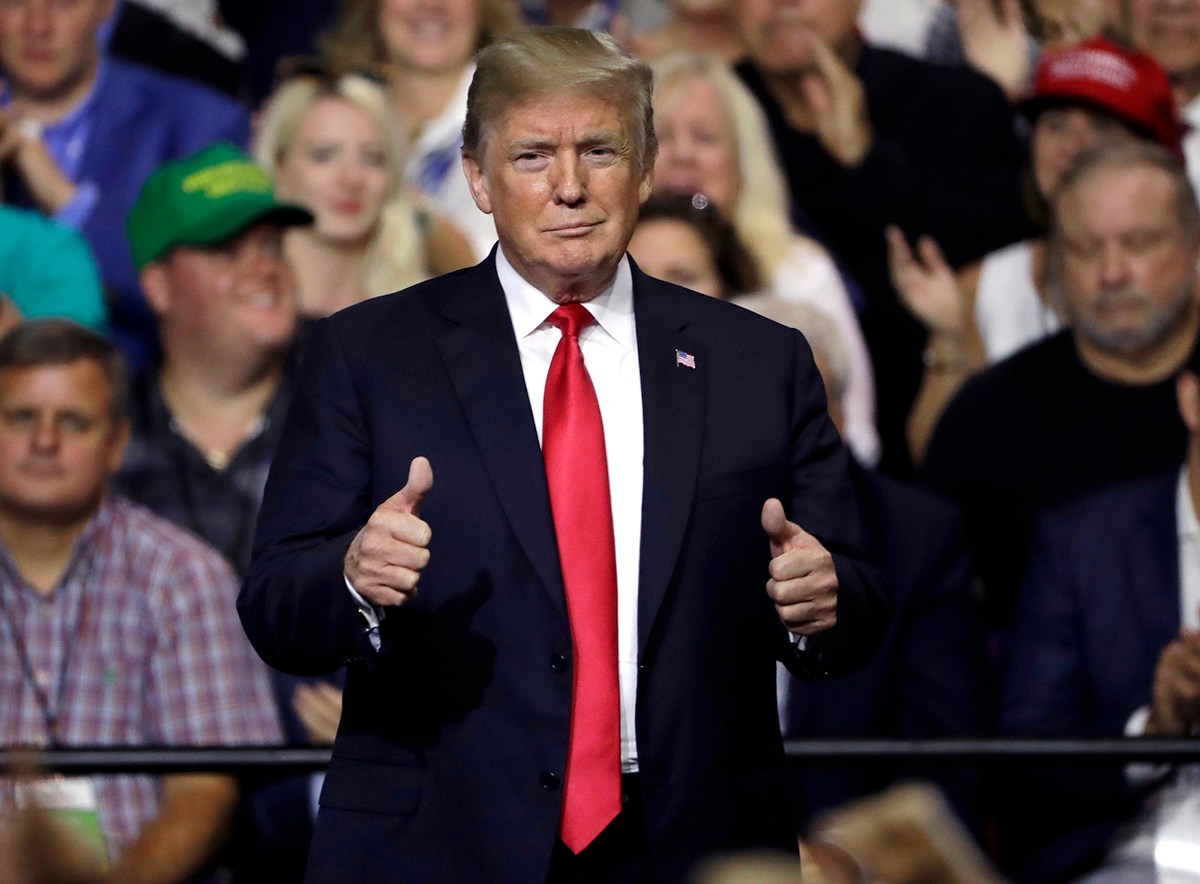
On the very day that Facebook revealed the new influence operation and announced it had deleted 32 pages and accounts connected to it, Trump went to Florida for a rally where he rehearsed some of his favorite incendiary themes.
He said that Democrats want to “open our borders, they want to let crime, tremendous crime, into our country.” For good measure, he also accused them of “trying to give illegal immigrants the right to vote.”
The absurdity of some of Trump’s statements should not distract us from their divisive ends.
Understanding that Trump’s strategy of maintaining power rests on stoking the animosities that allowed him to reach the White House in the first place explains why he has no apparent desire to contain cybercampaigns organized overseas that advance the same objectives. He seems ready to tell them to keep on keepin’ on.
Doing so also underscores that battling the bots and the hackers is not primarily a technical question but a matter of political will and moral commitment. It requires resolute resistance to the forces turning us against each other.
Washington Post Writers Group