
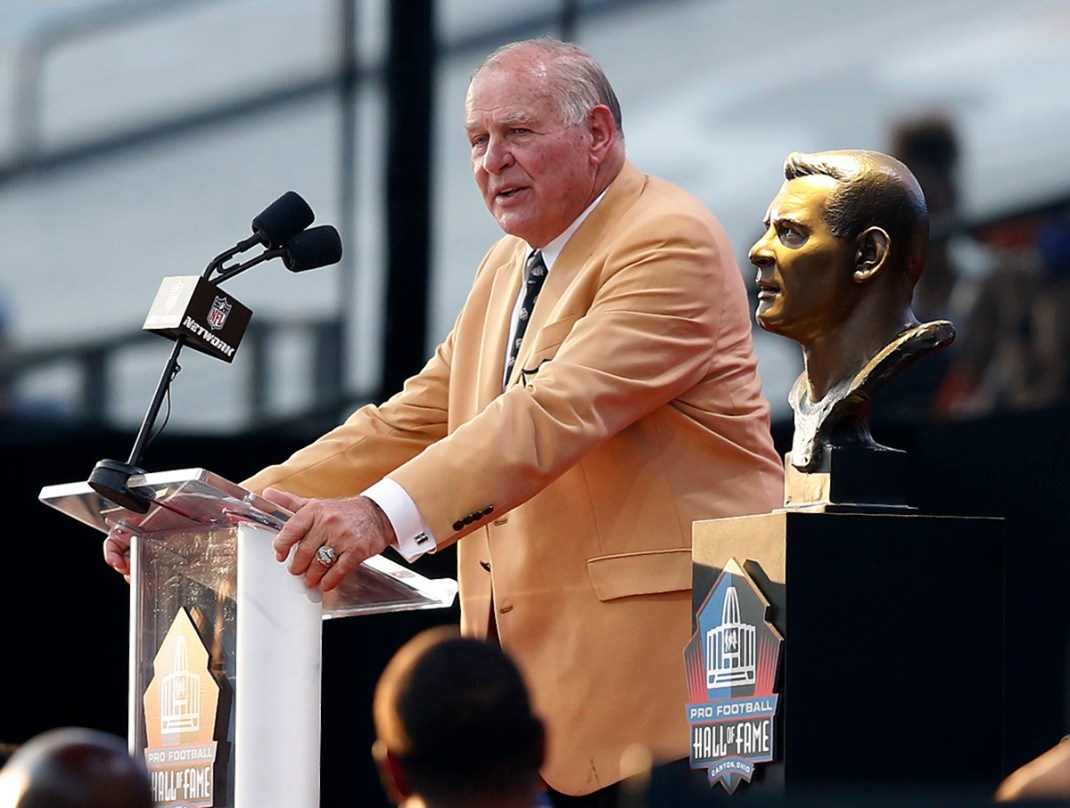
With the official Pro Football Hall of Fame induction ceremony complete Saturday night – the one in Canton, Ohio, not Chattanooga – the NFL Network crew began discussing the one inductee who was here in the Scenic City instead of there: Terrell Owens.
The panel of past inductees Terrell Davis, Michael Irvin, LaDainian Tomlinson and Kurt Warner plus new members Ray Lewis and Randy Moss, all dressed in pale gold Hall of Fame blazers, debated if future generations of players might be tempted to follow Owens. The former star wide receiver was so miffed at not being selected for the Hall of Fame until his third year of eligibility, he staged his own ceremony at the University of Tennessee at Chattanooga’s McKenzie Arena.
The former UTC Moc we came to later know as T.O. certainly had a solid beef. He should have been in on the first ballot. Failing that, there was no excuse for him not to make it the next year. And let’s be honest, it is a stats-driven honor, and Owens owns some of the most glittering stats in NFL history, including the second-most receiving yards (15,934) and the third-most touchdown catches (153).
After all, except for T.O., when someone fails to get enough votes to enter the hall, the reason almost always given for his omission is that his stats aren’t Hall of Fame caliber. With Owens, it was apparently something else – something murky and subjective and pretty indefensible overall.
But the 2018 Hall of Fame class’s longest and greatest injustice wasn’t Owens having to wait until his third year of eligibility to join his sport’s all-time greats. Instead, it was Jerry Kramer having to wait 50 years after he retired from the Green Bay Packers to make it to Canton. A five-time All-Pro, the only offensive guard named to the NFL’s First 5o Years team, the deliverer of arguably the most famous block in NFL history by leading Bart Starr into the end zone to win the Ice Bowl over the Dallas Cowboys and the co-author of “Instant Replay” (one of the best sports books ever written), Kramer should have been in the Hall of Fame in 1974, his first year of eligibility.