
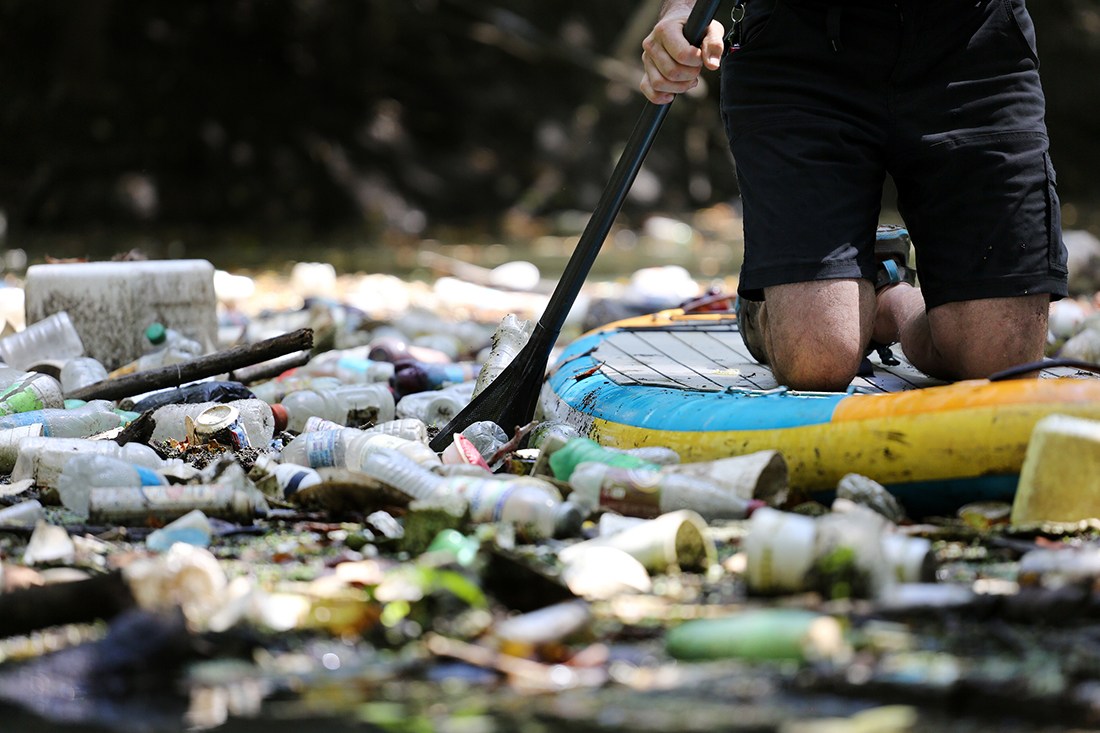
Plastic straws are controversy starters these days, but our plastic addiction goes far beyond straws and is seriously entrenched.
The plastic water bottle became affordable and popular back in the 1950s. In 1970, KFC introduced us to plastic utensils. Plastic bags in groceries stores caught on in 1982 beginning with Kroger and spreading far and wide. Can’t imagine your life without plastic? You’re not alone. About 500 billion plastic bags are used worldwide every year with more than one million bags used every minute.
Over the last 10 years we’ve produced more plastic than during the entire last century. What happens to all that plastic? Every year, enough plastic is thrown away to circle Earth four times. The average American throws away about 185 pounds of plastic – including 35 billion plastic water bottles – annually. Unfortunately, it takes 500-1,000 years for plastic to degrade so most of it is still around.
What happens to all this plastic? Some of it gets shipped overseas, some ends up in landfills, but much of it ends up as water pollution that you might not even see. In samples collected in Lake Erie, millions of plastic particles were microscopic, including tiny beads used in hundreds of toiletries like facial scrubs and toothpastes. We shouldn’t be surprised that Chattanooga’s waterways are plastic-ized.
All hail those who try to clean up the mess like Wild Trails’ director, Randy Whorton, who was recently featured in this newspaper. Do not think that this is simply a problem of littering. Plastic chemicals can be absorbed, and 93 percent of Americans age six or older test positive for BPA. Plastic chemicals like BPA have been shown to affect human health and hormones. You’d think that we’d be in a panic to halt the production and use of plastics. It’s true that hotels are beginning to switch to paper straws, and some grocery stores have moved away from plastic. But in the Los Angeles area alone, 10 metric tons of plastic fragments are swept into the Pacific Ocean daily. Guess what that does to the fish you eat?