
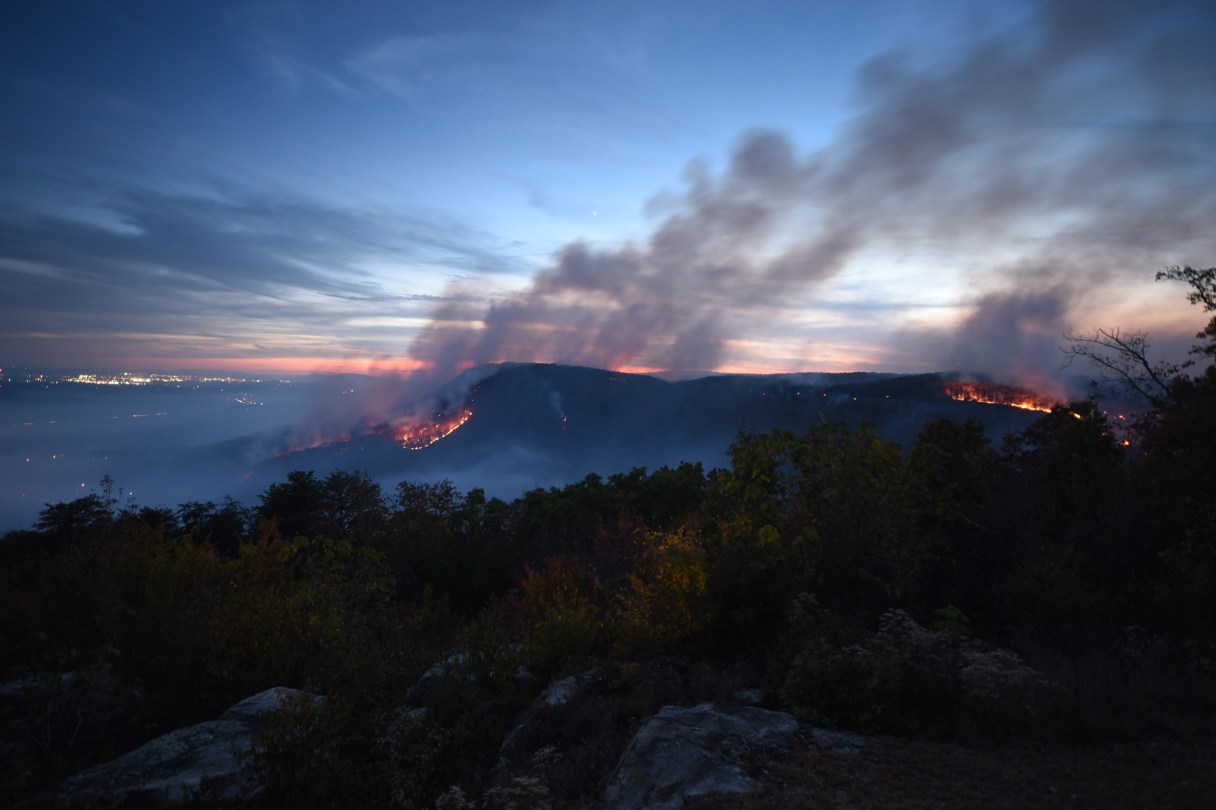
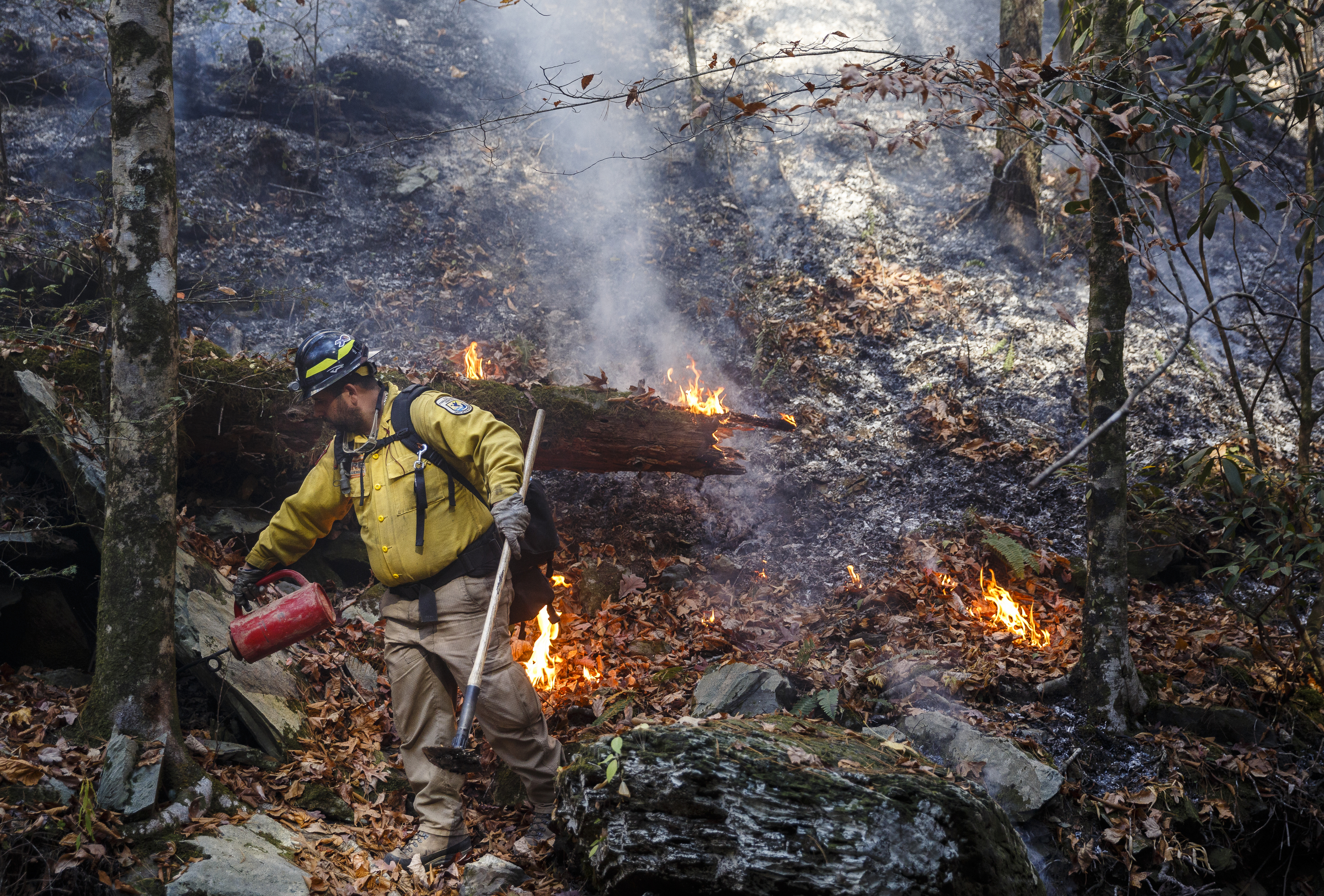
 Firefighter Jose Martinez from Puerto Rico uses a drip torch to burn out underbrush and remove fuel for the fire while battling the Rough Ridge wildfire in the Cohutta Wilderness of the Chattahoochee-Oconee National Forest on Friday, Nov. 18, 2016, near Chatsworth, Ga. The wildfire, which was started by lightning in mid-October, has burned in mostly wilderness areas.
The most authoritative and complete report on climate change and its impact on the U.S. has dire warnings for the Southeast: destructive wildfires like those seen in 2016 are likely to be more commonplace as the world’s changing climate create more fire-prone conditions.
The National Climate Assessment, released the day after Thanksgiving, projects a fourfold increase over the next 30 years in both the area burned by wildfire and suppression cost as forests dry out during longer and more prevalent droughts.
“The report essentially projects that wildfire risk will increase fairly substantially over the next 50 years,” said James Vose, a federal coordinating lead author of the report and senior research ecologist at U.S. Forest Service. “That’s not only in the West but also to some extent in the Southeastern U.S., as well.”
More than 300 experts took part in the 1,600-plus-page report, ranging from 13 government agencies, universities, climate scientists and other experts. It is the first such report under the Trump administration and fourth overall. The report is mandated by law.
President Donald Trump, who’s administration released the report, said he doesn’t believe its assertion that climate change will be economically damaging for the U.S. And White House spokeswoman Sarah Huckabee Sanders claimed the report was not based on fact and only presented the most extreme scenarios. Many of the report’s hundreds of contributors have defended its findings and are urging the government to act more urgently to slow the effects of climate change.