
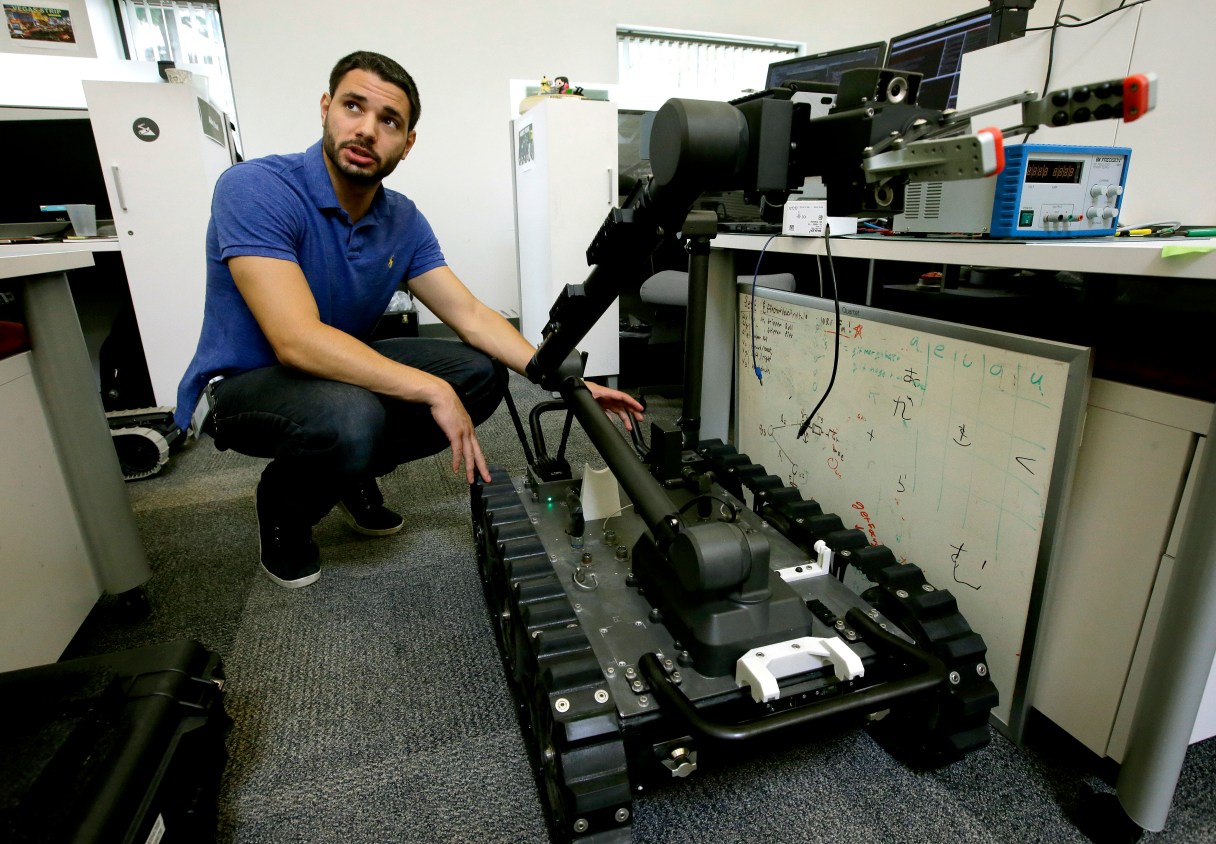
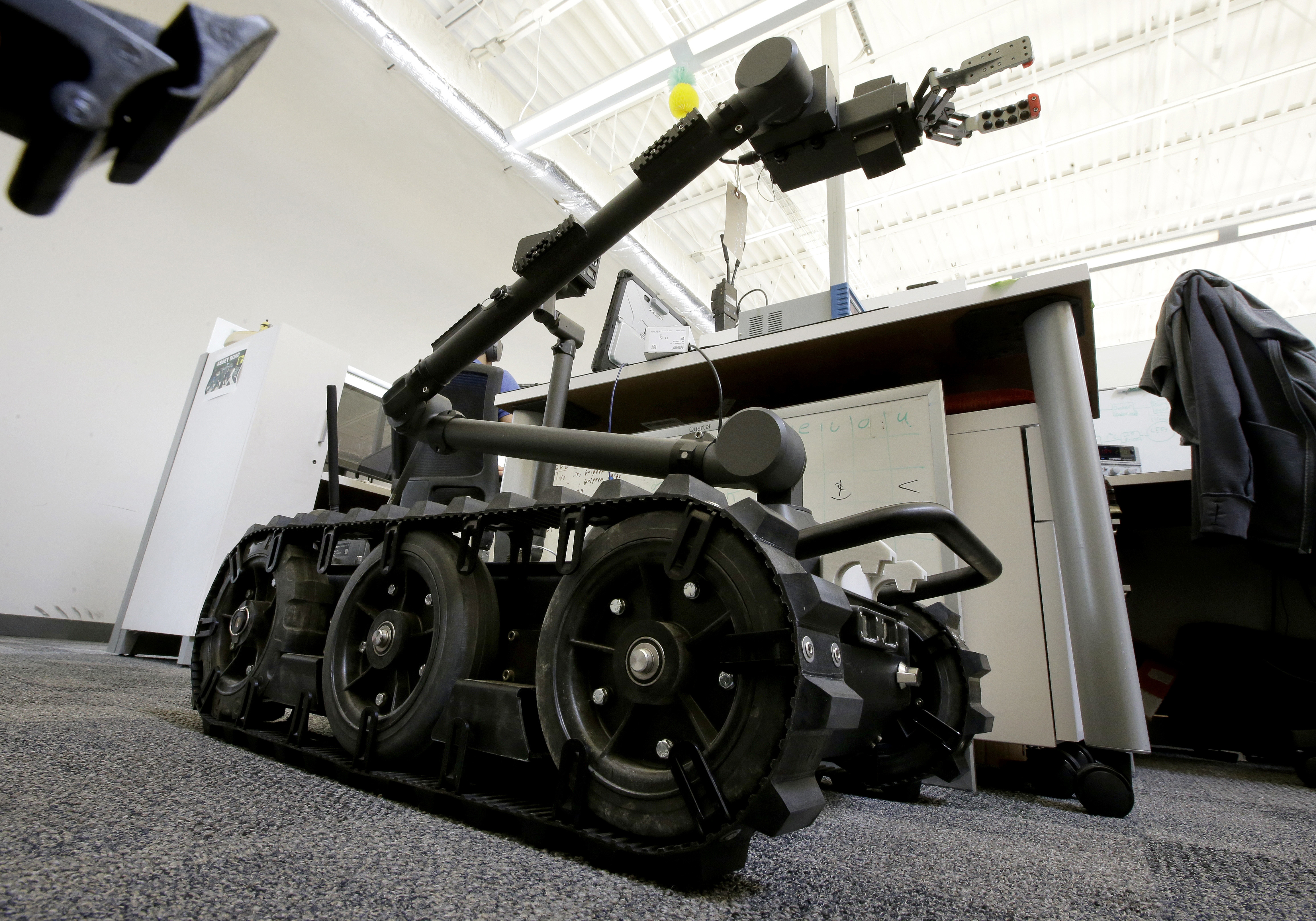
 In this Aug. 28, 2018 photo a Centaur robot rests on a carpeted floor between desks at Endeavor Robotics in Chelmsford, Mass. The Army is looking for a few good robots. These robots won’t fight, at least not yet. But they will be designed to help the men and women who do. The companies making them are waging a different kind of battle. At stake is a contract worth almost half a billion dollars for 3,000 backpack-sized robots that can defuse bombs and scout enemy positions. (AP Photo/Steven Senne)
The Army is looking for a few good robots. Not to fight – not yet, at least – but to help the men and women who do.
These robots aren’t taking up arms, but the companies making them have waged a different kind of battle. At stake is a contract worth almost half a billion dollars for 3,000 backpack-sized robots that can defuse bombs and scout enemy positions. Competition for the work has spilled over into Congress and federal court.
The project and others like it could someday help troops “look around the corner, over the next hillside and let the robot be in harm’s way and let the robot get shot,” said Paul Scharre, a military technology expert at the Center for a New American Security.
The big fight over small robots opens a window into the intersection of technology and national defense and shows how fear that China could surpass the U.S. drives even small tech startups to play geopolitics to outmaneuver rivals. It also raises questions about whether defense technology should be sourced solely to American companies to avoid the risk of tampering by foreign adversaries.
Regardless of which companies prevail, the competition foreshadows a future in which robots, which are already familiar military tools, become even more common. The Army’s immediate plans alone envision a new fleet of 5,000 ground robots of varying sizes and levels of autonomy. The Marines, Navy and Air Force are making similar investments.