
Thursday, October 29, 2026Oct 29

This story is free to read.

Sohn: About Trump’s button

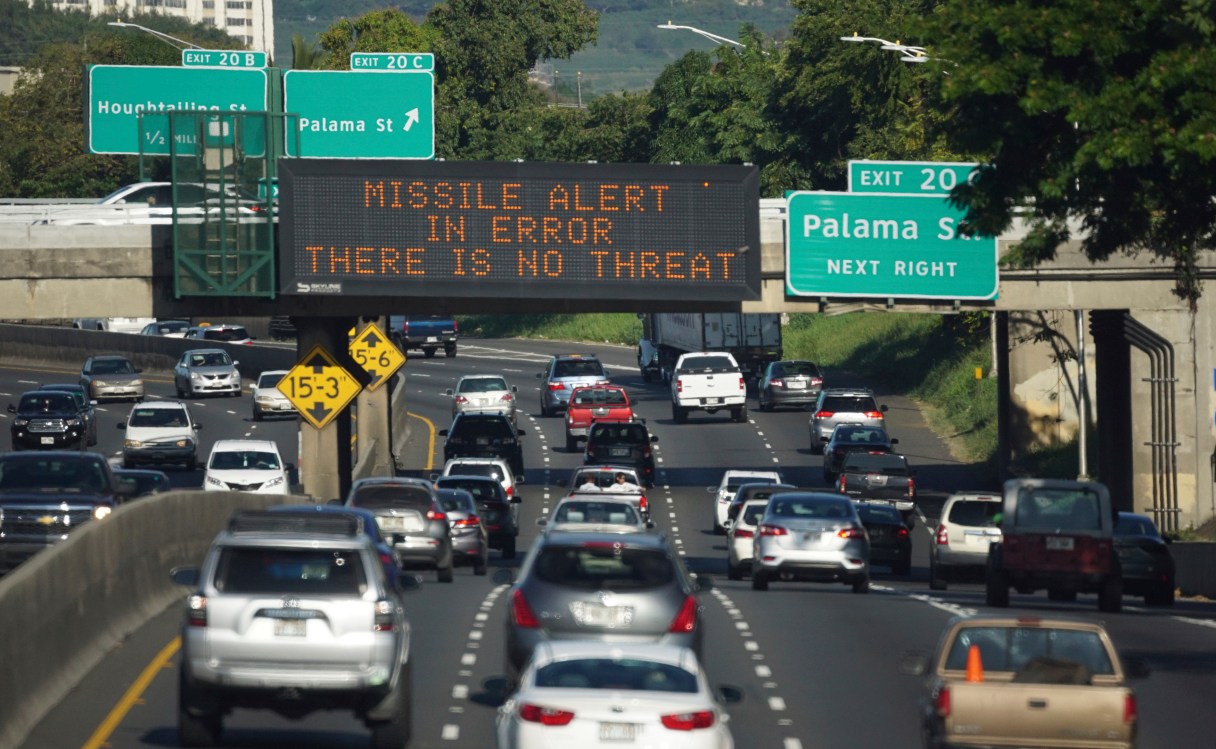
FILE - Vehicles drive past a highway sign that says "MISSILE ALERT ERROR THERE IS NO THREAT" on the H-1 Freeway in Honolulu on Jan. 13. Gov. David Ige appointed state Army National Guard Brig. Gen. Kenneth Hara as new head of Hawaii's emergency management agency after a faulty alert was sent to cellphones around the state warning of an incoming missile attack. (Cory Lum/Civil Beat via AP, file)
FILE - Vehicles drive past a highway sign that says "MISSILE ALERT ERROR THERE IS NO THREAT" on the H-1 Freeway in Honolulu on Jan. 13. Gov. David Ige appointed state Army National Guard Brig. Gen. Kenneth Hara as new head of Hawaii's emergency management agency after a faulty alert was sent to cellphones around the state warning of an incoming missile attack. (Cory Lum/Civil Beat via AP, file) FILE - Vehicles drive past a highway sign that says "MISSILE ALERT ERROR THERE IS NO THREAT" on the H-1 Freeway in Honolulu on Jan. 13. Gov. David Ige appointed state Army National Guard Brig. Gen. Kenneth Hara as new head of Hawaii's emergency management agency after a faulty alert was sent to cellphones around the state warning of an incoming missile attack. (Cory Lum/Civil Beat via AP, file)

Imagine your state of mind. Nuclear alert sirens all over town are wailing. Your cellphone and the Interstate sign ahead are on fire with alarms of an incoming ballistic missile. The warnings catapult your heart into your throat.

“Seek immediate shelter. This is not a drill.”

Imagine the next 10, 20 or 38 minutes – the rest of your life, or until the alert is found to be mistaken and cancelled. You must decide what to tell your child. You wonder where and what exactly “shelter” might be. You try to think what to say when you call your mom for what likely will be the last time. It would, undeniably, be the worst minutes of your life.

We don’t have to imagine being worried (and growing more worried) about our nuclear codes resting in Donald Trump’s impulsive hands. Widespread American concern about our president’s stability appears only to have made him want more nukes at his disposal – and with far fewer built-in restraints.

Earlier this month, The Huffington Post got its hands on the draft of a new Pentagon plan that expands the scope of U.S. nuclear retaliation. The draft, recently sent to President Trump for approval, would permit the use of nuclear weapons to respond to a wide range of devastating but non-nuclear assaults, including cyberattacks.