
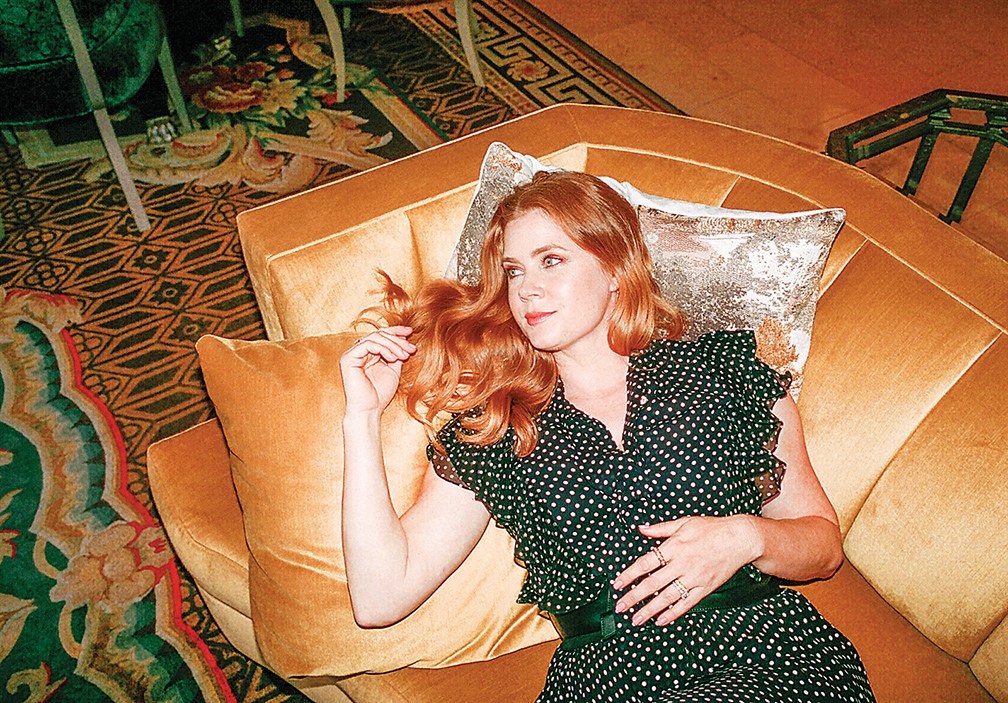
LOS ANGELES – Amy Adams stars this month in the HBO miniseries “Sharp Objects,” her first television role since she began starring in features more than a decade ago. The eight-episode arc, based on the controlled burn of a novel by Gillian Flynn (“Gone Girl”), marks a departure of another sort, too – Adams’ performance, as a hard-drinking, self-cutting journalist who returns to her provincial hometown to cover a series of mysterious murders, is among the most desolate and disquieting of her career.
The first Amy Adams that came into view was a hungry-eyed Lolita. She was a supporting player in near-misses from the raunchy, post-“Scream” teen movie explosion: the bubbly, oversexed sidekick to Kirsten Dunst in “Drop Dead Gorgeous” (1999) and a debauched social climber in the straight-to-DVD knockoff “Cruel Intentions 2” (2000). She jokingly called this her “Naughty Girl” phase – the awkward early years in two abundant decades of evolution in front of the camera.
Another phase came in 2006, when she received an Oscar nomination for a big-hearted portrayal of a small-town expectant mother in “Junebug.” This was what she refers to as the “Innocents” phase, the one seared into collective memory, in which she became one of the most famous and well-liked actresses in America.
As Giselle in the subsequent “Enchanted” (2007), she breathed exuberant life into not only a high-concept revision of Disney princess dogma but an entire new wave of live-action fairy-tale movies. A second Oscar nomination followed for “Doubt” in 2009, in which her credible innocence as the nun Sister James, opposite Meryl Streep and Philip Seymour Hoffman in scathing battle, ballasts a story about the thin line between human nature and the abyss.
Another actress might have settled there, staking out a comfortable living filling in one shade of disarming ingénue or another. But Adams has spent this decade evolving further still. She turned scrappy and raw in “The Fighter” (2010), chillingly zealous in “The Master” (2012) and cunning and carnal in “American Hustle” (2013).