
Monday, November 9, 2026Nov 9

Guns in schools? Seek school staff, student perspectives

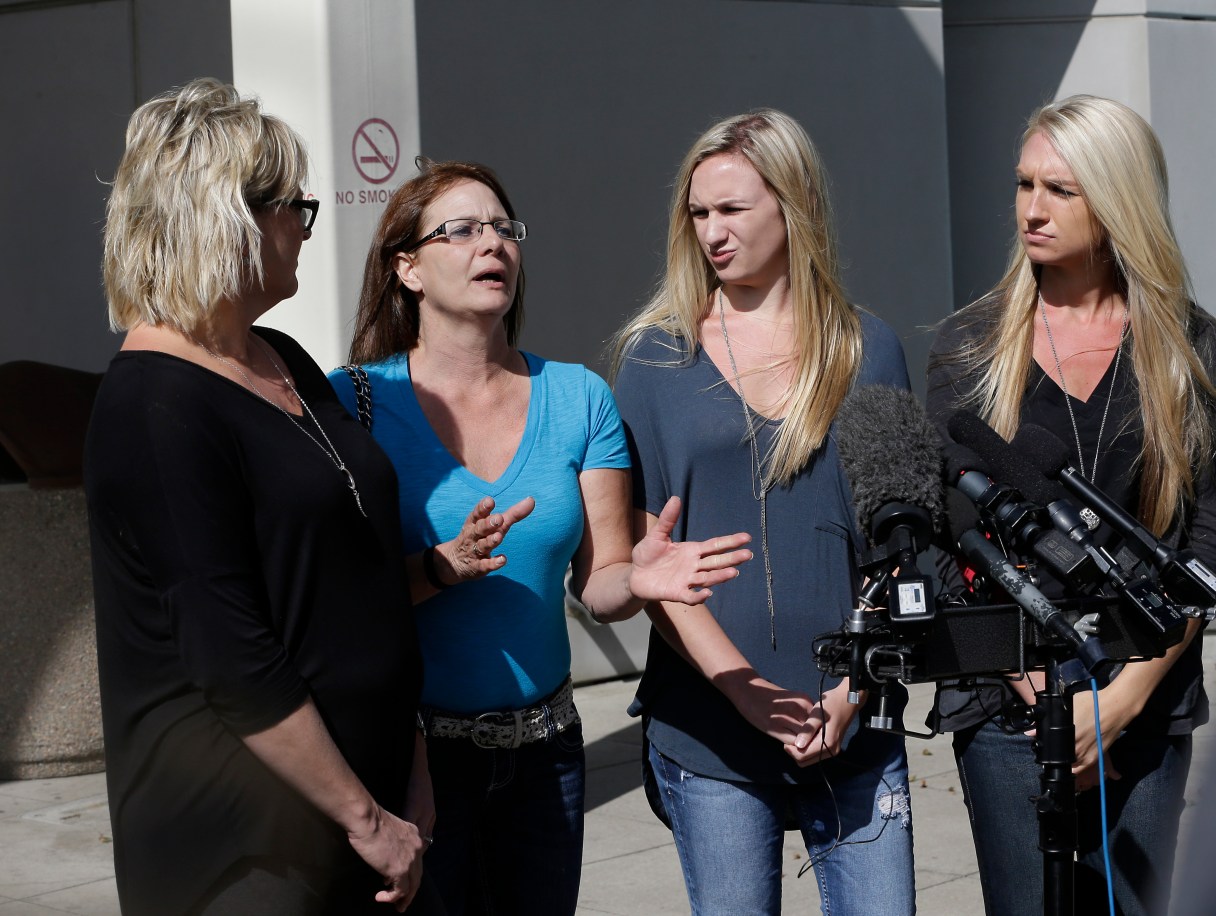
Bonnie Schaan, second from left, discuss her daughter, Cheyanne Fitzgerald, who was wounded in the shooting at Umpqua Community College, during a news conference outside Mercy Medical Center, Saturday, Oct. 3, 2015, in Roseburg, Ore. Cheyanne Fitzgerald, 16, is listed in critical condition from a gunshot wound that required the removal of her kidney. Fitzgerald was one of several people wounded when Chris Harper-Mercer walked into a class at the community college, Thursday and began shooting. Also seen are Cheyanne's aunt, Colleen Fitzgerald, left, and cousins, Kylie, third from left, and Courtney Fitzgerald.
Bonnie Schaan, second from left, discuss her daughter, Cheyanne Fitzgerald, who was wounded in the shooting at Umpqua Community College, during a news conference outside Mercy Medical Center, Saturday, Oct. 3, 2015, in Roseburg, Ore. Cheyanne Fitzgerald, 16, is listed in critical condition from a gunshot wound that required the removal of her kidney. Fitzgerald was one of several people wounded when Chris Harper-Mercer walked into a class at the community college, Thursday and began shooting. Also seen are Cheyanne's aunt, Colleen Fitzgerald, left, and cousins, Kylie, third from left, and Courtney Fitzgerald. Bonnie Schaan, second from left, discuss her daughter, Cheyanne Fitzgerald, who was wounded in the shooting at Umpqua Community College, during a news conference outside Mercy Medical Center, Saturday, Oct. 3, 2015, in Roseburg, Ore. Cheyanne Fitzgerald, 16, is listed in critical condition from a gunshot wound that required the removal of her kidney. Fitzgerald was one of several people wounded when Chris Harper-Mercer walked into a class at the community college, Thursday and began shooting. Also seen are Cheyanne's aunt, Colleen Fitzgerald, left, and cousins, Kylie, third from left, and Courtney Fitzgerald.

The inspiring response from youth, staff, and families in our schools after the Parkland, Fla., shooting reminds us that effective public policy requires the insights and expertise of those most affected by these policies.

So many of these incidents with gun violence are sadly impacting youth directly. We want change, and who is better positioned to let adults know the social dynamic in schools than youth? This generation cares not only about our physical safety, but the continued elevation of student voices. It shouldn’t take more than one incident to see a need for change.

When we discuss safety in our schools, our public institutions need transparent and consistent ways to gather student and teacher perspectives. They can both define the real problems we face and guide our communities to address them.

This work starts with listening to the staff in schools who can speak directly to the behavioral needs of our children. Our students come from diverse backgrounds. For some, experiences of violence can become normalized, creating a constant state of defensiveness. We must provide supports for students impacted by psychological trauma, which is often expressed as anger, withdrawal and desensitization to violence.

Trauma and mental health issues affect children across Hamilton County, and our solutions must focus on promoting equity. That will take a commitment to ensuring that resources are distributed in ways that address the needs of each child. The only way to do this is to listen to those in our schools.