
Tuesday, November 10, 2026Nov 10

U.S. government argues that AT&T-Time Warner deal would hurt consumers

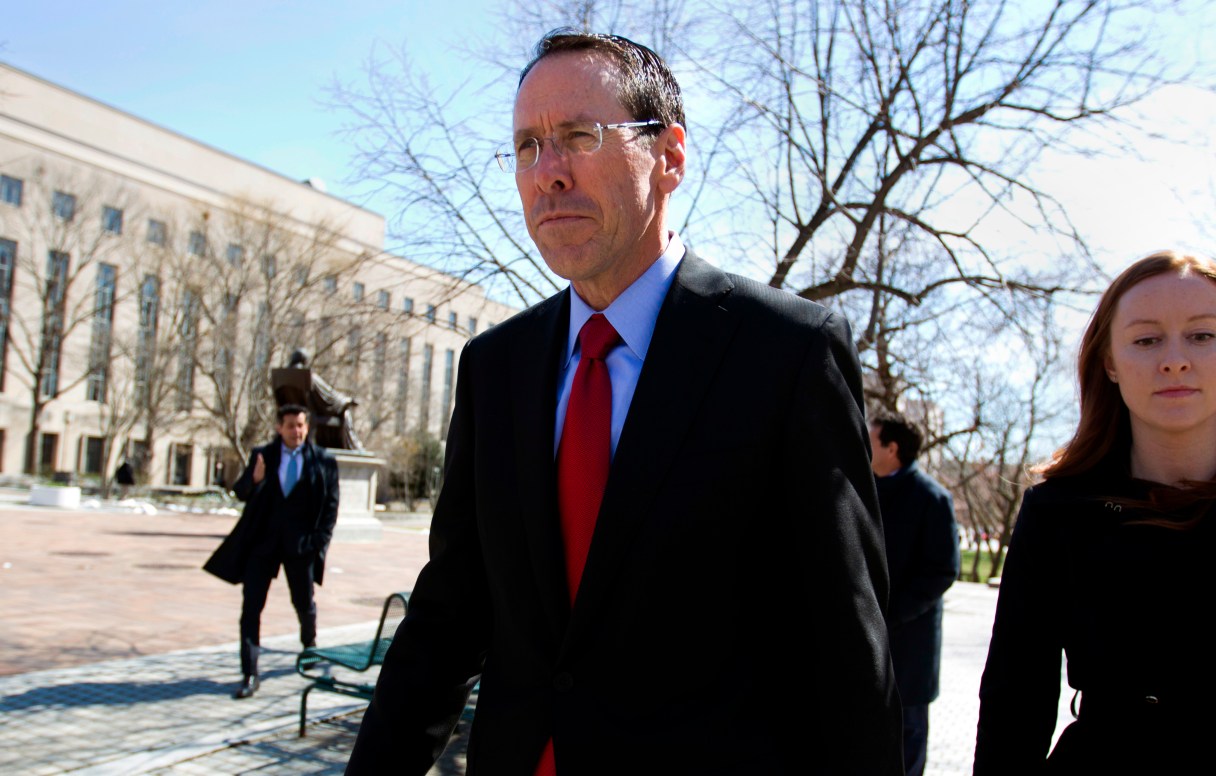
FILE - In this March 22, 2018, file photo, AT&T CEO Randall Stephenson leaves the federal courthouse, in Washington. The U.S. government pleaded its case Monday, April 30, for blocking AT&T from absorbing Time Warner, saying it would hurt consumers as a big antitrust trial crept toward its end and a decision by a federal judge. (AP Photo/Jose Luis Magana, File)
FILE - In this March 22, 2018, file photo, AT&T CEO Randall Stephenson leaves the federal courthouse, in Washington. The U.S. government pleaded its case Monday, April 30, for blocking AT&T from absorbing Time Warner, saying it would hurt consumers as a big antitrust trial crept toward its end and a decision by a federal judge. (AP Photo/Jose Luis Magana, File) FILE - In this March 22, 2018, file photo, AT&T CEO Randall Stephenson leaves the federal courthouse, in Washington. The U.S. government pleaded its case Monday, April 30, for blocking AT&T from absorbing Time Warner, saying it would hurt consumers as a big antitrust trial crept toward its end and a decision by a federal judge. (AP Photo/Jose Luis Magana, File)

WASHINGTON – The U.S. government pleaded its case Monday for blocking AT&T from absorbing Time Warner, saying the combination would hurt consumers.

In the landmark antitrust trial’s last day in federal court, lead Justice Department attorney Craig Conrath argued that the $85 billion proposed merger “would have a massive effect on the structure of the pay-TV industry.”

The Trump Justice Department sued in November to block the deal, saying it would force consumers to pay hundreds of millions of dollars more to watch their favorite shows, whether on a TV screen, smartphone or tablet.

Conrath told U.S. District Judge Richard Leon that if he doesn’t block the merger outright, he should consider ordering other remedies such as “partial divestitures.” That could mean, for example, that AT&T wouldn’t be able to acquire key parts of Time Warner such as Turner Broadcasting, which includes CNN, Conrath suggested.

“That is an effort to kill the deal,” Daniel Petrocelli, the companies’ lead attorney in defending the merger, countered later in his closing argument. “You take away those pieces and there is no deal.”