
Sunday, November 1, 2026Nov 1

This story is free to read.

Report: 4 largest states carrying highest credit card debt

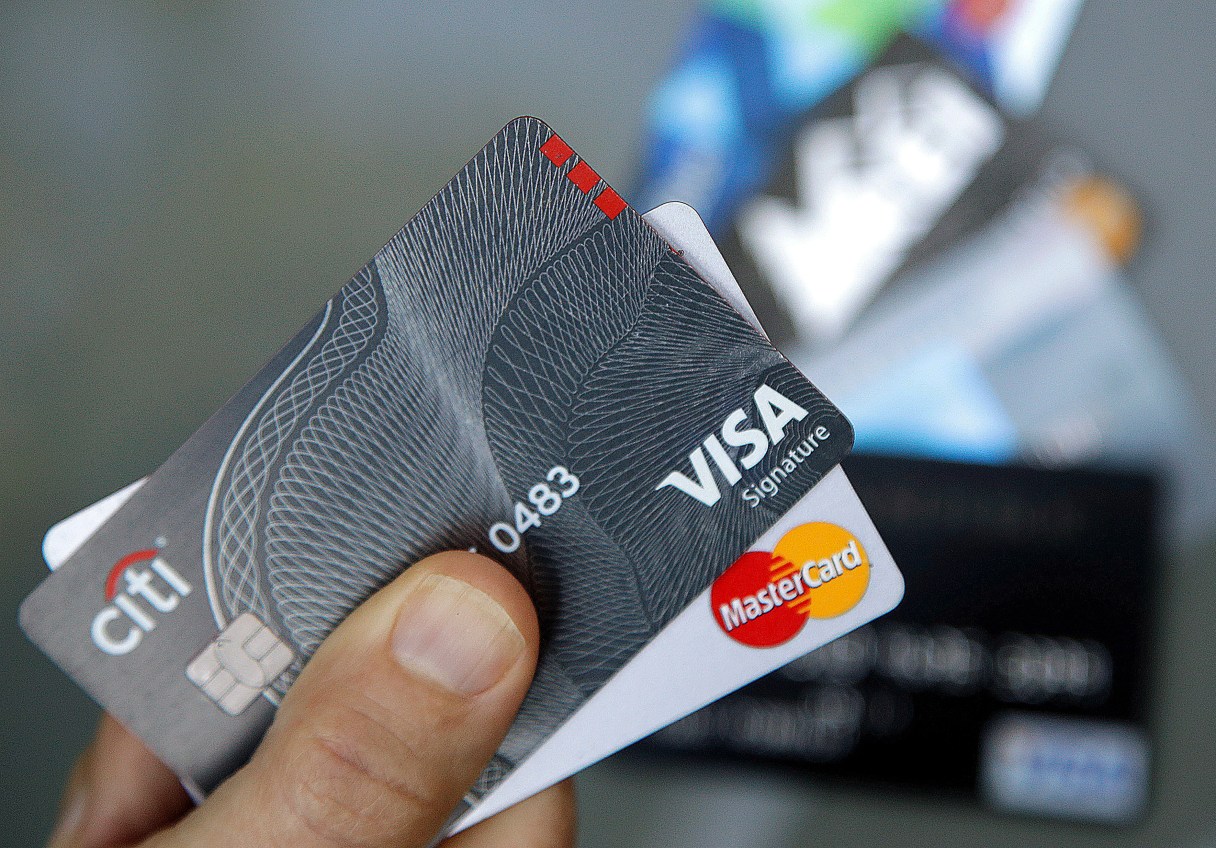
FILE - In this June 15, 2017, file photo, credit cards are displayed in Haverhill, Mass. American consumers stepped up their borrowing by $18.4 billion in December 2017, a solid performance that followed a massive gain the previous month. The Federal Reserve says the increase reflects gains of $5.1 billion in the category that covers credit cards. (AP Photo/Elise Amendola, File)
FILE - In this June 15, 2017, file photo, credit cards are displayed in Haverhill, Mass. American consumers stepped up their borrowing by $18.4 billion in December 2017, a solid performance that followed a massive gain the previous month. The Federal Reserve says the increase reflects gains of $5.1 billion in the category that covers credit cards. (AP Photo/Elise Amendola, File) FILE - In this June 15, 2017, file photo, credit cards are displayed in Haverhill, Mass. American consumers stepped up their borrowing by $18.4 billion in December 2017, a solid performance that followed a massive gain the previous month. The Federal Reserve says the increase reflects gains of $5.1 billion in the category that covers credit cards. (AP Photo/Elise Amendola, File)

ALBANY, N.Y. (AP) – The New York state comptroller’s office says the nation’s four most-populated states carry the highest total amount of credit card debt, with California leading the way followed by Texas, Florida and New York.

Democratic Comptroller Thomas DiNapoli (dee-NAP’-oh-lee) says in a report released Tuesday that Californians had racked up more than $106.8 billion in credit card debt by the end of 2017.

The Lone Star State was No. 2 at $67.3 billion, followed by Florida with $59.2 billion and New York with $58.1 billion.

Rounding out the top 10 are Pennsylvania ($33.2 billion), Illinois ($32.2 billion), New Jersey ($29.6 billion), Ohio ($26.7 billion), Virginia ($26.5 billion) and Georgia ($26.3 billion).

DiNapoli says the totals were based on statistics compiled in February by the Federal Reserve Bank of New York.