
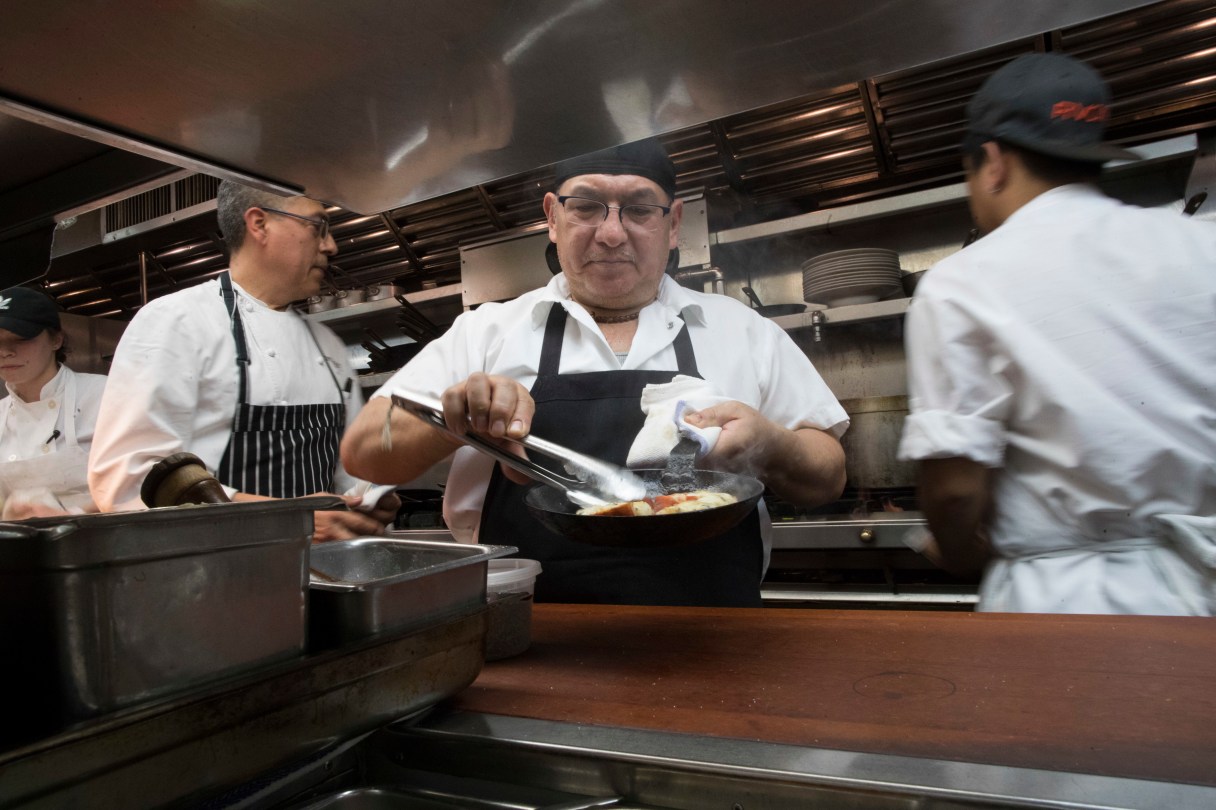
 In this Tuesday, Nov. 27, 2018 photo, steak is grilled at the Gotham Bar and Grill in New York. Gotham’s hourly wages have gone up along with the city’s minimum wage, which rose $2 an hour to $13 last December and will reach $15 this Dec. 31. Higher labor costs due to a tight employment market and rising minimum wages in states like New York are a key factor as some small businesses struggle with inflation and whether to pass higher expenses along to customers. (AP Photo/Mary Altaffer)
Diners are willing to pay more at Manhattan’s upscale Gotham Bar and Grill, but price increases these days aren’t about snob appeal – the restaurant is contending with higher costs, particularly from rising wages.
“We have been forced to raise our prices to offset this expense and our pricing still doesn’t compensate fully for the increase,” says Bret Csencsitz, managing partner in the restaurant located in the Greenwich Village section.
Gotham’s hourly wages have gone up along with the city’s minimum wage, which rose $2 an hour to $13 last December and will reach $15 this Dec. 31. The restaurant is also paying more for ingredients, especially eggs and other dairy items that are key dessert components.
Higher labor costs due to a tight employment market and rising minimum wages in states like New York are a key factor as some small businesses struggle with inflation and consider whether to pass higher expenses along to customers. Wholesale prices, which reflect what businesses pay for goods and services, rose 0.6 percent in October, the largest increase in six years. Consumer prices, which the Federal Reserve considers as it determines whether to raise interest rates, were up 2.5 percent from October 2017. Economists consider U.S. inflation to currently be mostly in check, but individual businesses can feel the impact of higher prices in differing ways, depending on where they’re located, whether they have employees, are in tight real estate markets and face the Trump administration’s tariffs on imports.
Owners have varying strategies for coping with inflation. Where possible, they try to negotiate lower prices with suppliers or search for new vendors. They may change products or services to avoid raising prices or keep the increases to a minimum. Others understand when they’re forced to charge more that they may lose some business.