
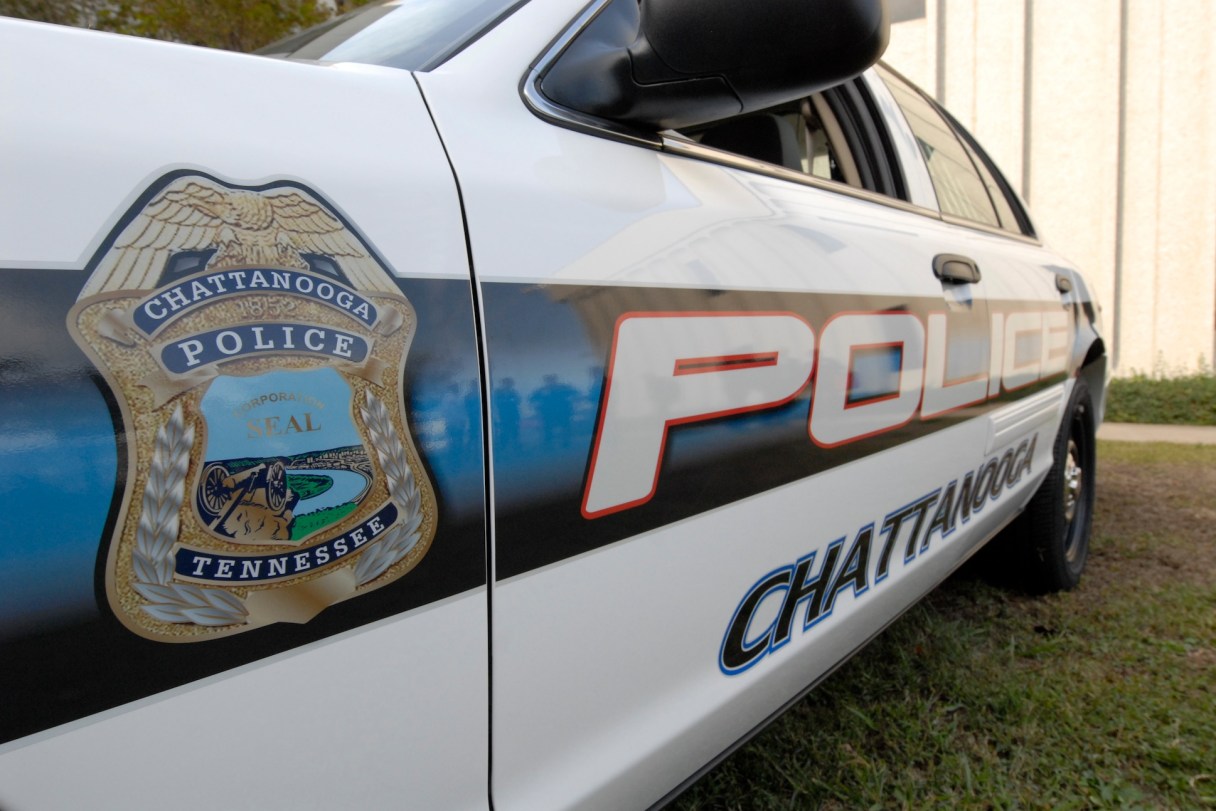
The Chattanooga Police Department’s victim services unit soon will be growing by three.
Two new hires will bring victim advocacy services to the field as opposed to only working in the investigative stage, and a third, bilingual advocate will help on the investigative side of things.
That’s thanks to a $450,000 grant for law enforcement-based victim services from the U.S. Department of Justice and a $600,000 grant through the Victims of Crime Act, which also funds the victim services unit as a whole. The city is not required to match any money for the grant.
Case managers help victims navigate the aftermath of crime. They follow a case from the very beginning, which can include helping victims apply for victim compensation and developing a plan for safety if they’re at risk.
“Our advocates can follow a case from start to finish, essentially, unless the family doesn’t want to engage with us, in which case we don’t force them,” said Caroline Huffaker,victim services coordinator. “We let the families kind of guide how much involvement they want from victim services.”
With the two separate grants, the unit will be divided in two operational branches: The three victim coordinators, including the bilingual case manager, and some interns, who will work on the investigative side of things, and the crisis response advocates, who will be on-call and follow-up on patrol matters. A third branch is dedicated to volunteer chaplains.
Normally, case managers aren’t always able to follow-up with cases from the night before. That’s where the crisis response advocates would come in, to check in with the cases that have been dealt with at the scene.
A case can be resolved at the patrol level for a number of reasons. Sometimes an officer is able to establish enough to take out a warrant right then and there, or the officer is able to deescalate a situation at the scene.
But just because a case was cleared doesn’t mean it was resolved on a deeper level, Huffaker said.
“There is still lasting impact with that family or individual, and if it wasn’t referred to investigations, it may never come into our lap,” she said.
For example, an officer might inform a family about the resources available to them, but it may not have registered in the heat of the moment.
“Having police and victims services people work hand-in-hand builds trust, and it’s trust that wasn’t there as much as it could have been years ago,” said Chattanooga police Sgt. Andrew Peker. ” Now that the needs of victims are being met much more than in the past, we’re seeing a lot more cooperation, a lot more testimony in court and a lot more case closures.”
For the first few hours of their shift, advocates will be in the office checking in on victims, making sure they know their rights and how to access resources for victims of crime and that they know what comes next.
Advocates also will do ride alongs with officers and be on-call for certain types of violent crime within the ZIP Codes that have higher rates of crime. Those ZIP Codes include the 37407 and 37421 areas, with 826 and 764 instances, respectively, over the last three years.
“Working with victim services, it allows the officers to be better in dealing with the people that are going to help them prosecute the cases that brought them there in the first place,” Peker said.
While not every single overnight incident will get a callback, “every victim deserves an advocate,” Huffaker said. “I wish I had double [staff members] of what we’re about to have.”
Contact staff writer Rosana Hughes at rhughes@timesfreepress.com or 423- 757-6327 with tips or story ideas. Follow her on Twitter @HughesRosana.