
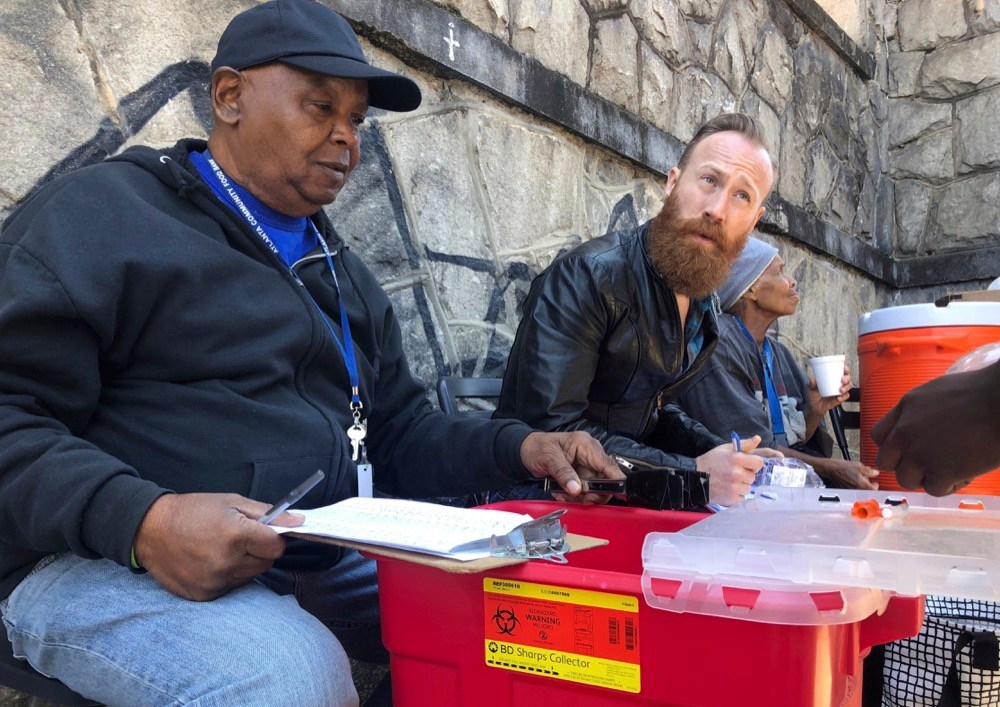
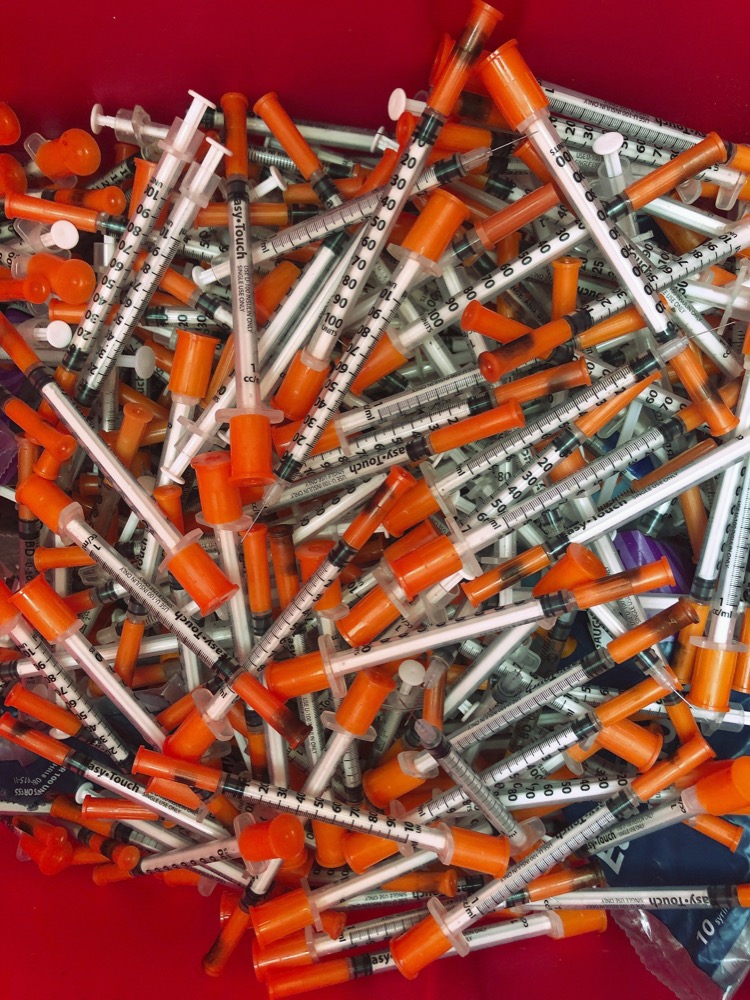
 In this March 20, 2019 photo, dozens of used needles collected by the Atlanta Harm Reduction Coalition sit inside a red bio hazard container, in Atlanta. (AP Photo/Sanya Mansoor)
ATLANTA (AP) – James Lane has a backpack full of syringes slung across his shoulder as he goes to exchange used needles for sterile ones at a small booth set up by an Atlanta needle exchange clinic. The clinic, which operates in an area known as a hot spot for drug use in Atlanta, collects and distributes syringes. It’s among just a few of its kind operating publicly in Georgia and a godsend to Lane, who says he turned to heroin and cocaine to self-medicate for post-traumatic stress.
“It’s not the right answer. I know that. But right now I’m able to sustain my life,” he said. He said he also exchanges needles on behalf of five friends who are embarrassed to show up in person.
Such clinics may become more widespread in Georgia after Gov. Brian Kemp signed a bill into law Tuesday legalizing needle exchanges. While opponents have historically criticized needle exchange programs as condoning drug use, many experts disagree, saying these initiatives help contain the spread of HIV and other infectious diseases that sometimes linger in used syringes.
At least 320 needle exchanges currently exist across the U.S. and are legal in 28 states and Washington, D.C., according to HIV and AIDS research organization AmfAR. Idaho legalized them just last month. While the number of clinics has been steadily rising since the ’90s, there has been a recent surge around the country: About 100 additional clinics opened after a 2015 outbreak in a Southern Indiana county where more than 200 people tested positive for HIV, said Asal Sayas, amfAR’s director of government affairs.
The Centers for Disease Control and Prevention says the estimated lifetime cost of treating one HIV patient is more than $400,000 and that people who inject drugs are five times as likely to enter substance abuse treatment if they use a needle exchange.