

“HEATING & COOLING: 52 MICRO-MEMOIRS” by Beth Ann Fennelly (W.W. Norton & Co., 128 pages, $23).
Unlike some memoirs, “Heating & Cooling: 52 Micro-Memoirs” by Beth Ann Fennelly isn’t focused on one subject. The collection feels like a series of journal entries, though one written by a poet who knows how to harness complex imagery with just the right amount of omission. For readers it offers a rare opportunity to take the roof off someone’s home and peer inside, witnessing moments of absurdity, banality and wonder.
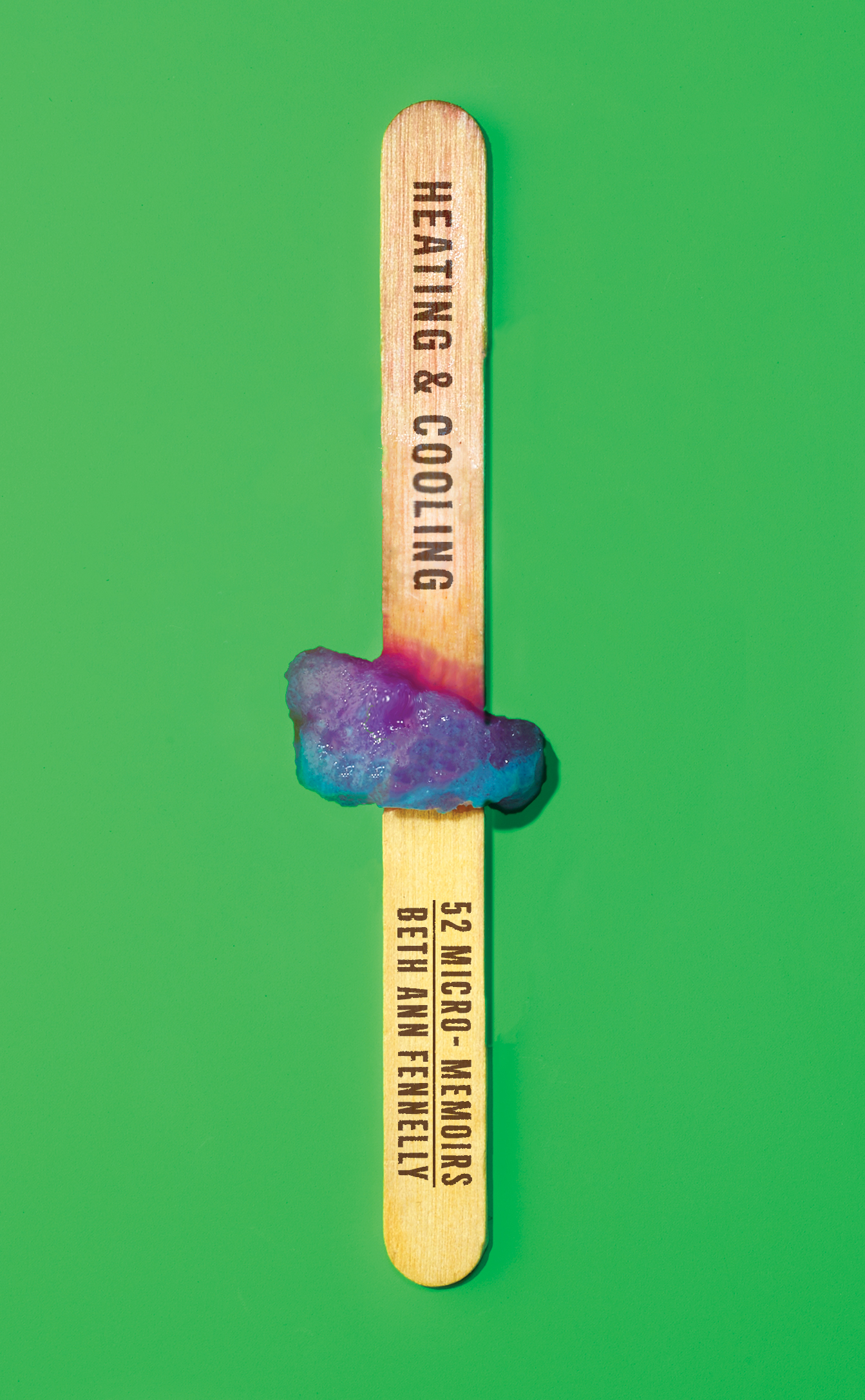 “Heating & Cooling: 52 Micro-Memoirs” is a memoir by Beth Ann Fennelly.
Despite the essays’ brevity, many feature the same kind of complexity typically found in longer essays. “Married Love, V,” the last essay in a series with that title, humorously describes how a piece of gravel embedded in Fennelly’s palm leads to a moment of marital bliss. A doctor removes the rock with a clawed scalpel and offhand narration – “I’m just gonna rummage around in here until I nab it” – and at home Fennelly holds up her rock like a trophy, a medical moment of show-and-tell. Before she throws the bit of gravel away, though, her husband (writer Tom Franklin) tells her that he wants to keep it: “It was in your hand for a month. It was a part of you.”
Another excellent essay, “I Survived the Blizzard of ’79,” uses pain as catalyst to reflect on how we create memories. In this essay, Fennelly’s father insists on trekking the mile to Sunday Mass during a blizzard with his two daughters. The “scalding cold” of Fennelly’s uncovered neck finally forces her to ask for her father’s scarf, which he gives, lovingly wrapping it around her throat. At first this is a happy memory for Fennelly, but later she questions the wisdom of a 2-mile round-trip walk when the temperature is 19 degrees below zero. But parenting, like memory-making, is a messy process: “For he is below the earth and has been for years and cares not for the ways I remember him, or remember remembering him.”
Beth Ann Fennelly began her career as a poet, and her skills at minimalism and image are in full display with these essays. Some chapters consist of a single sentence, something few writers could pull off. “I Come From a Long Line of Modest Achievers” consists, in its entirety, of this sentence: “I’m fond of recalling how my mother is fond of recalling how my great-grandfather was the very first person to walk across the Brooklyn Bridge on the second day.” Where some of the tiny essays read like epigrams, others read more like tight-fisted poems that have not been broken into lines (a refreshing choice considering how much poetry is prose that has been broken into lines).