
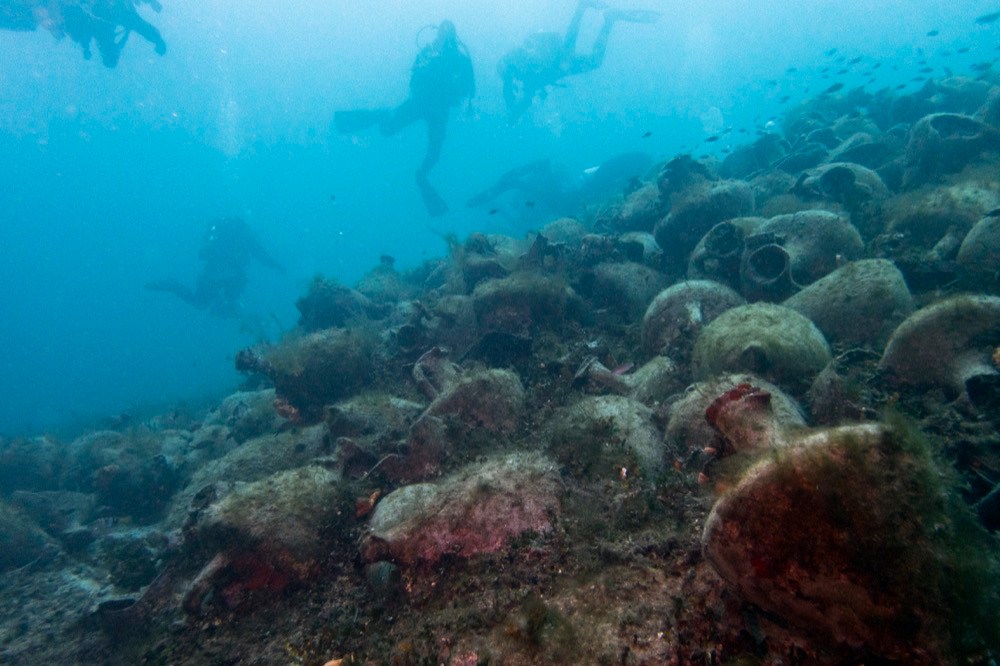
 In this photo taken on Sunday, April 7, 2019, ancient amphoras lie at the bottom of the sea from a 5th Century B.C. shipwreck, the first ancient shipwreck to be opened to the public in Greece, including to recreational divers who will be able to visit the wreck itself, near the coast of Peristera, Greece. Greece’s rich underwater heritage has long been hidden from view, off-limits to all but a select few, mainly archaeologists. Scuba diving was banned throughout the country except in a few specific locations until 2005, for fear that divers might loot the countless antiquities that still lie scattered on the country’s seabed. Now that seems to be gradually changing, with a new project to create underwater museums. (AP Photo/Elena Becatoros)
STENI VALLA, Greece (AP) – Near the northern Greek island of Alonissos lies a remarkable ancient shipwreck: the remains of a massive cargo ship that changed archaeologists’ understanding of shipbuilding in antiquity.
Now this spectacular find is to become the first ancient shipwreck to be made accessible to the public in Greece, including to recreational divers.
Greece’s rich underwater heritage has long been hidden from view, off-limits to all but a select few, mainly archaeologists. Scuba diving was banned throughout the country except in a few specific locations until 2005, for fear that divers might loot the countless antiquities that still lie scattered on the country’s seabed.
Ancient shipwrecks and even many more recent ones are still off-limits.
 In this photo taken on Sunday, April 7, 2019, ancient amphoras lie at the bottom of the sea from a 5th Century B.C. shipwreck, the first ancient shipwreck to be opened to the public in Greece, including to recreational divers who will be able to visit the wreck itself, near the coast of Peristera, Greece. Greece’s rich underwater heritage has long been hidden from view, off-limits to all but a select few, mainly archaeologists. Scuba diving was banned throughout the country except in a few specific locations until 2005, for fear that divers might loot the countless antiquities that still lie scattered on the country’s seabed. Now that seems to be gradually changing, with a new project to create underwater museums. (AP Photo/Elena Becatoros)
Now that seems to be gradually changing, with a new project to create underwater museums.