
Tuesday, November 10, 2026Nov 10

U.S. Xpress hauled in less money last quarter

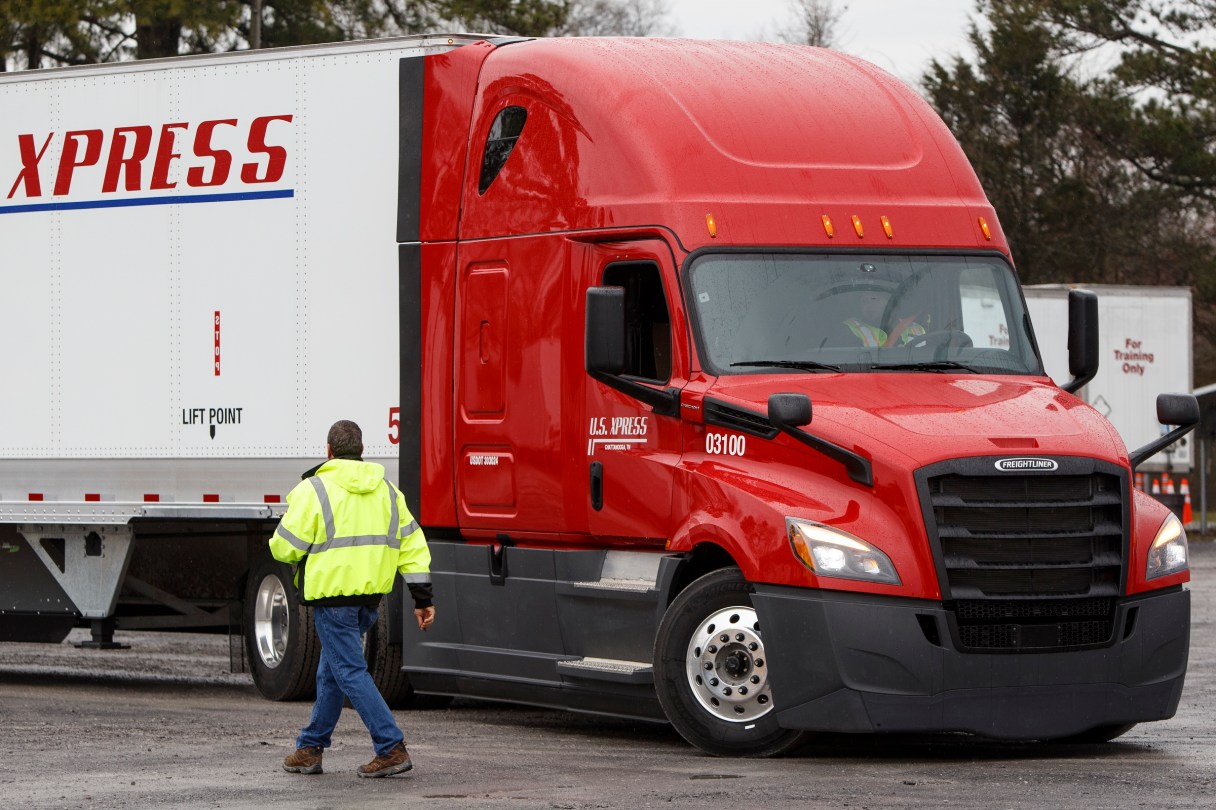
A truck demos the driving range at the U.S. Xpress Tunnel Hill facility on Tuesday, Feb. 19, 2019 in Tunnel Hill, Ga. The driving range is part of the Professional Driver Development program and offers potential drivers a course to practice different maneuvers. The driving range is part of the Professional Driver Development program and offers potential drivers a course to practice different maneuvers.
A truck demos the driving range at the U.S. Xpress Tunnel Hill facility on Tuesday, Feb. 19, 2019 in Tunnel Hill, Ga. The driving range is part of the Professional Driver Development program and offers potential drivers a course to practice different maneuvers. The driving range is part of the Professional Driver Development program and offers potential drivers a course to practice different maneuvers. A truck demos the driving range at the U.S. Xpress Tunnel Hill facility on Tuesday, Feb. 19, 2019 in Tunnel Hill, Ga. The driving range is part of the Professional Driver Development program and offers potential drivers a course to practice different maneuvers. The driving range is part of the Professional Driver Development program and offers potential drivers a course to practice different maneuvers.

U.S. Xpress Enterprises Inc. hauled in less money this spring than a year ago as the freight market slowed truck shipments for Chattanooga’s biggest trucking company in the second quarter.

U.S. Xpress said operating income in the three months ended June 30 totaled $8.8 million on revenues of $413.9 million this year, down from the $20 million of operating income on revenues of $449.8 million recorded in the same period a year earlier.

The company said adjusted net income totaled $2.9 million, or 6 cents per share, in the second quarter of 2019 compared with $11.3 million in in the second quarter of 2018 prior U.S. Xpress becoming publicly traded in June 2018.

“The freight market remained challenging through the second quarter driven by weaker than seasonal demand combined with capacity growth as a result of more favorable market conditions in 2018,” U.S. Xpress CEO Eric Fuller said. “This supply – demand imbalance severely pressured spot pricing through the quarter which adversely impacted parts of our business.”

Fuller said spot pricing for over the road freight was down by more than 30% this spring.