
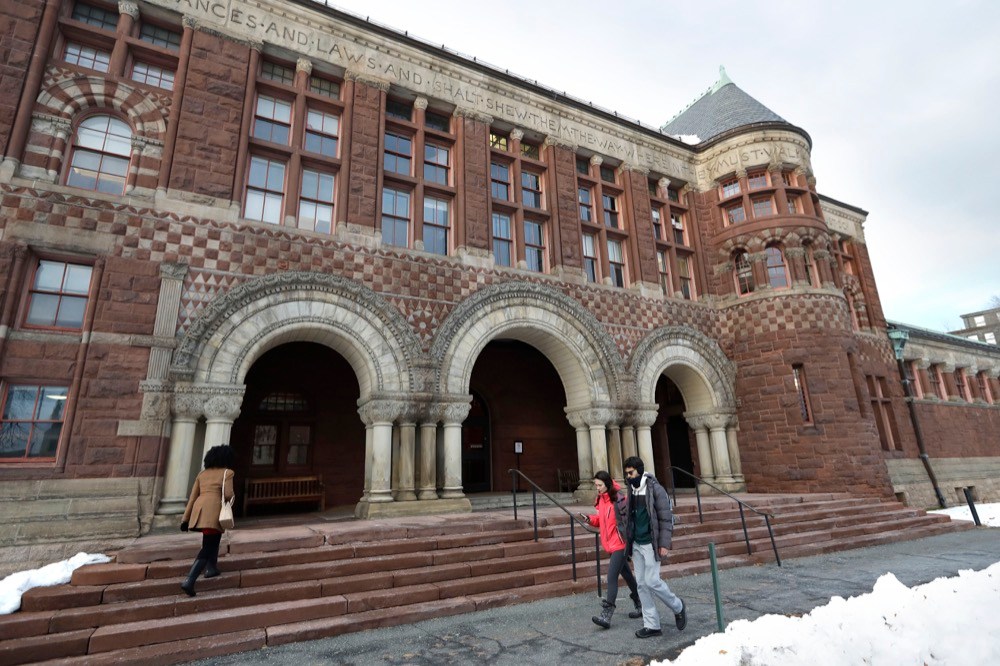
BUFFALO, N.Y. (AP) – The promise of reparations to atone for historical ties to slavery has opened new territory in a reckoning at U.S. colleges, which until now have responded with monuments, building name changes and public apologies.
Georgetown University and two theological seminaries have announced funding commitments to benefit descendants of the enslaved people who were sold or toiled to benefit the institutions.
While no other schools have gone so far, the advantages that institutions received from the slavery economy are receiving new attention as Democratic presidential candidates talk about tax credits and other subsidies that nudge the idea of reparations toward the mainstream.
The country has been discussing reparations in one way or another since slavery officially ended in 1865. This year marks the 400th anniversary of the arrival of the first slave, launching the violence afflicted on black people to prop up the Southern economy.
University of Buffalo senior Jeffrey Clinton said he thinks campuses should acknowledge historical ties to slavery but that the federal government should take the lead on an issue that reaches well beyond higher education.