
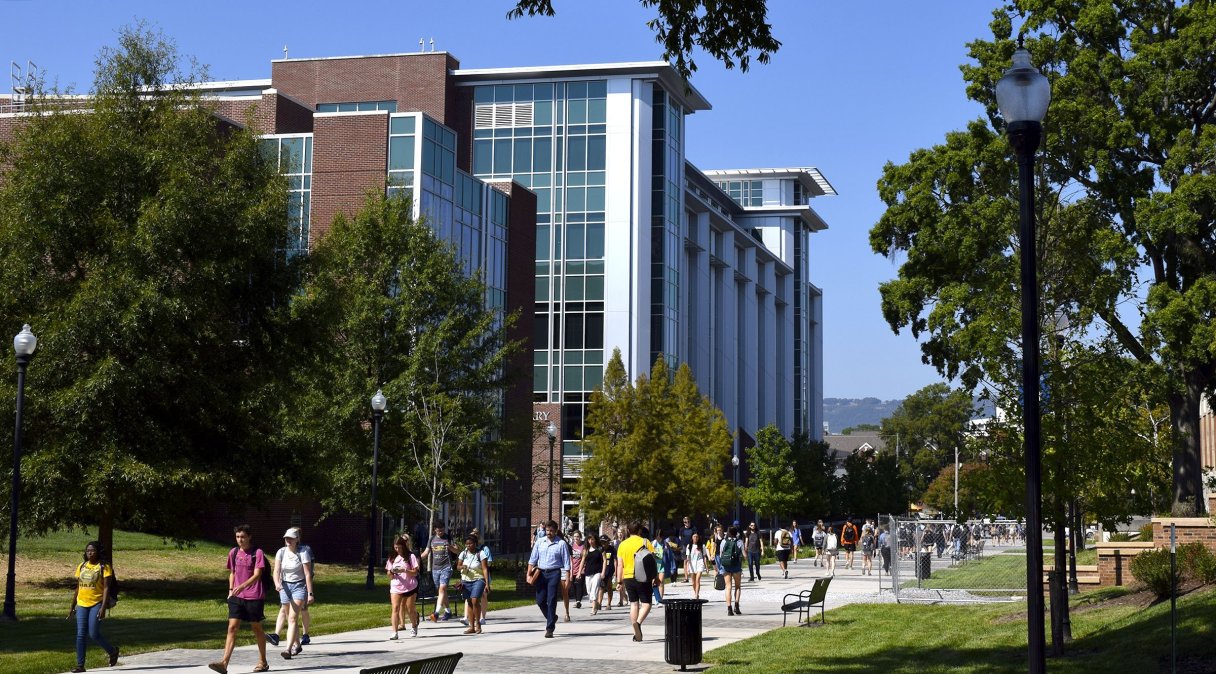
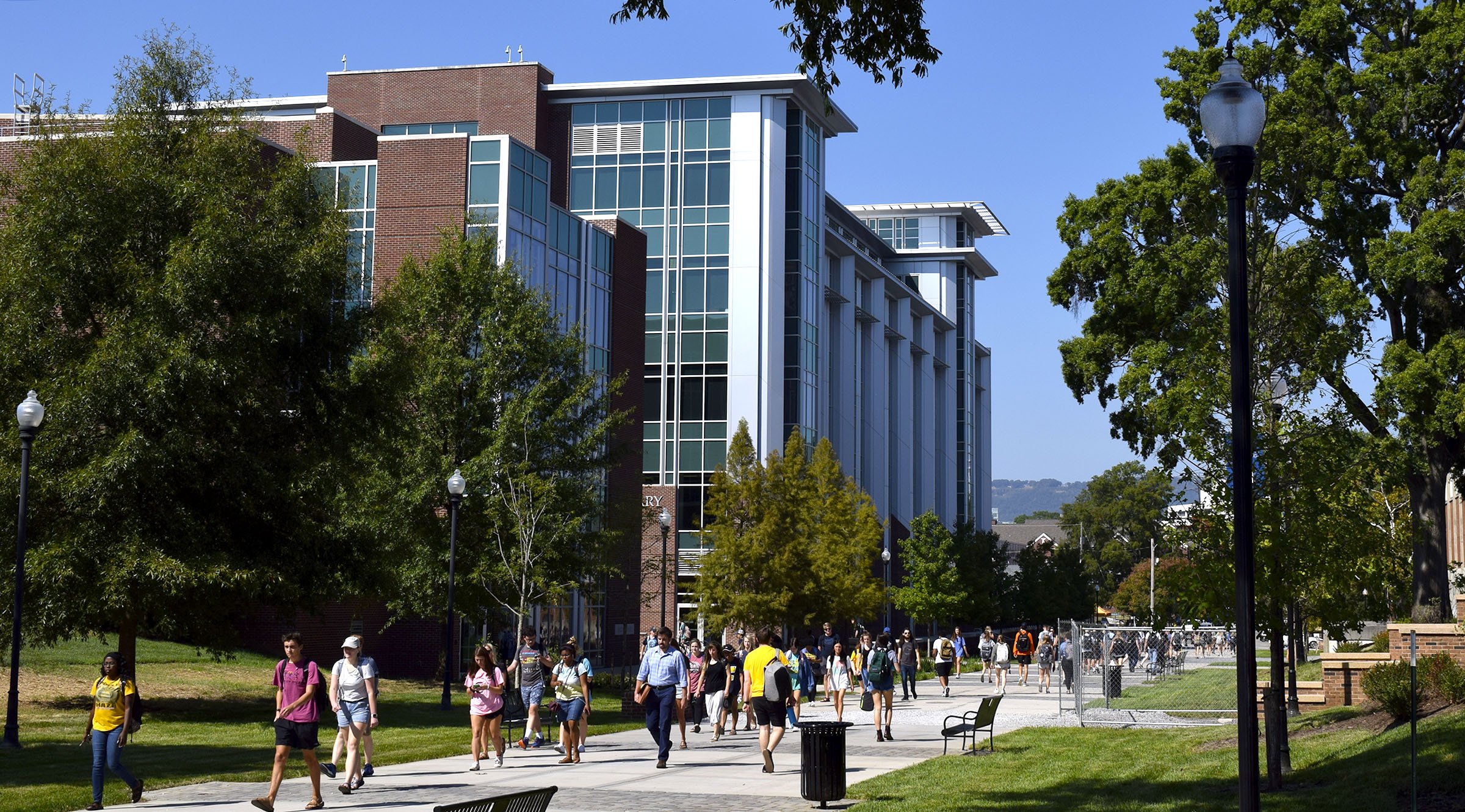
A new report from the state comptroller’s office says more board oversight is needed related to the safety and security of University of Tennessee campuses, including in Chattanooga.
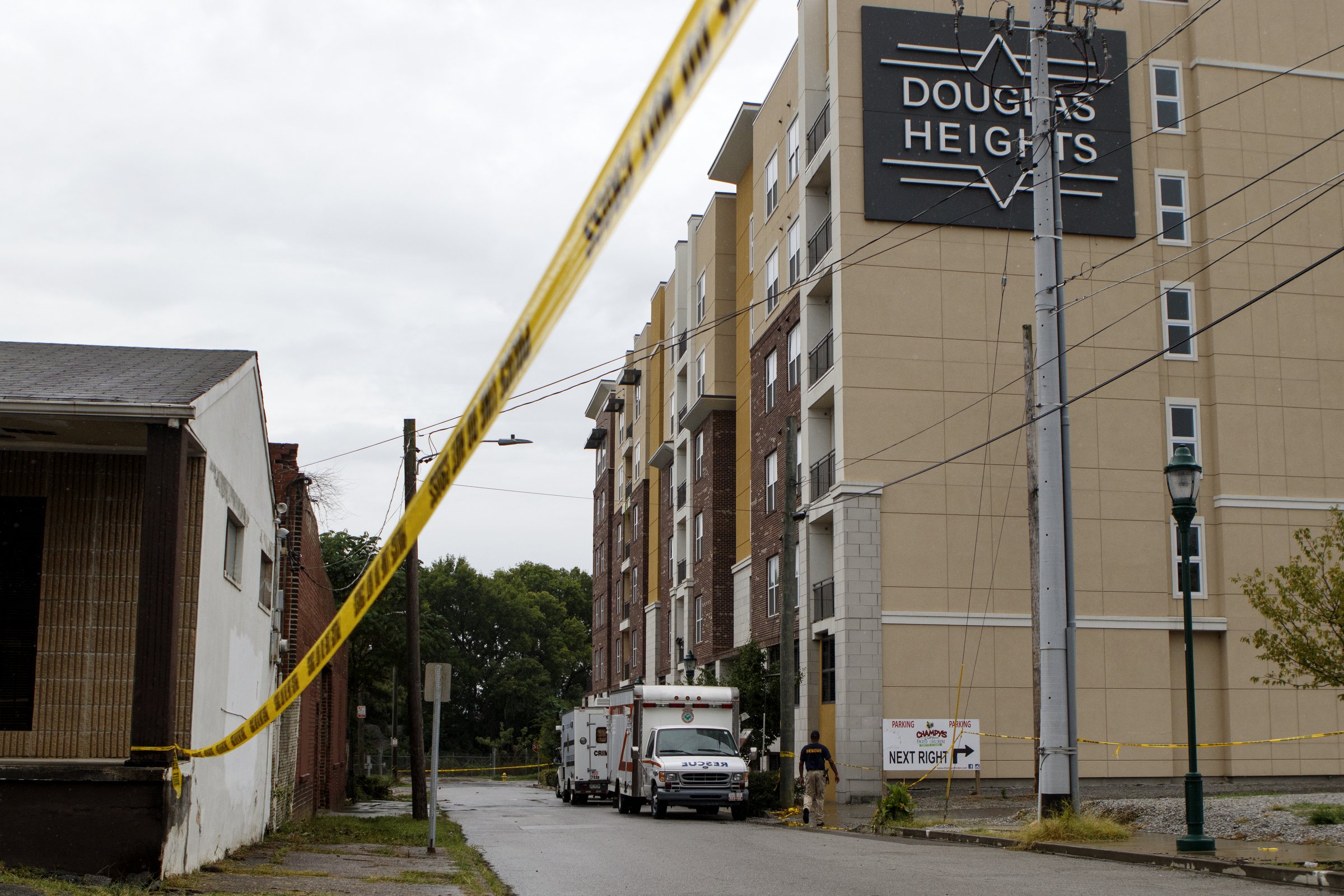
Among the findings was that officials at the University of Tennessee at Chattanooga failed to issue a timely warning to students after a deadly shooting this summer at nearby Douglas Heights, a privately owned apartment complex that houses a number of UTC students.
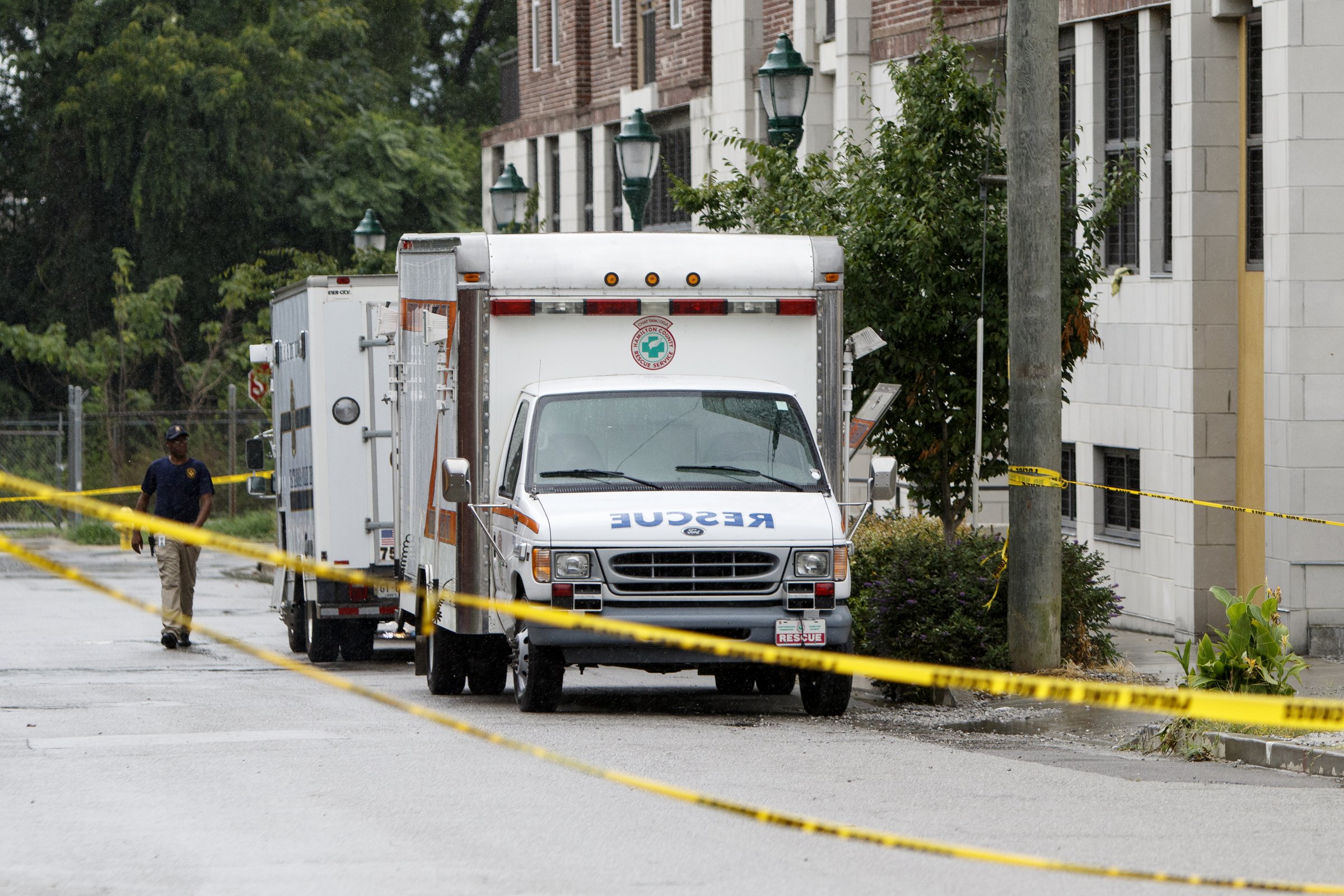
The shooting, which happened early in the morning on July 14, left one man dead and two others injured inside an apartment off M.L. King Boulevard.
The suspects – 29-year-old Omerrieal Woods; his brother, 26-year-old Toddie Woods; and 25-year-old Hyacinth Keyone Taylor – were not arrested until later that week.
While Douglas Heights is not a university facility or under campus police jurisdiction, the report states school officials should have alerted the campus community to the possible threat, citing the Clery Act – a 1990 federal law that requires schools to provide timely warnings and emergency notifications.
The report, part of a performance audit of the UT Board of Trustees released last week, said failure to send alerts “increases the risk that students and other campus community members do not have sufficient information to take reasonable actions to ensure their safety.”
UTC officials in the report acknowledged that a timely warning was not issued and said decisions around sending notices are handled on a case-by-case basis, taking into consideration certain factors such as the nature of the crime, its location and timing, impact on the community and direction from local law enforcement.
They added that a notice from Chattanooga police to the university after the shooting was not of an emergency nature and there appeared to be no threat to the campus community, therefore no warning was sent to students.
“UTC will continue to implement controls to ensure evaluation for timely warnings for situations that may present a threat to the safety of the campus community,” school officials said in the report.
In its recommendations to the UT Board of Trustees, the comptroller’s report said the board must increase its oversight of student safety and campus security across the UT system.
Other recommendations include:
– UTC campus management should ensure timely warnings are issued without delay for situations that may present a threat to safety, informing students and other campus community members.
– The university should consider defining clear lines of communication as well as key roles and responsibilities.
– The UT board and UT system management should consider directing campuses to regularly review and ensure compliance with their timely warning policies and procedures.
In response, Robie Robinson, UTC executive director of emergency services, told the Times Free Press the university is “appreciative of the state audit and review of campus safety and security, both of which are of the utmost importance to UTC.”
COMMUNICATING A THREAT
UTC uses a system that provides emergency notifications through email, text messages, social media and other electronic messaging platforms.
Deciding when to use it involves a team of people.
“When an incident is reported or a potential threat is discovered, the decision to communicate involves the UTC Police Chief, Executive Director of UTC Emergency Services and University Communications,” Robinson said, “and is based on compliance with federal Clery Act requirements in addition to case-by-case evaluation of circumstances and [the] possibility of an ongoing safety or security threat that warrants notification to the campus community.”
Just months after the July shooting, a campus alert was issued in November after a second shooting at the apartment complex left a 21-year-old man injured and the suspect on the run.
In that incident, Robinson said, campus police believed there to be a possible continuing threat so an alert was sent to the campus community. No suspect has been arrested.
After the July and November shootings, parents and students expressed frustration over what they felt was a lack of communication.
A concerned parent who reached out to the Times Free Press said he has a son who attends UTC and lives in Douglas Heights, which bills itself as student housing.
The father, who asked not to be identified out of concern for his son’s safety, said they chose Douglas Heights for their son because the concept and setup of the facility gives it the potential to be the perfect off-campus living situation.
And while the building isn’t part of UTC, when there is a shooting near the university the entire campus community should be notified, he said.
With the release of the audit recommendations, Robinson said the university will revisit properties in close proximity to the campus.
“The University seeks to ensure all parents of the top priority placed on the safety and security of UTC students and every person on campus,” he added.
GOT QUESTIONS?
Parents with questions or concerns about campus security can call UTC Police Chief Robert Ratchford at 423-425-4357.
A NATIONAL CONVERSATION
The debate over when to issue alerts has gained nationwide attention in recent months.
In January, Pennsylvania State University was criticized because it didn’t send an alert that a gunman involved in an off-campus shooting was on the loose, according to the Associated Press. School officials said there was no imminent threat to students or the campus, similar to the July incident at Douglas Heights.
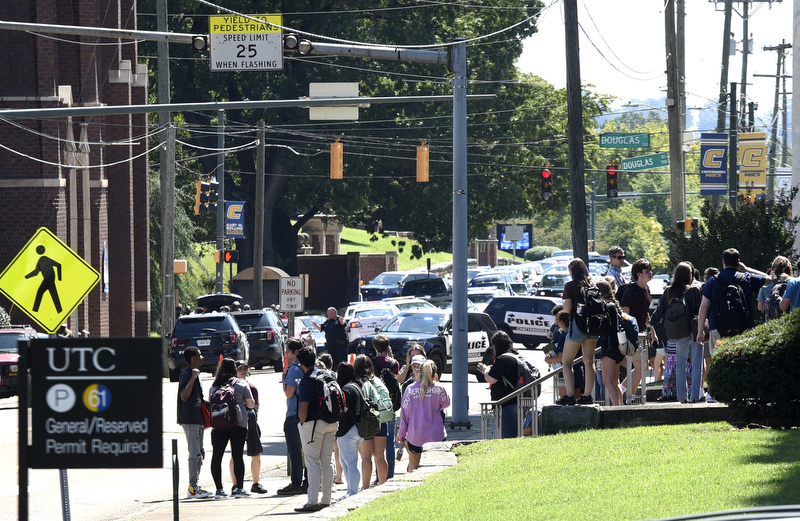
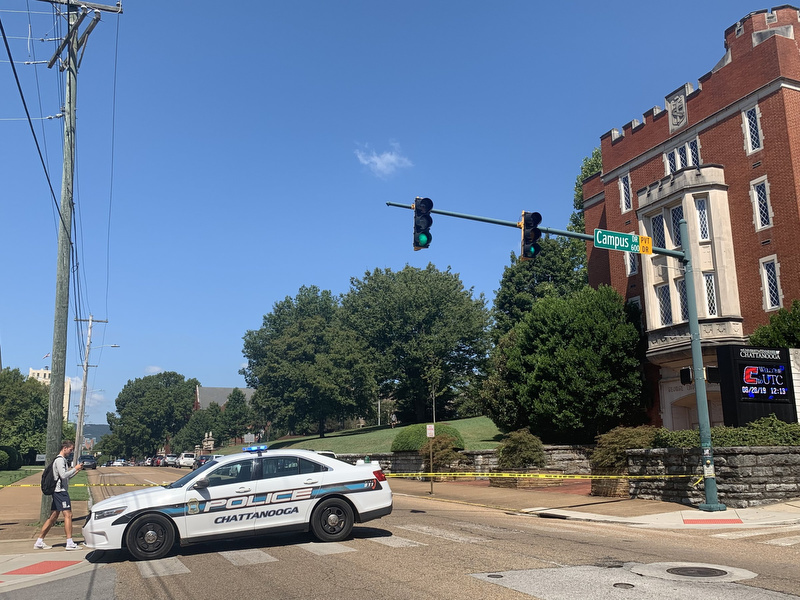
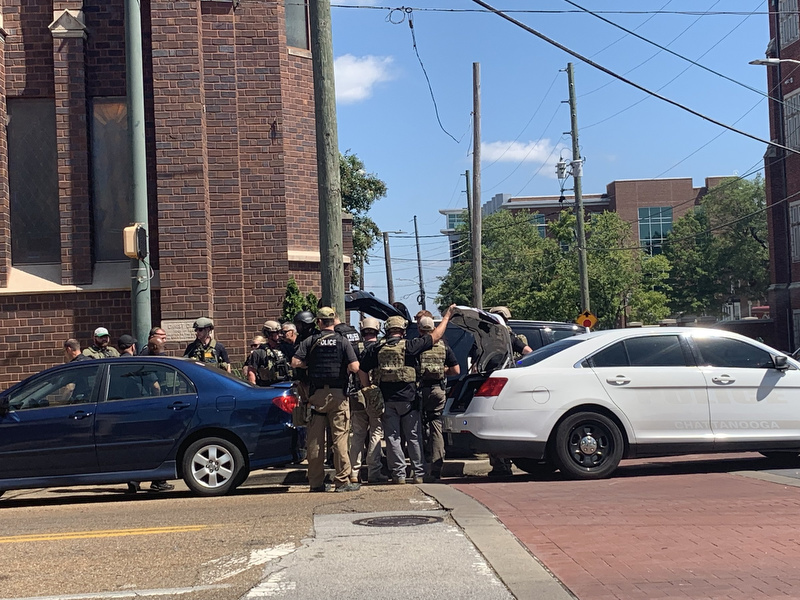
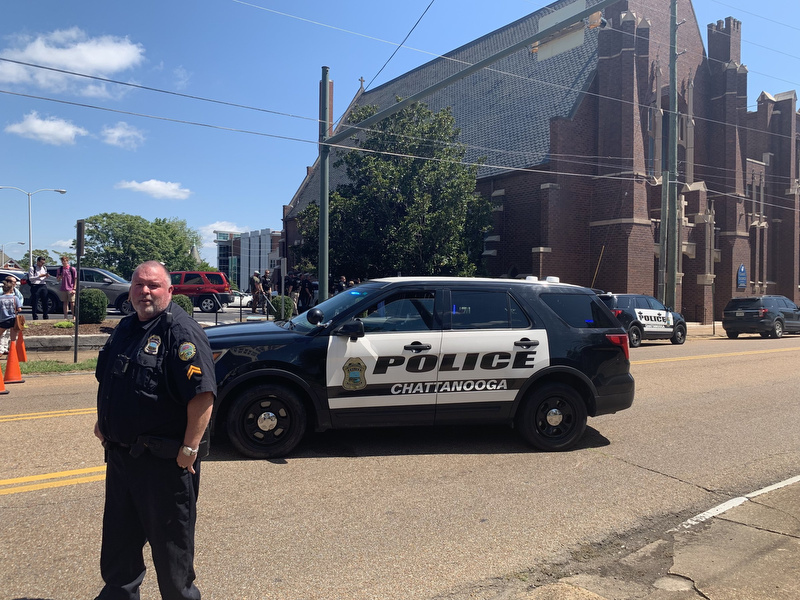
Closer to home, a Chattanooga police officer was walking to his house near the University of Tennessee at Chattanooga campus after a shift in August, still in full uniform and with his rifle in hand, when a person saw him, wasn’t sure if he was an officer, and called 911 to report a suspicious person. That sparked an hourslong search for an alleged armed suspect. While the school did send out an alert, it was criticized by parents and students because the campus did not go into a full lockdown. Chancellor Steven Angle later said the school made an error in that regard and would review its practices for the future.
And in September, Villanova University erupted into chaos after an alert was sent to students warning of an active shooter. But there was no gunman, and the school sent out an alert notifying the campus everything was safe.
Making the call on when to send an alert can be a challenge.
The Clery Act doesn’t specify a timeline for sending emergency notifications.
In those first crucial moments, officials often don’t have the time to verify reports. But they also don’t want to unnecessarily spook an entire community with an outburst of texts, emails, tweets and Facebook posts.
Abigail Boyer, associate executive director at the Clery Center in Strafford, Pennsylvania, told the Associated Press in September that universities should have a detailed procedure, test it frequently and use message templates.
“The safety of our students, faculty and staff is our No. 1 priority,” Robinson said. “To that end, we have worked diligently to put in place and follow policies that comply with all regulations and statutes. Even so, each incident is unique and we continually evaluate those policies to ensure the safety of our campus community.”
During a presentation of the report Wednesday, UT system interim president Randy Boyd told a joint meeting of the House and Senate Government Operations committees that “the question of public safety in educational settings is an issue facing all of us – from K-12 to higher education.”
He added: “We agree that this is a race that has no finish line, and we will continue to work diligently.”
Staff writer Andy Sher and the Associated Press contributed to this story.
Contact Meg Scarbrough at 423-757-6260 or mscarbrough@timesfreepress.com.