
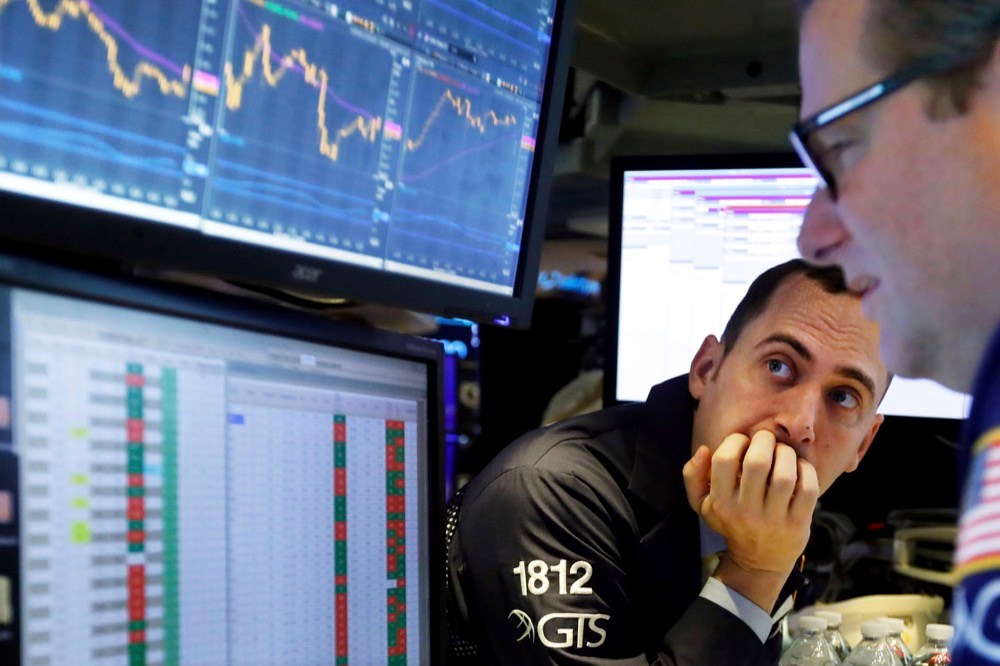
NEW YORK (AP) – On January 3, the S&P 500 sank 2.5% when Apple warned of sagging demand for the iPhone, an inauspicious start to 2019 following a 14% drubbing in last year’s fourth quarter.
On January 4, Federal Reserve Chairman Jay Powell said the central bank would be “patient” with its interest rate policy following four increases in 2018. The S&P 500 soared 3.4% and by the end of the month was up nearly 8%.
January’s swing helped set the tone for a year in which the market responded to every downturn with a more sustained upswing. Along the way, stocks kept setting records – 32 of them for the S&P 500 by Dec. 20, and 19 for the Dow Jones Industrial Average.
By its final policy meeting in December, the Fed had completely reversed course and cut rates three times in what Powell called a pre-emptive move against any impact a sluggish global economy and the U.S.-China trade war might have on U.S. economic growth. The stock market, and most Fed observers not named Trump, approved of the Fed’s actions.
Investors’ uncertainty over trade policy eased by December as Washington and Beijing reached a modest, interim agreement that averted a new round of tariffs on $160 billion worth of Chinese imports and reduced existing import taxes on about $112 billion in other Chinese goods.