
Thursday, October 29, 2026Oct 29

This story is free to read.

Telescopes capture moment of impact during eclipse of moon

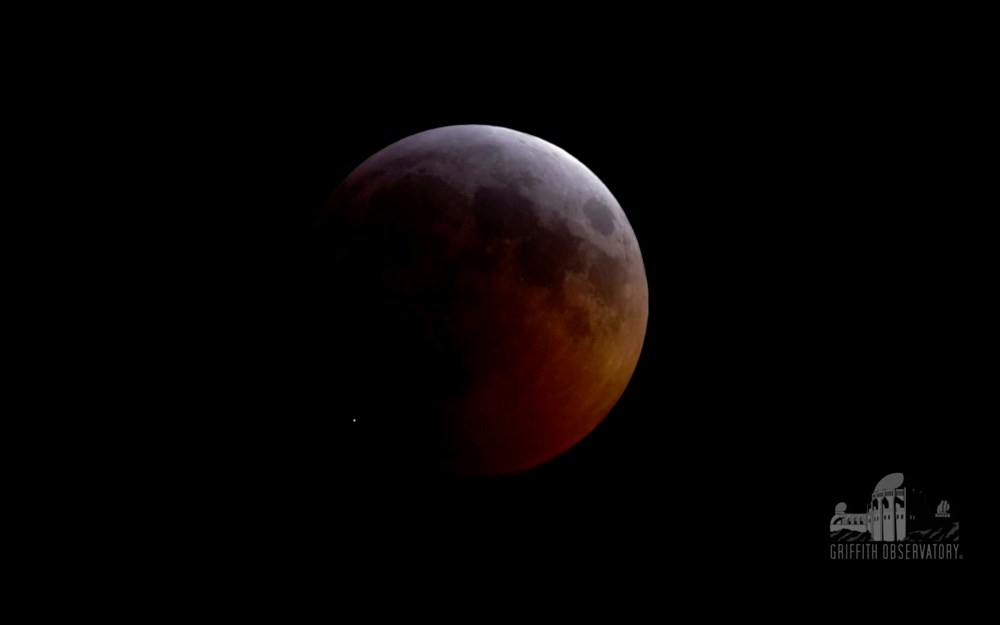
This image from video provided by Griffith Observatory in Los Angeles shows an impact flash on the moon, bottom left, during the lunar eclipse which started on Sunday evening, Jan. 20, 2019. Spanish astrophysicist Jose Maria Madiedo of the University of Huelva said Wednesday, Jan. 23, 2019, it appears a rock from a comet slammed into the moon. (Griffith Observatory via AP)
This image from video provided by Griffith Observatory in Los Angeles shows an impact flash on the moon, bottom left, during the lunar eclipse which started on Sunday evening, Jan. 20, 2019. Spanish astrophysicist Jose Maria Madiedo of the University of Huelva said Wednesday, Jan. 23, 2019, it appears a rock from a comet slammed into the moon. (Griffith Observatory via AP) This image from video provided by Griffith Observatory in Los Angeles shows an impact flash on the moon, bottom left, during the lunar eclipse which started on Sunday evening, Jan. 20, 2019. Spanish astrophysicist Jose Maria Madiedo of the University of Huelva said Wednesday, Jan. 23, 2019, it appears a rock from a comet slammed into the moon. (Griffith Observatory via AP)

CAPE CANAVERAL, Fla. (AP) – Astronomers managed to capture the moment of an impact during this week’s eclipsed moon.

Spanish astrophysicist Jose Maria Madiedo of the University of Huelva said Wednesday it appears a rock from a comet slammed into the moon during the total lunar eclipse late Sunday and early Monday. The strike was seen by telescopes in Spain and elsewhere as a bright flash.

Madiedo said it’s the first impact flash ever seen during a lunar eclipse, although such crater-forming impacts are common.

The object hit at an estimated 10 miles (17 kilometers) per second, and was 22 pounds (10 kilograms) and 12 inches (30 centimeters) across, according to Madiedo.

Griffith Observatory in Los Angeles also recorded the impact during its livestream of the eclipse. A second flash was seen a minute after the first by some observers, said Anthony Cook, an astronomical observer at Griffith.