
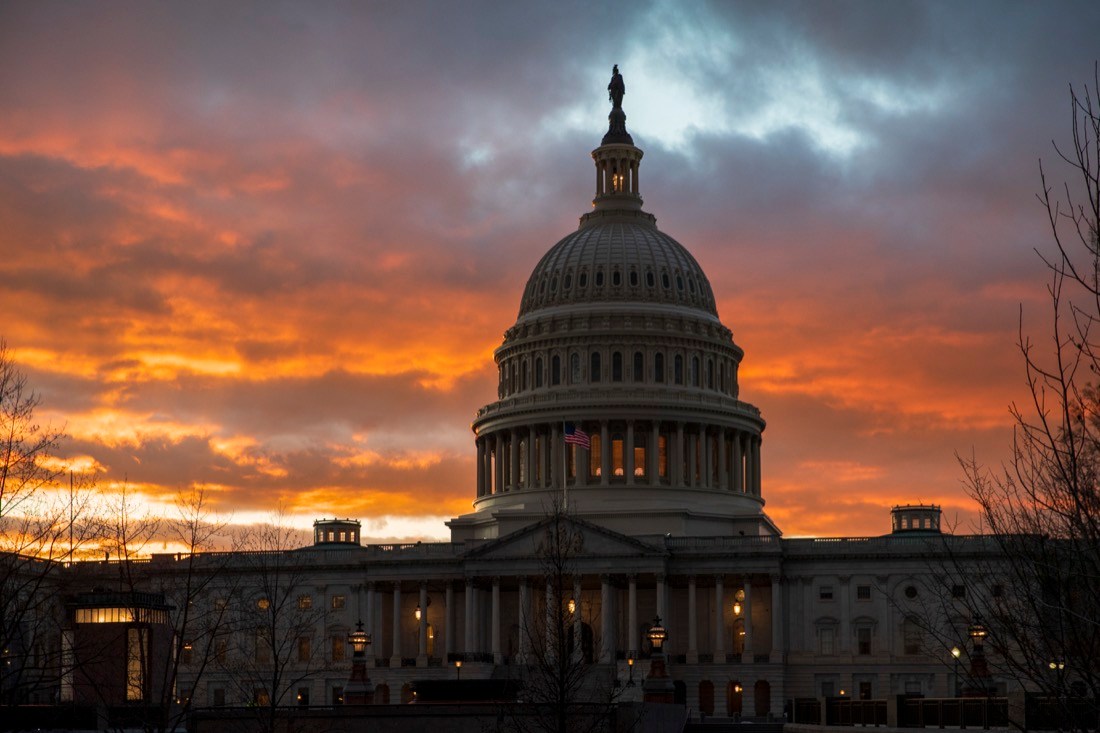
Shutdown cost economy $11 billion, CBO says
The five-week federal government shutdown cost the U.S. economy $11 billion, with nearly a quarter of that total permanently lost, the Congressional Budget Office said Monday.
The nonpartisan CBO said that the shutdown, which started in late December and ended last Friday, delayed $18 billion in spending by federal workers. That is expected to reduce 2018 fourth quarter gross domestic product by $3 billion and cut first quarter growth this year by $8 billion, or 0.2 percent.
The CBO said that growth in subsequent quarters will be higher as that delayed spending takes place and filters through the economy. However, it estimates that $3 billion will never be recovered.
The most direct hit to the economy came from the loss of spending by furloughed workers, as well as the delay in federal spending on goods and services and reduced aggregate demand, the CBO said.
But the economy also suffered “more indirect negative effects,” which are harder to quantify but stemmed from businesses being unable to obtain permits and certifications and reduced access to federal-backed loans.
White House officials had warned that the economy could have zero growth in the first quarter if the shutdown dragged on.
Wildfire losses top $11 billion
Insurance claims from California’s deadly November 2018 wildfires have topped $11.4 billion.
State Insurance Commissioner Ricardo Lara said Monday that more than $8 billion worth of damage comes from the fire that leveled the town of Paradise and killed 86 people. About $3 billion more is from two Southern California wildfires that ignited the same week.
The $11.4 billion is just shy of the claims filed in a series of 2017 wildfires, including deadly blazes that tore through Northern California wine country.
The Paradise wildfire destroyed about double the number of homes than the wine country fires, but property values are lower in the rural Northern California region.
Including other major California fires in July 2018, total insurance claims from the year neared $12.4 billion.
NLRB halts union of Disney Lyft drivers
A labor relations board is putting the brakes on a decision allowing the Teamsters to represent scores of drivers who haul passengers around the Walt Disney World property in Florida after being summoned by a Lyft app.
A National Labor Relations Board panel last Friday reversed a regional director’s decision allowing the Orlando-based Teamsters local to represent the drivers.
The “Minnie Van” drivers have different responsibilities and training than do bus drivers who are already represented by the Teamsters local, according to the three-member panel’s ruling.
The Teamsters demanded the right to bargain for wages, hours and working conditions on behalf of the van drivers without a vote on the matter after an NLRB regional director last May ruled the union could represent them.
Disney World guests can get the private rides using the Lyft app on their phones instead of waiting for Disney buses to drive them around the resort.
An attorney for Teamsters Local Union 385 on Monday said he was considering the local union’s options. They include asking the NLRB to reconsider or filing an appeal in the federal courts.
Privatize attempt stalls in Puerto Rico
Plans to quickly privatize Puerto Rico’s hurricane-damaged electrical power system have hit a snag with the U.S. territory’s House and Senate at odds over a bill to award concessions for the transmission and distribution system.
Senators on Monday balked at the bill, in part because the House of Representatives amended the measure to cap the price of energy at 20 cents per kilowatt hour – a price that some say may be too low if generation costs rise. The rejection comes more than a year after the governor announced plans to privatize the system, largely to attract investment the debt-laden government itself cannot afford.
Larry Seilhamer, vice president of Puerto Rico’s Senate, announced his opposition to dozens of investors and energy experts at a two-day conference on rebuilding the power grid more than a year after Hurricane Maria destroyed it.
“We’re about to have a historic project that will define the economic development of Puerto Rico,” he said. “I am not going to throw away my shot.”
The disagreement comes after Puerto Rico’s government recently chose four out of five companies interested in operating the agency’s transmission and distribution operations and asked them to submit proposals, said Jose Ortiz, director of Puerto Rico’s Electric Power Authority.