
NASHVILLE – Years after it was supposed to be operational, state TennCare officials say Tennessee government’s most expensive and complex information technology project in history is finally expected to be up and running this spring.
The nearly $400 million Tennessee Eligibility Determination Systems will make decisions over eligibility for TennCare, the state’s Medicaid program, and interface with the federal government’s online marketplace created under the Affordable Care Act.
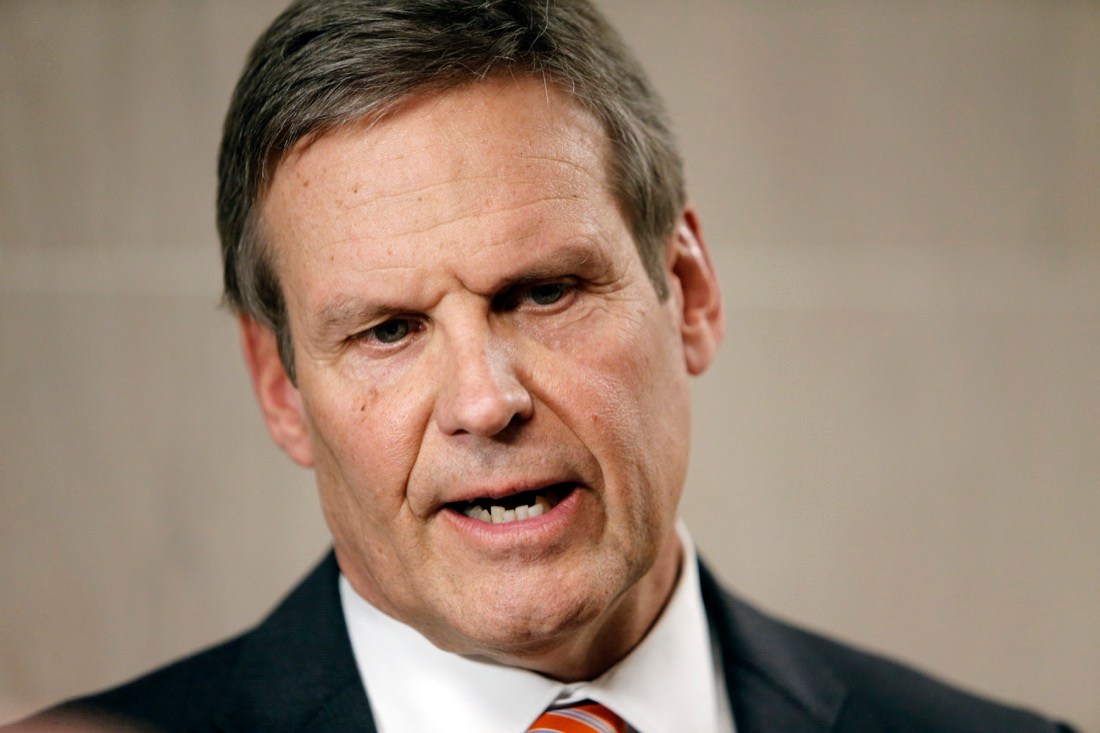
TennCare officials on Tuesday asked Gov. Bill Lee during his budget hearings to include a final $60.69 million in his upcoming 2019-2020 spending plan to wrap up the project, which would bring the estimated total cost to $386.37 million, according to department figures.
The federal government has footed 90 percent of the bill for the computer system. For example, the state’s share of the final $60.69 million installment is $7.2 million.
“Please be able to share that we remain on track for TEDS to go live online this spring,” TennCare Chief Financial Officer William Aaron told the governor. “We’re continuing to work through and that progress is going very well.”
Aaron said the computer system “will meet both federal mandates for the eligibility and re-verification processes for Medicaid members and also allow Tennessee to control the application and eligibility process.”
Other states implemented their own systems years ago as part of a requirement under the Affordable Care Act.
Most people seeking insurance, including low-income persons qualifying for Medicaid health coverage, were expected to go to an online marketplace website and use a computer system that could provide a better interface with the federal portal.
TennCare originally contracted back in 2012 with Northrup Grumman to build the sophisticated system capable of handling all that. It was supposed to be functioning Oct. 1, 2013. It wasn’t. Meanwhile, TennCare initially limited its in-person help applicants.
The Southern Poverty Law Center filed a federal class-action lawsuit in 2014 on behalf of applicants and a U.S. District Court judge in Nashville ordered the state to develop workarounds, including call centers.
TennCare and Northrup parted ways in 2015 and a new vendor was found.
Just last week, U.S. District Judge William Campbell Jr. of Nashville released the state from his injunction. While Tennessee’s computer system still isn’t fully operational, Campbell wrote the state has taken measures to prevent delays. More than 99 percent of applications are now processed within the required time frame, officials say, although advocates for the poor dispute that.
The $12.09 billion agency provides health coverage through Medicaid and other programs to an estimated 1.34 million Tennesseans. In the current budget, the state provides $3.8 billion, or 31.5 percent, while the federal government picks up the rest of the tab.
TennCare Director Gabe Roberts told Lee the agency has cost increases of $354.7 million. The state’s portion of the increase is $139.53 million, while $209.59 million comes from the federal government and another $5.63 million is from other sources.
One of the major cost drivers this year is medical inflation and utilization, which is expected to cost the state nearly $60 million.
The state is also taking another $41.3 million hit due to changes in the federal share rate. It’s computed from a formula that takes into account the average per capita income for each state relative to the national average.
“We have a hole to fill with approximately $41.3 million,” Roberts said. He also cautioned “obviously we never say likely, but I think it’s worth noting that we might be back here next year with another decrease [from the federal government]” if the state’s per capita income average continues to rise.
Observed Lee: “As our economy is stronger than the rest of the country, we maybe pay for that.”
As part of Lee’s direction that departments offer up 2 percent spending reduction plans, Roberts laid out $49.5 million in potential impacts. For example, the agency’s pharmacy program would be pared back by $19.2 million, with the state share coming in at $6.65 million.
Roberts said that would come about as a result of pharmacy savings. There are a number of other potential cuts too, including eliminating grants to “targeted hospitals.”
Like his immediate predecessors, Republican Bill Haslam and Democrat Phil Bredesen, Lee, who took office earlier this month, has directed agencies to offer up reductions, some of which he will likely take as he seeks to make room in the budget for his priorities, and others he won’t.
Lee shot down one proposal by health officials to cut testing for HIV/AIDs testing.
“Well, I put that away because the goal of asking for reductions is to really look for inefficiencies in the way that we operate so that we can in fact redirect those funds to the things that we need to redirect them for,” Lee explained.
The purpose of the exercise is “really not to cut services,” Lee said. “So in my view that was a cut in service. When I see proposals that are actually going to cut services, those are not the sorts of things we are looking at first. We are looking at inefficiencies.”
Contact staff writer Andy Sher at asher@timesfreepress.com or 615-255-0550. Follow on Twitter @AndySher1.