
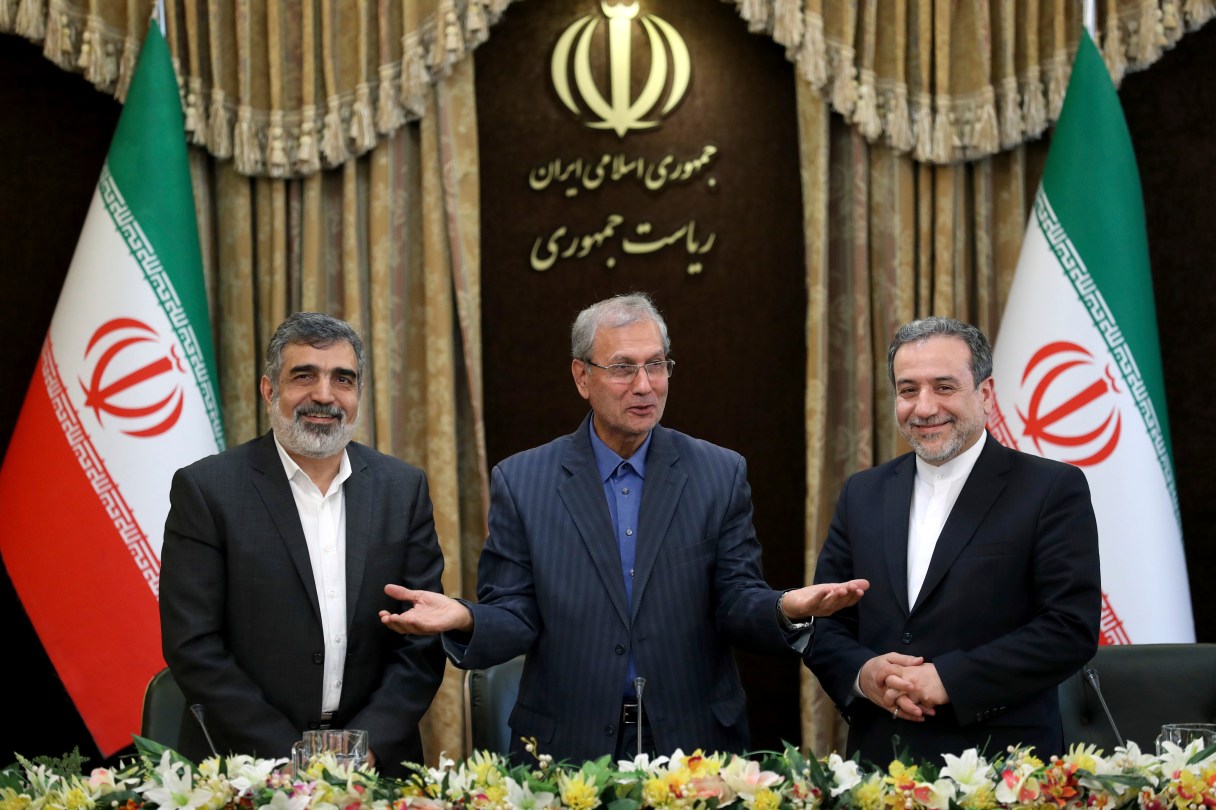
TEHRAN, Iran (AP) – Iran announced Sunday it will increase its uranium enrichment to an unspecified level beyond the terms of its 2015 nuclear deal with world powers, breaking another limit set under the accord and furthering heightening tensions between Tehran and the U.S.
Setting another unspecified 60-day deadline for the deal, Iran took further steps toward pressuring Europe while urging further diplomacy to save an agreement that President Donald Trump unilaterally pulled the U.S. from a year ago.
Hopes for saving the faltering deal appear increasingly dim, however, as the Europeans have been unable to offer Iran any effective way around U.S. sanctions that block Tehran’s oil sales abroad and target its top officials. But Iran’s recent measures, while of concern to nuclear non-proliferation experts, could be easily reversible if Europeans offer Iran the sanctions relief it seeks.
Tensions began rising in May when the U.S. rushed thousands of additional troops, an aircraft carrier, nuclear-capable B-52 bombers and advanced fighter jets to the Mideast.
Mysterious oil tanker blasts near the Strait of Hormuz, attacks by Iranian-backed rebels in Yemen on Saudi Arabia and Iran shooting down a U.S. military drone have raised fears of a wider conflict engulfing a region crucial to global energy supplies.