
Is the ringing, buzzing, chirping or humming in your ears, also known as TINNITUS (pronounced TINN-a-tus or ti-NIGHT-us), driving you to distraction? Be assured, you are not alone. An estimated 50 million Americans experience some form of tinnitus, making it one of the most common health conditions.
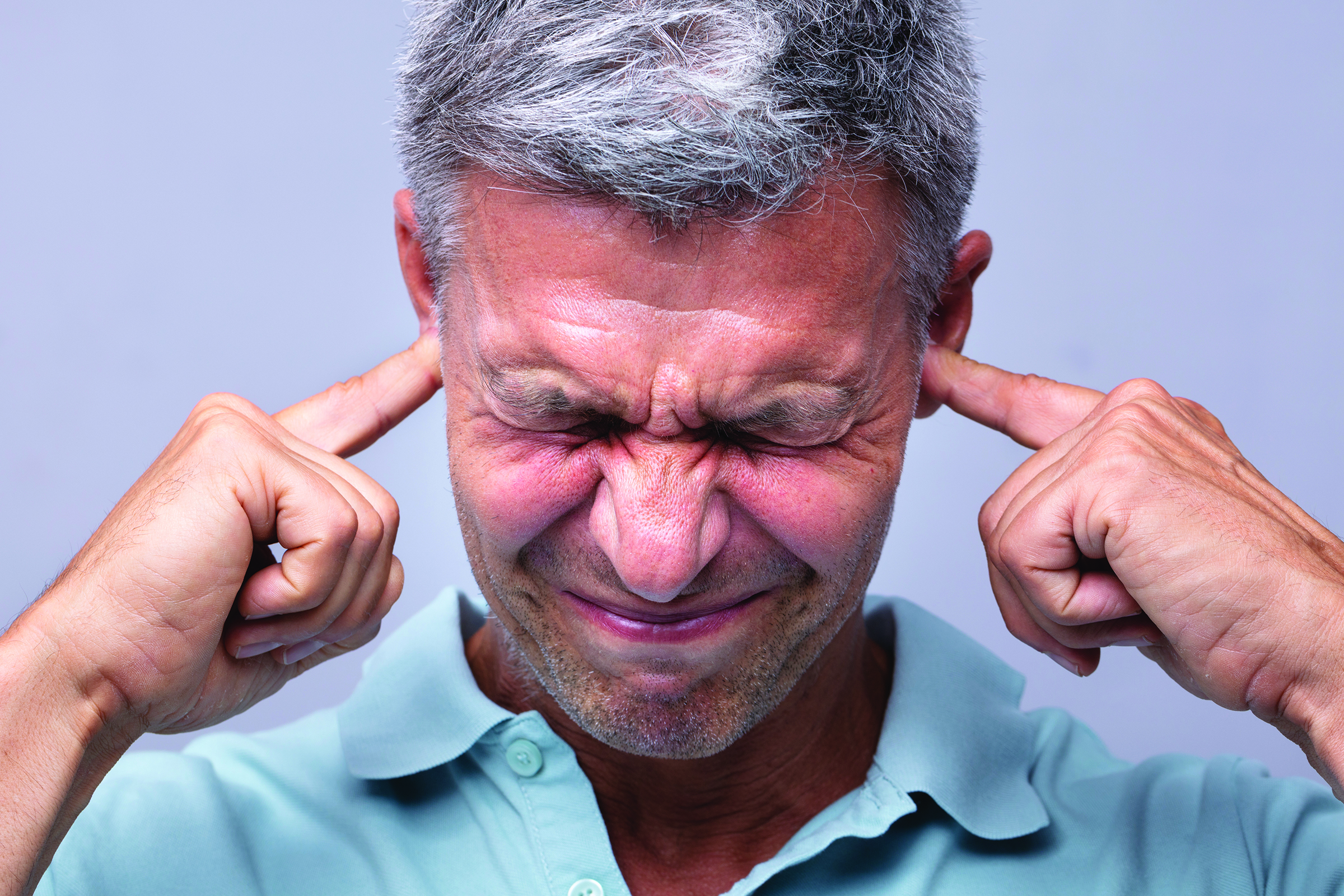
Megan Johnson, Au.D. and owner of Johnson Audiology, a Chattanooga-based private audiology practice, said, “Tinnitus is experienced by people in different ways. For some, tinnitus manifests itself as a ringing sound, while others experience tinnitus as a hissing, buzzing, roaring, chirping or humming. I’ve even had patients report that their tinnitus sounds like music playing directly in their ears.”
Many with tinnitus are surprised to learn that the sound they are hearing is not actually originating from the outside environment and, therefore, is not audible to anyone around them.* In a manner of speaking, tinnitus is “all in your head.” Please understand, however, that is not meant to imply that a person’s tinnitus is not “real.” It is, indeed, a very real sensation being experienced by the person with tinnitus. But why does the brain create this sound?
In 90% of cases, tinnitus is accompanied by some degree of hearing loss, even if the hearing loss is so mild as to not create significant communication difficulties. Hearing loss can happen for various reasons, but most common is exposure to various types and degrees of loud noise, even if the sounds are not constant or frequent. Think of the last time you mowed the grass or used the vacuum cleaner without wearing ear plugs. Have you attended a sporting event surrounded by screaming fans? Have you been to a rock concert? Have you fired a gun? Do you work in a factory or other loud environment? Over the course of a lifetime, extended or repeated exposure to sounds at or above 85 decibels (approximately the level of a vacuum cleaner) can cause permanent damage to a person’s hearing. The damage can be in the high frequency range of hearing, the low frequencies and/or anywhere in between. The pitch of a person’s tinnitus usually tends to be in the same frequency where there is the most hearing loss. If, for instance, a person has a high-frequency hearing loss, it is likely the person experiences their tinnitus as a sharp, high-pitched sound. That is because as the brain “searches” for sounds in that frequency and comes up empty-handed because of the hearing loss, the brain fills in the void with the ringing, buzzing, or chirping sounds. Noteworthy is that a single exposure to a sudden extremely loud noise also can cause tinnitus.
While hearing loss is thought to be the reason that most experience tinnitus, other catalysts also exist. These include sinus congestion; barometric trauma; obstructions in the ear canal; temporomandibular joint disorder, or TMJ; head or neck trauma; traumatic brain injury; some prescription and over-the-counter medications; metabolic disorders like hyperthyroidism; autoimmune disorders, such as fibromyalgia; high blood pressure; and psychiatric disorders like anxiety and depression. Tinnitus is more common in men, Caucasians, seniors, and those with significant noise exposure, such as veterans, factory workers, musicians, and hunters.