

Thursday, October 29, 2026Oct 29

This story is free to read.

Cooper: The suffering for suffrage

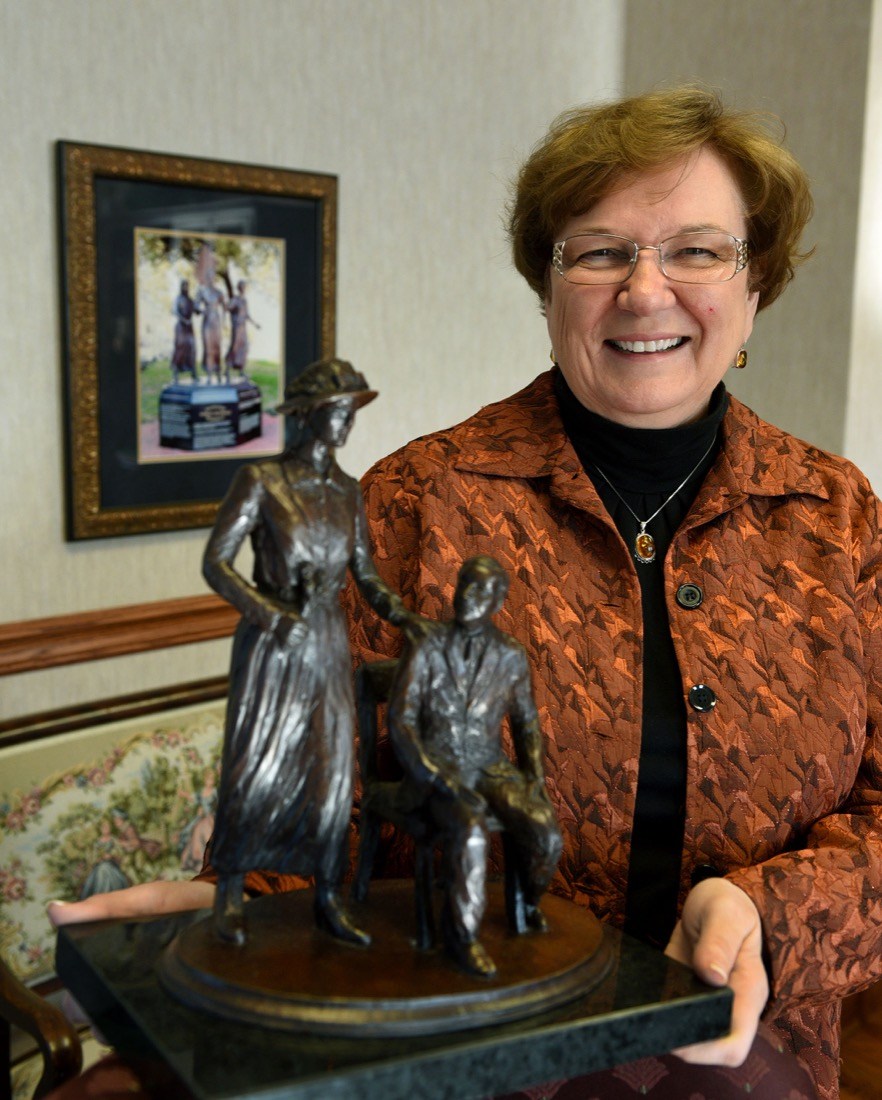
Wanda Sobieski holds a model of the Burn Memorial that was erected at Clinch Avenue and Market Square in Knoxville to honor women's suffrage state tiebreaker Rep. Harry T. Burn and his mother, who had urged him to vote for suffrage in 1920. (Photo By Knoxville News Sentinel)
Wanda Sobieski holds a model of the Burn Memorial that was erected at Clinch Avenue and Market Square in Knoxville to honor women's suffrage state tiebreaker Rep. Harry T. Burn and his mother, who had urged him to vote for suffrage in 1920. (Photo By Knoxville News Sentinel) Wanda Sobieski holds a model of the Burn Memorial that was erected at Clinch Avenue and Market Square in Knoxville to honor women's suffrage state tiebreaker Rep. Harry T. Burn and his mother, who had urged him to vote for suffrage in 1920. (Photo By Knoxville News Sentinel)

If you heard that last week marked the 100th anniversary of women getting the right to vote in the United States, you heard incomplete information.

Indeed, a constitutional amendment resolution to that effect 44 years in the making was passed by the U.S. Senate on June 4, 1919, but three-fourths of the 48 state legislatures still had to ratify the amendment.

More on the ratification effort in a moment.

Officially, the Senate passed the resolution 56-25, getting two more votes than necessary. The U.S. House had passed the bill roughly two weeks earlier 304-89. President Woodrow Wilson’s signature was said to be unnecessary but was expected.

The resolution had been drafted by Susan B. Anthony in 1875 and introduced by Sen. Aaron Sargent, R-California, in 1878.