
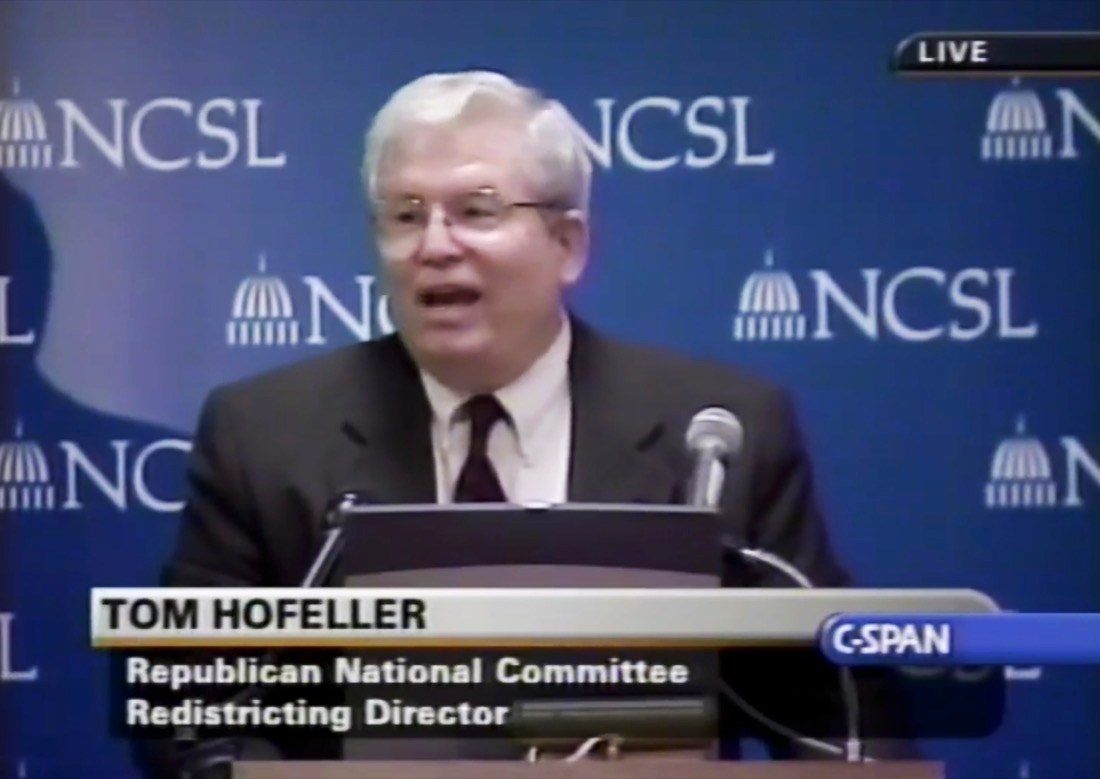
RALEIGH, N.C. (AP) – During his long career drawing legislative maps designed to help Republicans, Tom Hofeller preached about the dangers of leaving digital fingerprints.
As he advised in a 2011 presentation about redistricting strategies: “Make sure your computer is in a PRIVATE location,” and “Don’t walk away from it and leave your work exposed.”
But less than a year after his death, Hofeller’s own electronic records threatened to upend two major legal battles unfolding in the courts.
Opponents of the Trump administration’s plan to include a citizenship question on the 2020 U.S. census say records found on a hard drive in Hofeller’s home unmask partisan intent, including language nearly identical to the Justice Department’s justification for the question: aiding enforcement of the Voting Rights Act. The U.S. Supreme Court ruled Thursday that the rationale seemed contrived and sent the case back to a lower court in New York.
Hofeller’s records also prompted a new court filing in North Carolina redistricting litigation , suggesting Republicans lied about how long drawing new maps would take.