
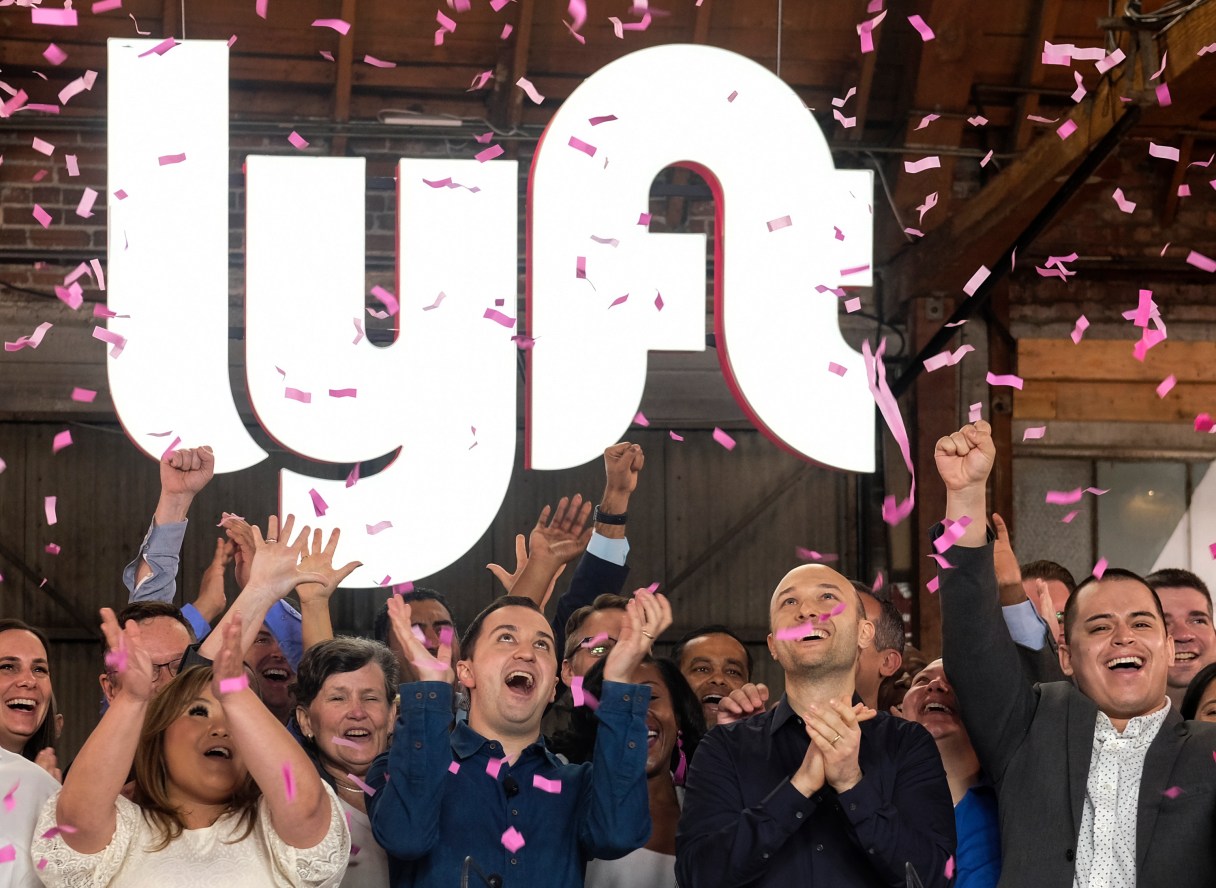
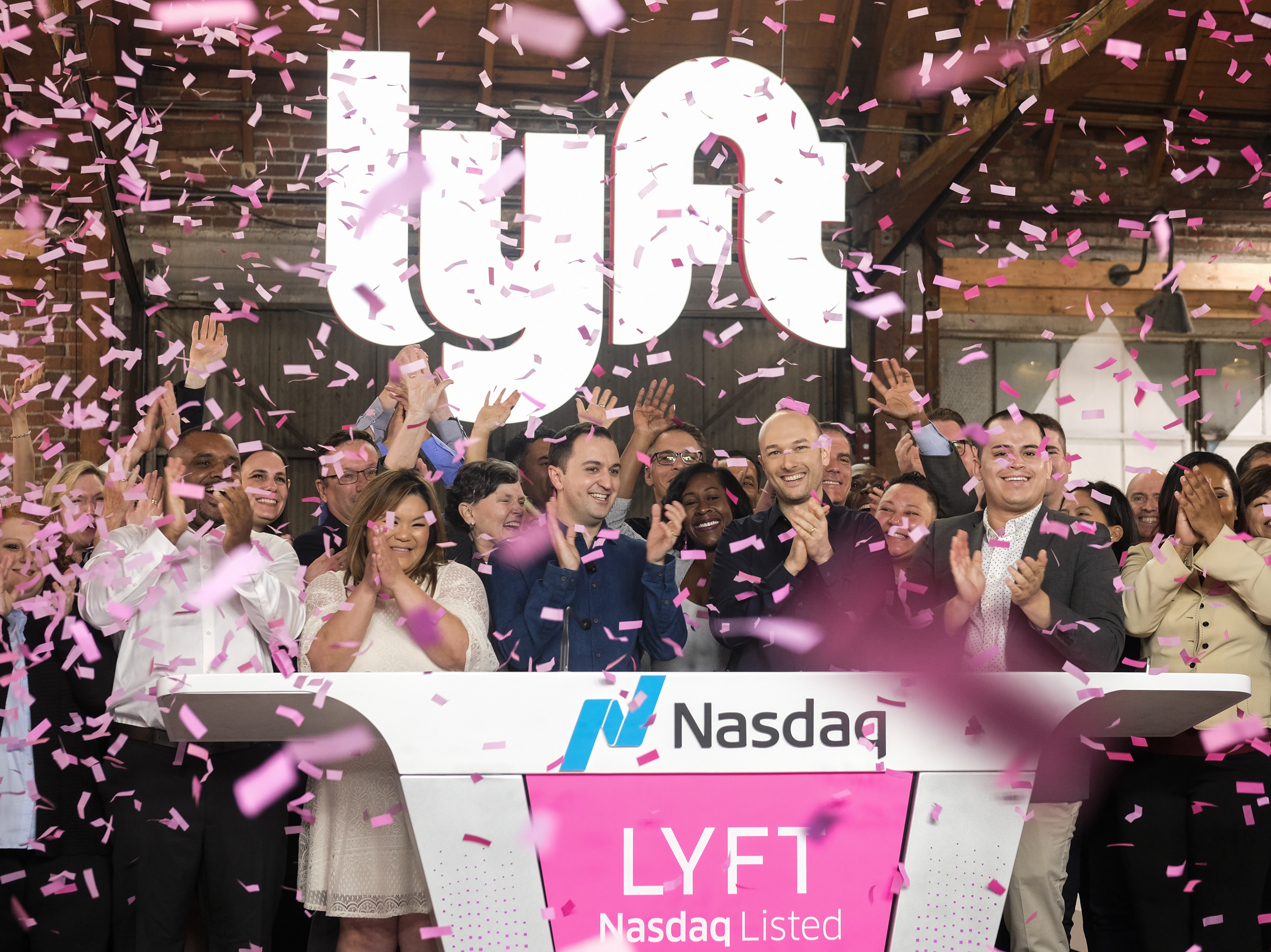
 Lyft co-founders John Zimmer, front third from left, and Logan Green, front third from right, cheer as they as they ring a ceremonial opening bell in Los Angeles, Friday, March 29, 2019. On Friday the San Francisco company’s stock will begin trading on the Nasdaq exchange under the ticker symbol “LYFT.” (AP Photo/Ringo H.W. Chiu)
Lyft’s shares soared as the company went public Friday, giving investors their first chance to bet on the future of the ride-hailing industry.
The stock opened at $87.24, up 21 percent from its offering price of $72. It closed at $78.29, up 8.7 percent, giving the company a $27 billion valuation.
Investors embraced Lyft despite an uninterrupted history of losses totaling nearly $3 billion since its 2012 inception on the premise that its growing popularity will pay off in the long run. The company has lured new riders and taken market share from Uber – and now it’s beaten its larger rival in the race to sell shares to the public.
Still, Lyft’s path to profitability is uncertain, and it’s under pressure to keep prices low as it competes for customers with Uber and traditional taxi companies. Both Uber and Lyft are relying on the eventual deployment of autonomous vehicles to help them reduce the cost of paying drivers, although deployment on a large scale could be many years away.
The IPO represents a watershed moment for ride hailing, an industry hatched from the rise of smartphones. Now that both Lyft and Uber have made it easy to summon a ride on a mobile app, more people are already starting to wonder if owning their own cars will make sense in the future.