
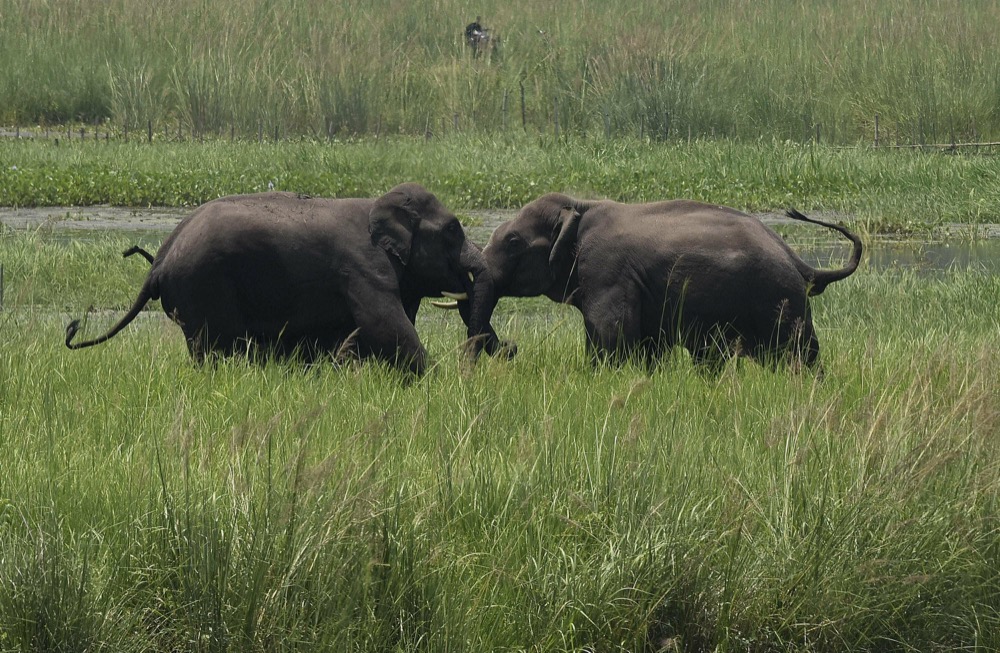
 FILE – In this June 7, 2017, file photo, two wild elephants, part of a herd that arrived at a wetland near the Thakurkuchi railway station engage in a tussle on the outskirts of Gauhati, Assam, India. Development that s led to loss of habitat, climate change, overfishing, pollution and invasive species is causing a biodiversity crisis, scientists say in a new United Nations science report released Monday, May 6, 2019. (AP Photo/ Anupam Nath, File)
People are putting nature in more trouble now than at any other time in human history, with extinction looming over 1 million species of plants and animals, scientists said Monday.
But it’s not too late to fix the problem, according to the United Nations’ first comprehensive report on biodiversity.
“We have reconfigured dramatically life on the planet,” report co-chairman Eduardo Brondizio of Indiana University said at a press conference.
Species loss is accelerating to a rate tens or hundreds of times faster than in the past, the report said. More than half a million species on land “have insufficient habitat for long-term survival” and are likely to go extinct, many within decades, unless their habitats are restored. The oceans are not any better off.
“Humanity unwittingly is attempting to throttle the living planet and humanity’s own future,” said George Mason University biologist Thomas Lovejoy, who has been called the godfather of biodiversity for his research. He was not part of the report.