
“I have seen the future, and it works,” the left-wing journalist Lincoln Steffens famously declared, after observing Bolshevik Russia in its infancy. What was intended as a utopian boast soon read as a dystopian prediction – but then eventually, as Stalinist ambition gave way to Brezhnevian decay, it curdled into a sour sort of joke. By the time the Soviet Union dissolved, even the people inclined to defend the “ideals” of Marxism tended to acknowledge that as a system for managing an advanced economy and running an effective government, the one thing Soviet communism definitely didn’t do was work.
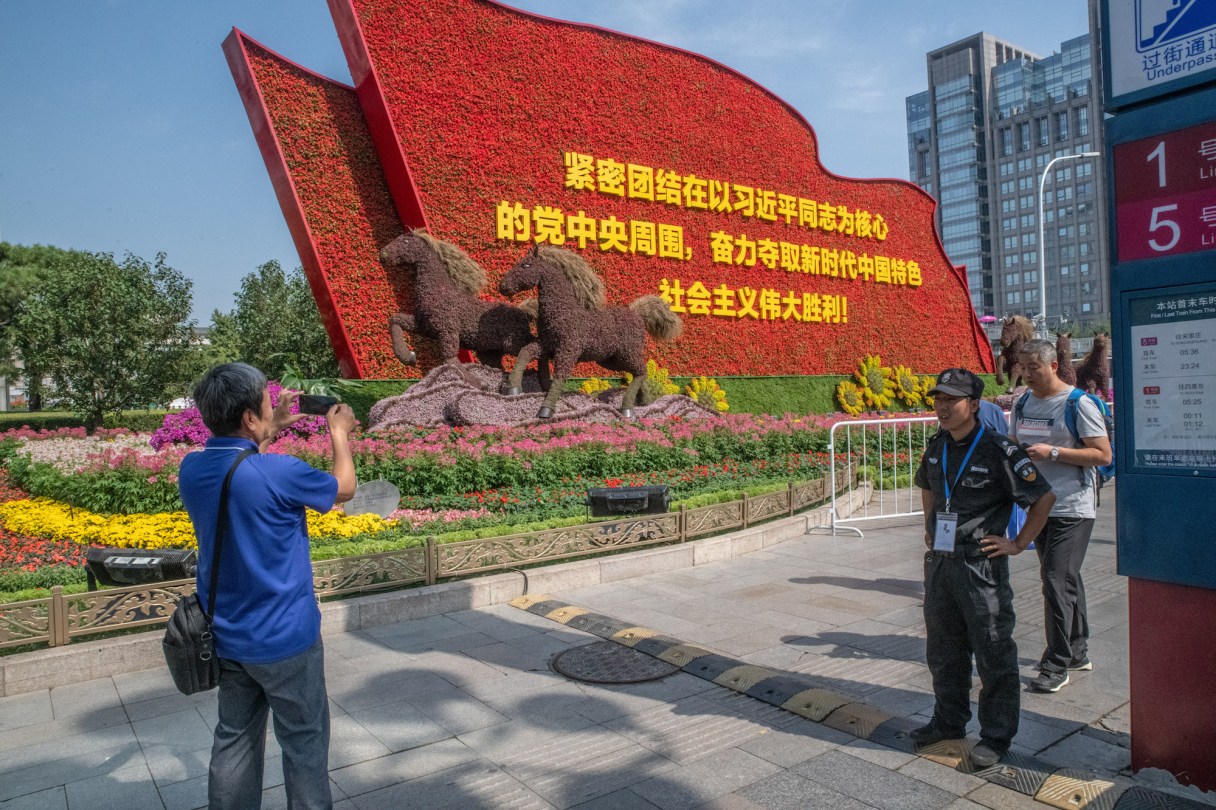
Today, though, there is a palpable fear in the liberal West that Beijing is succeeding where Moscow failed, and that the peculiar blend of Maoist dogmatics, nationalist fervor, one-party meritocracy and surveillance-state capitalism practiced in the People’s Republic of China really is a working alternative to liberal democracy – with cruelty sustained by efficiency, and a resilience that might outstrip our own.
This fear is stoked by a growing realization that the “Chimerica” project, our great integration of markets and supply chains, has had roughly the opposite effect to the one its U.S. architects anticipated. Instead of importing liberal ideas into China and undermining the Politburo’s rule, the Chimerican age has strengthened Beijing’s policy of social control and imported totalitarian influences into the officially free world.
A crucial mechanism for both trends is the internet, once hailed as a great liberator and now revealed as something rather different – a machine that induces its users to trade privacy for entertainment and distraction, and a panopticon whose global expanse exposes anyone who wants to do business in China to the manufactured consensus of Chinese nationalism.
China’s influence within U.S. industry is evident well beyond the online realm, of course. But its successful censorship of U.S. businesses generally involves websites, app stores, social media. It’s not a coincidence that the National Basketball Association’s supine behavior toward China – from what is supposedly the most progressive and politically engagé of the American professional sports leagues – followed from a general manager fleetingly expressing support for the Hong Kong protesters on Twitter. Likewise when China induced Marriott to fire a luckless $14-an-hour worker recently, it was for seeming to endorse Tibetan independence by “favoriting” a tweet. Having figured out how to tame their internet, the Chinese are intent on using commercial power to tame ours.