
Thursday, October 29, 2026Oct 29

This story is free to read.

Loftin: Candidates should clarify core principles in next debate

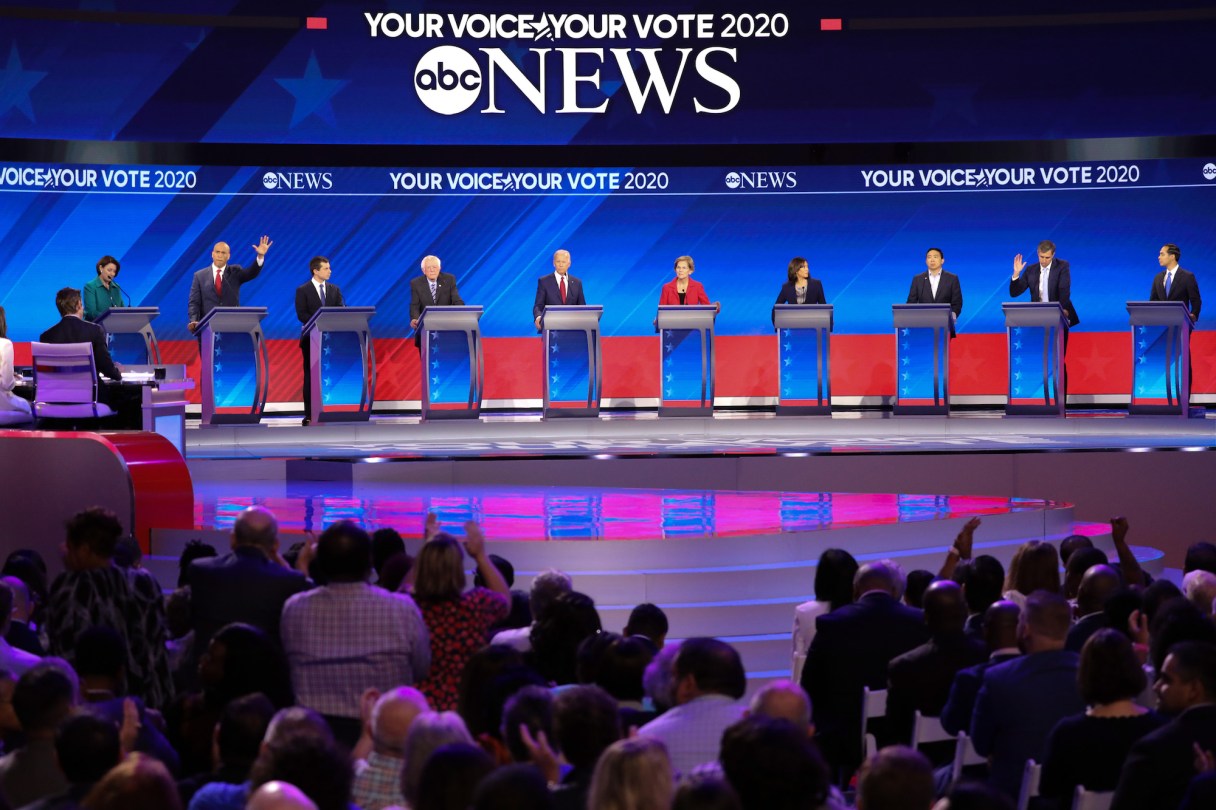
Photo by Ruth Fremson of The New York Times/Candidates for the Democratic nomination for president debate at Texas Southern University in Houston on Sept. 12. From left: Sen. Amy Klobuchar, D-Minnesota; Sen. Cory Booker, D-New Jersey; Mayor Pete Buttigieg of South Bend, Indiana; Sen. Bernie Sanders, I-Vermont; former Vice President Joe Biden; Sen. Elizabeth Warren, D-Massachusetts; Sen. Kamala Harris, D-California; the entrepreneur Andrew Yang; former Rep. Beto O'Rourke of Texas; and former Housing Secretary Julian Castro.
Photo by Ruth Fremson of The New York Times/Candidates for the Democratic nomination for president debate at Texas Southern University in Houston on Sept. 12. From left: Sen. Amy Klobuchar, D-Minnesota; Sen. Cory Booker, D-New Jersey; Mayor Pete Buttigieg of South Bend, Indiana; Sen. Bernie Sanders, I-Vermont; former Vice President Joe Biden; Sen. Elizabeth Warren, D-Massachusetts; Sen. Kamala Harris, D-California; the entrepreneur Andrew Yang; former Rep. Beto O'Rourke of Texas; and former Housing Secretary Julian Castro. Photo by Ruth Fremson of The New York Times/Candidates for the Democratic nomination for president debate at Texas Southern University in Houston on Sept. 12. From left: Sen. Amy Klobuchar, D-Minnesota; Sen. Cory Booker, D-New Jersey; Mayor Pete Buttigieg of South Bend, Indiana; Sen. Bernie Sanders, I-Vermont; former Vice President Joe Biden; Sen. Elizabeth Warren, D-Massachusetts; Sen. Kamala Harris, D-California; the entrepreneur Andrew Yang; former Rep. Beto O'Rourke of Texas; and former Housing Secretary Julian Castro.

Before the last Democratic debate in November, party leaders will tighten the polling and fundraising criteria that candidates must meet to extend their participation. The political Grim Reaper will then eliminate more of the original aspirants.

The debates so far have allowed only bite-sized vote pitches. But in the next one, it would be helpful if candidates focused less on the minutiae of various proposals and more on the core principles upon which they would rely to provide the leadership that America needs and the presidency demands.

Previous presidents’ ability to lead were tested by issues that, in retrospect, were far less serious than what we can expect. The next president will take office at a time when the nation seems adrift in the midst of uncertainty. For the first time in our history American democracy is at risk of cyber and social media attacks more sophisticated than in 2016.

That being the case, we need assurances of how the president proposes to confront those dangers, thereby ensuring America’s survival and its mission in a hostile world.

Given the opportunity, I would urge the candidates to read a valuable new book, “Leadership in Turbulent Times,” in which historian Doris Kearns Goodwin describes four men whose presidencies enabled the United States to survive terrible circumstances while simultaneously strengthening its system of government.