
(Editor’s note: Fourth in a series)
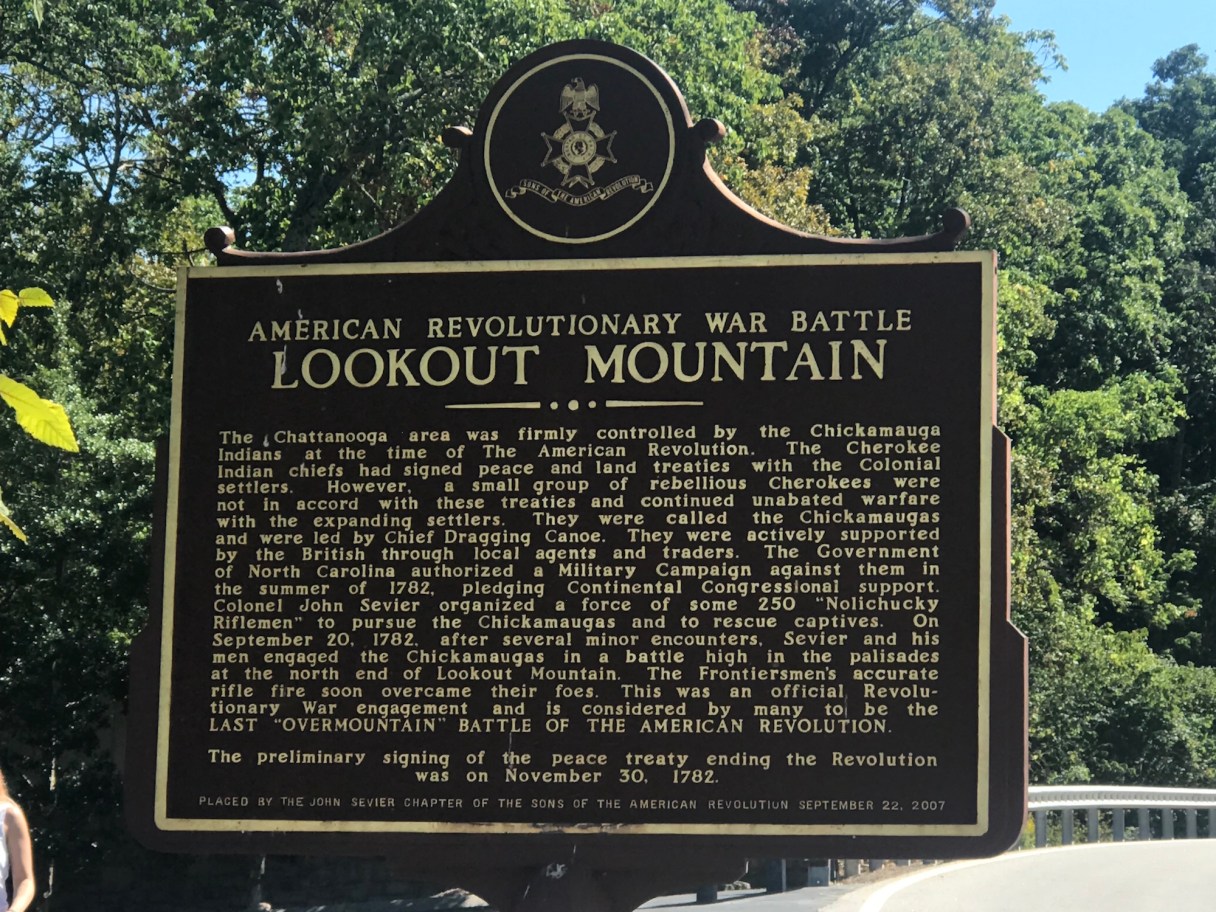
Dr. James Livingood, UTC historian, discussed the last battle of the American Revolution in excerpts from his “Chattanooga, An Illustrated History”:
“Militiamen assembled in upper East Tennessee; no draft was needed as volunteers took up the cause. On April 10, 1779, they embarked in boats on the Tennessee River – there may have been 900 men in the area’s first naval operation. In the valley of South Chickamauga Creek they put the torch to 11 [Indian] villages, destroyed the spring crops, rounded up horses, and carried off booty from John McDonald’s stand. One part of the army continued on down the Tennessee River to join George Rogers Clark in his dramatic campaign in the Old Northwest.
“[Col. Evan] Shelby’s scorched-earth policy had little permanent effect; the Chickamaugas’ manpower losses were slight and crops were replanted. Dragging Canoe, however, correctly assessed the result. His villages lay exposed to attack. In a second trek, the Chickamaugas in large number moved around the base of Chatanuga Mountain (Lookout) into the river canyon and beyond. Some rebuilt the older towns; but under the protection of the mountains where the river’s troubled waters helped maintain control, the warriors established new villages collectively known as the Five Lower Towns – Running Water, Nickajack, Long Island, Lookout Mountain, and Crow towns. Their rear guard offensive in the Revolution was far from over; John McDonald moved with the Canoe, and the flow of war supplies from Florida still passed through the area’s southern gateway.
“Shelby’s punitive expedition had little effect on the use of the stream. Within the year, Chickamauga braves sighted a large flotilla of flatboats moving downstream. Ignoring the wartime hazards, the settlement party sailed with a large crowd of women and children toward new homes on the exposed Cumberland River frontier. They chose the treacherous unknown currents of the river and the wrath of marauding Indians rather than the overland route from East Tennessee, which most of the men had taken earlier with their livestock. The Adventure, an appropriately named craft with John Donelson as master, served as flagship; it carried among others the skipper’s family, including young daughter Rachel, who later became the wife of Andrew Jackson.