
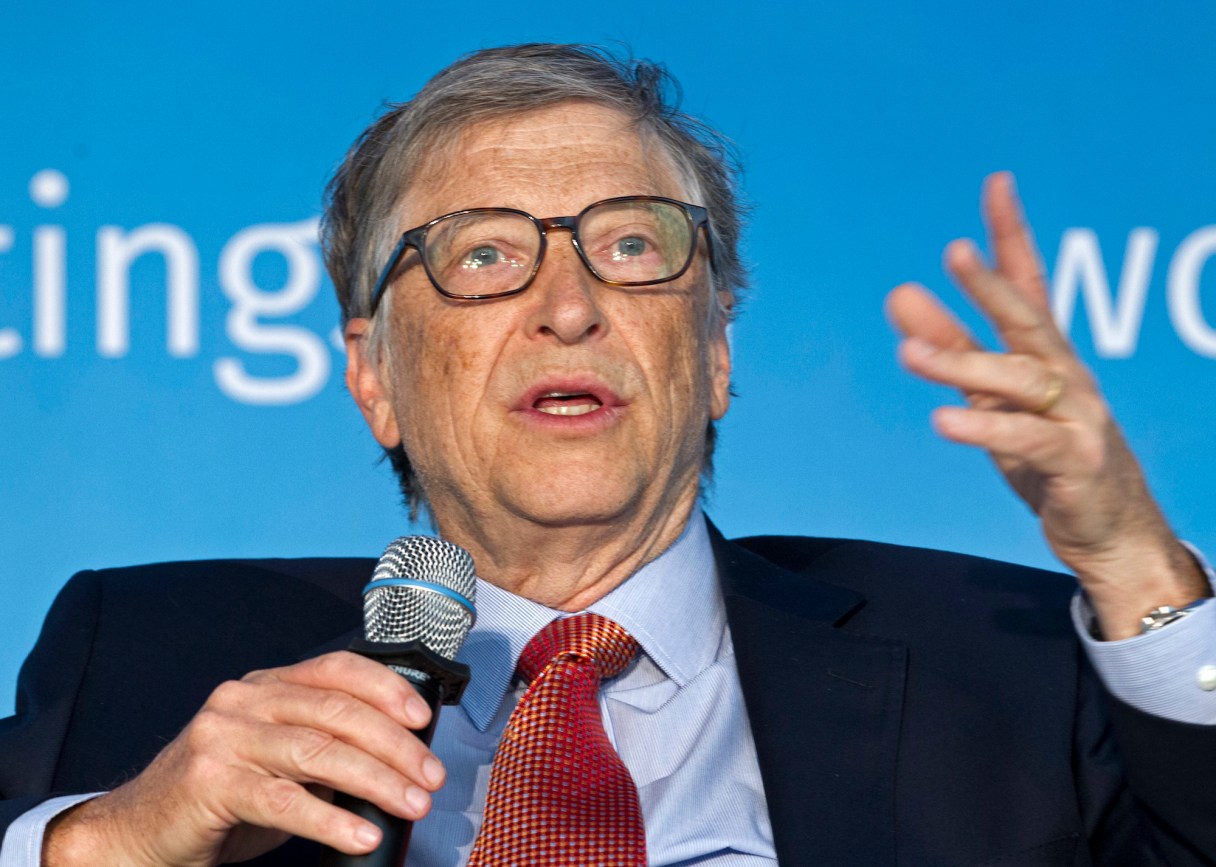
As millions of jobless Americans line up for food or risk their lives delivering essential services, the nation’s billionaires are making conspicuous donations – $100 million from Amazon’s Jeff Bezos for food banks, billions from Microsoft co-founder Bill Gates for a coronavirus vaccine, thousands of ventilators and N95 masks from Tesla’s Elon Musk, $25 million from the Walton family and its Walmart Foundation. The list goes on.
I don’t mean to be uncharitable, but much of this is self-serving rubbish.
First off, the amounts involved are tiny relative to the fortunes behind them. Bezos’ $100 million amounts to about 11 days of his income.
The well-publicized philanthropy also conveniently distracts attention from how several of these billionaires are endangering their workers and, by extension, the public.
With online sales surging, Amazon is on a hiring binge. But Bezos still doesn’t provide paid sick leave for Amazon workers unless they test positive for COVID-19, in which case they get just two weeks.
Walmart’s booming sales have caused it to hire more than 100,000 additional workers over the past three weeks. But the firm failed to implement social distancing for two weeks after the CDC announced guidelines on March 16. Two workers have since died.
Musk initially dismissed sheltering as “dumb” and initially defied a sheriff’s order to shelter in place by keeping Tesla’s Fremont, California, factory open, telling employees the factory was an “essential” business.
Conspicuous philanthropy during the pandemic also suggests that government shouldn’t demand more from the super-rich, even in such a national emergency. As Rupert Murdoch’s Wall Street Journal put it in an op-ed piece, if we had a wealth tax like Elizabeth Warren proposed “it’s unlikely (Bill Gates would) have the capacity to act this boldly.”
That’s absurd. Warren’s tax would have cost Gates about $6 billion of his roughly $100 billion fortune.
Besides, all the billionaire charity combined is a tiny fraction of the trillions the government has already spent on the coronavirus crisis. How does the Wall Street Journal believe we’re going to pay down this added national debt if the wealthiest among us don’t pay more taxes? Even when this nightmare is over, most other Americans will be hard-pressed.
And why should we believe that Gates’ or any other billionaires’ “boldness” necessarily reflects society’s values and needs, anyway? Oligarchies aren’t the same as democracies.
The worst fear of the billionaire class is that the government’s response to the pandemic will lead to a permanently larger social safety net.
“Once the virus is conquered – and it will be – the biggest risk will be the political campaign to expand government control over far more of American economic life,” the Wall Street Journal warned.
After all, the Great Depression of the 1930s spawned Social Security and the minimum wage, as well as a widespread conviction that government should guarantee a minimum standard of living. World War II yielded the GI Bill and later the National Defense Education Act, enshrining the government’s role as a financier of higher education.
Even programs that don’t enjoy wide popularity when first introduced, such as the Affordable Care Act, enlarge the nation’s sense of what is reasonable for the government to do for its citizens.
If the pandemic has revealed anything, it’s that America’s current social safety net and health care system does not protect the majority of Americans in a national emergency. We are the outlier among the world’s advanced nations in subjecting our citizens to perpetual insecurity.
We are also the outlier in possessing a billionaire class that, in controlling much of our politics, has kept such proposals off the public agenda.
At least until now.
Tribune Content Agency