
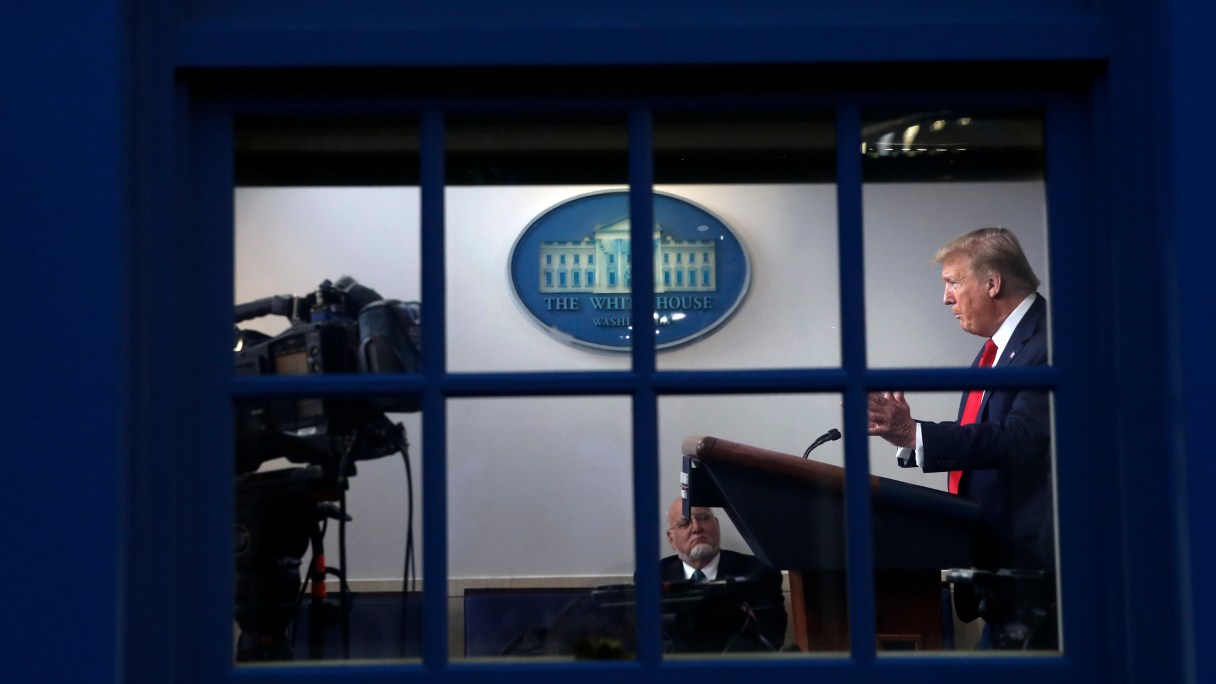
WASHINGTON (AP) – Laura Herd says she sleeps better because her state’s governor, Michigan Democrat Gretchen Whitmer, imposed one of the nation’s strictest stay-at-home orders to combat the coronavirus pandemic. President Donald Trump’s actions are another story.
“His goal is to get the economy back up so he stands a chance in November,” said Herd, 36, of Traverse City, Michigan, who works for an environmental news service. “But he’s not willing to listen to the experts about what that really means.”
Herd’s skepticism about Trump’s desire to push the country back toward normal isn’t uncommon, especially among her fellow Democrats and many independents. That’s prompting concern by public health professionals that voters will use a partisan lens to decide which policymakers they heed as communities consider easing restrictions that have smothered normal life – a potentially dangerous dynamic.
“I’m not sure if it’s partisan or ideological, but there’s clearly a divide,” said Mike Leavitt, a Republican former Utah governor and secretary of health under President George W. Bush. “I think it will clearly be a filter through which people read” officials’ guidance.
Trump has wanted states to relax restrictions by May 1 and has inaccurately claimed “total” authority to decree how that happens. He retreated Thursday as the White House issued vague guidelines for gradually returning to normal activities that left final decisions to the states.