

Every family in America is probably blessed with some members who are taking the Centers for Disease Control and Prevention guidelines for COVID-19 very seriously and some members who are taking them with a grain of salt. And those on opposing sides of the fence are looking down their nose at the others, wondering when they are going to wake up and realize their perspective is the correct one.
There is certainly no shortage of information out there. From the mainstream news, to opinion papers, talk shows, Dr. Fauci, the CDC and of course we can’t forget social media, it’s almost like information overload. And who you choose to listen to often determines your behavior.
Whether you are practicing social distancing with a level of intensity or think it’s a massive overreaction, one thing’s for sure: How you engage the ones you love around this issue will impact your relationship long after COVID-19 is no longer a concern.
At some point, many have come to the conclusion that it’s going to be complicated doing life together if you cannot agree on this issue. There is some degree of truth in that, but when have all members of a family ever seen everything exactly the same way?
We can spend our time arguing about who’s right and who’s wrong, which is unlikely to have a productive outcome, or we can figure out how to move forward while having differing points of view.
At the core of what many are dealing with is fear: Fear of getting the virus because people around you are not social distancing or following CDC guidelines. Fear of infecting someone else. Fear of doing the wrong thing. Fear of the government taking your rights away. Fear of losing a business. Fear of economic collapse. And the list goes on.
So what do you do?
If you have family members you believe are not handling things the way they need to, you can choose to have a conversation with them. How you approach them really matters. If you are judgmental and condescending, it’s likely that the conversation won’t go well. It’s probably a given that you feel strongly about your beliefs and you want those you love to get with the program, but the reality is, they may never be on the same page with you.
Case in point: your aging parents who don’t want you telling them what to do or, at the opposite end of the spectrum, your college student who also does not want you telling them what to do.
If all of you are living under the same roof, have a family meeting about how the entire family will work as a team to keep every member of the household safe. You don’t all have to agree. In fact, you may have to agree to disagree, yet all find a way to do what is best for the greater good.
Acknowledge what you have control over. If your parents are living hours away from you, what they do is beyond your control. You can make recommendations, but at the end of the day, they are going to do what they want to do. Can you love them anyway?
One thing that is within your control is your attitude. You can walk around angry all day because people are responding in a way you believe is irresponsible, or you can do what you need to do to keep yourself safe and not seek to be responsible for other people’s behavior.
For example, you are trying to keep your family healthy and safe and your neighbors decide to have a party for 50 people in their front yard. You could choose to be confrontational with them, but the only thing that is likely to accomplish is more angst on your part. It’s pretty likely that everybody is feeling a fair amount of tension, so why create more? Going on a walk away from the party, heading to the backyard to play or staying inside might actually help decrease your anxiety.
Be careful about being quick to judge. Things may not always be as they appear. Someone leaving the grocery store with a lot of toilet paper, paper towels and other items at first glance could be seen as hoarding much-needed supplies. In reality, the person may be shopping for several older people in their neighborhood.
At the end of the day, respect really matters. Even though you may have differing perspectives on the coronavirus, being able to share, listen and seek to understand each other’s views goes a long way toward maintaining a healthy relationship over the long term.
It is our differences that make this world a rich place. Instead of spending your time trying to convince someone else that your way is the only way, treat them with the same respect you would like to receive. At the end of the day, although you may not see eye-to-eye, disagreement doesn’t have to damage or destroy your closest relationships.
Julie Baumgardner is president and CEO of family advocacy nonprofit First Things First. Email her at julieb@firstthings.org.
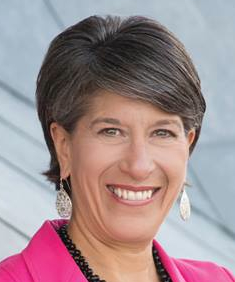 Julie Baumgardner