
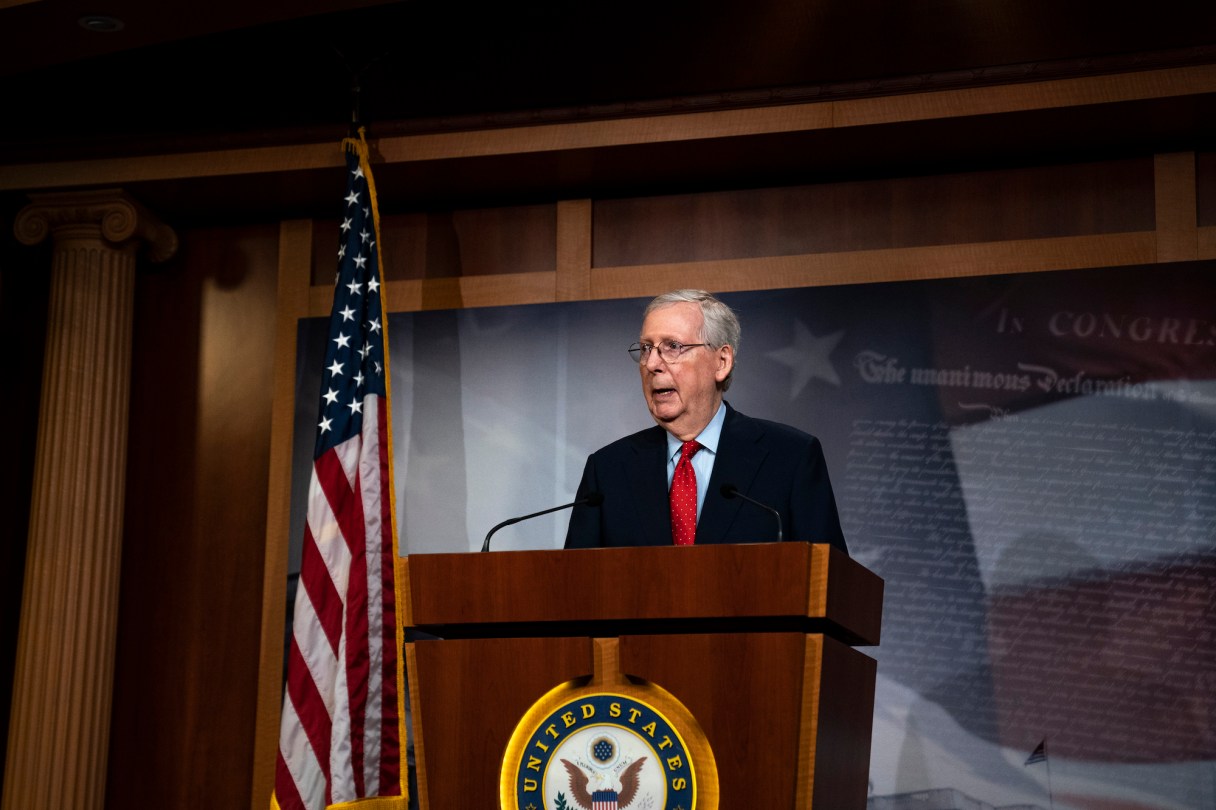
As negotiations over the next coronavirus relief package heat up, a key point of contention – perhaps the key point – is whether Congress will provide meaningful aid to struggling state and local governments.
Boiling down the politics: Democratic lawmakers favor the move. Many Republicans, including the Senate majority leader, Mitch McConnell, do not. Some in the Trump administration have suggested that withholding aid is a great way to pressure states to reopen sooner rather than later. This is both cynical and destructive. Denying states a financial lifeline, even as Washington is showering trillions of dollars on the private sector, will only exacerbate the economic devastation that Congress is trying to mitigate.
The situation is dire. The Center on Budget and Policy Priorities estimates that states could suffer a collective shortfall of $500 billion through the 2022 fiscal year. Tapping rainy-day funds and using the targeted federal aid already appropriated would still leave a $360 billion gap, the center warns, “not including the substantial new costs they face to combat the COVID-19 virus.” Local, state and territorial governments face their own funding crunches. As tax revenues plunge, costs are expected to skyrocket as layoffs and pay cuts drive more people to apply for food stamps, Medicaid and other public assistance.
The nation’s governors have petitioned Congress for $500 billion in direct funding to help address lost revenue. Without this aid, the states – which, unlike the federal government, cannot run budget deficits – will have to start slashing costs. Read: services. Read also: jobs. Lots of public-sector jobs.
As a result of the financial crisis of 2008, state and local governments shed an estimated 585,000 jobs. This time around, the pain is expected to be even more pronounced. Teachers, law enforcement officers, bus drivers and legions of others stand to get hit. In addition, the nation’s nonprofit sector, which accounts for around 10% of private employment, relies heavily on government grants and contracts.