
Tuesday, November 10, 2026Nov 10

Early in coronavirus pandemic, frantic doctors traded tips across oceans

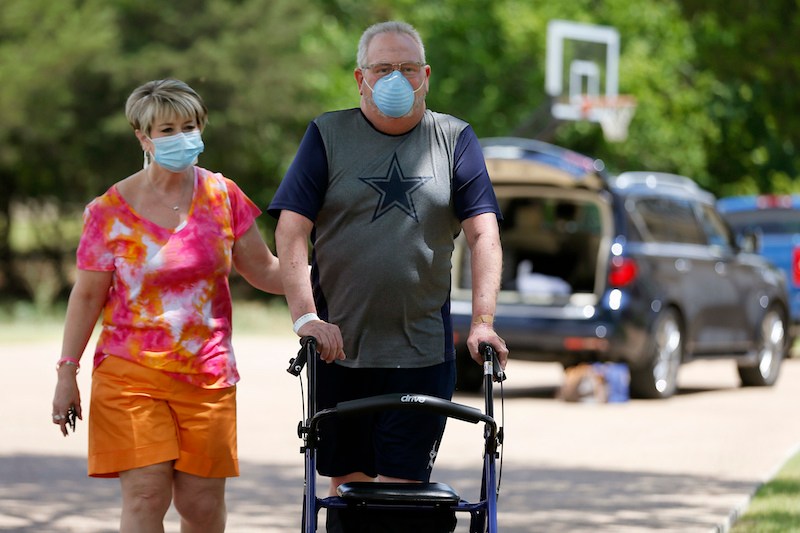
Terri Donelson, left, and her husband, Stephen, walk up their driveway to see friends and family awaiting him at his home in Midlothian, Texas on Friday, June 19, 2020, after his 90-day stay in the Zale Hospital on the UT Southwestern Campus. Donelson's family hadn't left the house in two weeks after COVID-19 started spreading in Texas, hoping to shield the organ transplant recipient. Yet one night, his wife found him barely breathing, his skin turning blue, and called 911. (AP Photo/Tony Gutierrez)
Terri Donelson, left, and her husband, Stephen, walk up their driveway to see friends and family awaiting him at his home in Midlothian, Texas on Friday, June 19, 2020, after his 90-day stay in the Zale Hospital on the UT Southwestern Campus. Donelson's family hadn't left the house in two weeks after COVID-19 started spreading in Texas, hoping to shield the organ transplant recipient. Yet one night, his wife found him barely breathing, his skin turning blue, and called 911. (AP Photo/Tony Gutierrez) Terri Donelson, left, and her husband, Stephen, walk up their driveway to see friends and family awaiting him at his home in Midlothian, Texas on Friday, June 19, 2020, after his 90-day stay in the Zale Hospital on the UT Southwestern Campus. Donelson's family hadn't left the house in two weeks after COVID-19 started spreading in Texas, hoping to shield the organ transplant recipient. Yet one night, his wife found him barely breathing, his skin turning blue, and called 911. (AP Photo/Tony Gutierrez)

Amid the chaos of the pandemic’s early days, doctors who faced the first coronavirus onslaught reached across oceans and language barriers in an unprecedented effort to advise colleagues trying to save lives in the dark.

With no playbook to follow and no time to wait for research, YouTube videos describing autopsy findings and X-rays swapped on Twitter and WhatsApp spontaneously filled the gap.

When Stephen Donelson arrived at the University of Texas Southwestern Medical Center in mid-March, Dr. Kristina Goff was among those who turned to what she called “the stories out of other places that were hit before.”

Donelson’s family hadn’t left the house in two weeks after COVID-19 started spreading in Texas, hoping to shield the organ transplant recipient. Yet one night, his wife found him barely breathing, his skin turning blue, and called 911.

In New York or Italy, where hospitals were overflowing, Goff thinks Donelson wouldn’t even have qualified for a then-precious ventilator. But in Dallas, “we pretty much threw everything we could at him,” she said.