
Thursday, October 29, 2026Oct 29

This story is free to read.

BreakPoint: Misremembering the Holocaust through the banality of evil

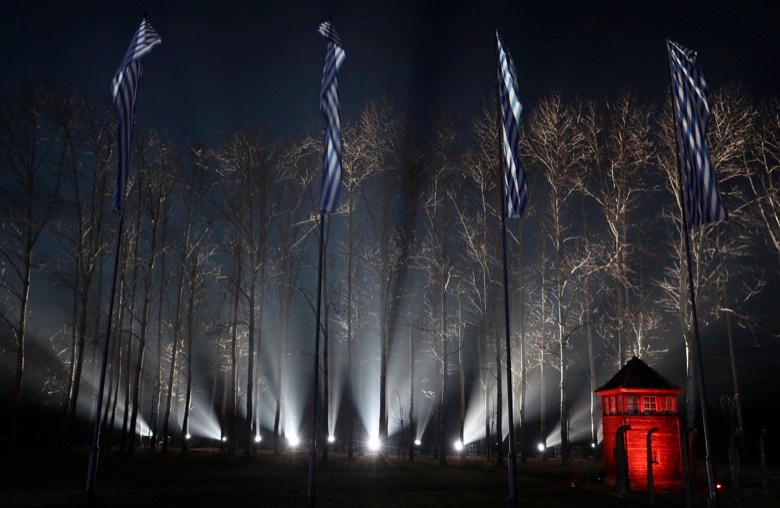
Flags with the stripes of the prison uniforms of Nazi death camps fly at the fence of Birkenau at the Auschwitz Nazi death camp in Oswiecim, Poland, Monday, Jan. 27, 2020. Survivors of the Auschwitz-Birkenau death camp gathered for commemorations marking the 75th anniversary of the Soviet army's liberation of the camp, using the testimony of survivors to warn about the signs of rising anti-Semitism and hatred in the world today. (AP Photo/Czarek Sokolowski)
Flags with the stripes of the prison uniforms of Nazi death camps fly at the fence of Birkenau at the Auschwitz Nazi death camp in Oswiecim, Poland, Monday, Jan. 27, 2020. Survivors of the Auschwitz-Birkenau death camp gathered for commemorations marking the 75th anniversary of the Soviet army's liberation of the camp, using the testimony of survivors to warn about the signs of rising anti-Semitism and hatred in the world today. (AP Photo/Czarek Sokolowski) Flags with the stripes of the prison uniforms of Nazi death camps fly at the fence of Birkenau at the Auschwitz Nazi death camp in Oswiecim, Poland, Monday, Jan. 27, 2020. Survivors of the Auschwitz-Birkenau death camp gathered for commemorations marking the 75th anniversary of the Soviet army's liberation of the camp, using the testimony of survivors to warn about the signs of rising anti-Semitism and hatred in the world today. (AP Photo/Czarek Sokolowski)

On Jan. 24, the 75th anniversary of the liberation of the infamous Nazi death camp known as Auschwitz, the world marked International Holocaust Remembrance Day.

The millions who each year visit Auschwitz, as well as the Holocaust museums in Jerusalem, Washington, D.C., and elsewhere become witnesses to an era of almost unimaginable cruelty.

They, and we, are told to “never forget.” And we shouldn’t. But it is crucial not only that we remember, but how we remember.

Recently, in the online magazine TLS, Nikolaus Wachsmann reflected on the plea of camp victim Zalman Gradowski that future generations would “form an image” of the “hell” of Auschwitz.

“But,” Wachsmann writes, “the Auschwitz of popular imagination often bears little relation to the Auschwitz Gradowski had lived and died in. As a global emblem of evil, the camp has become unmoored from its actuality.”