
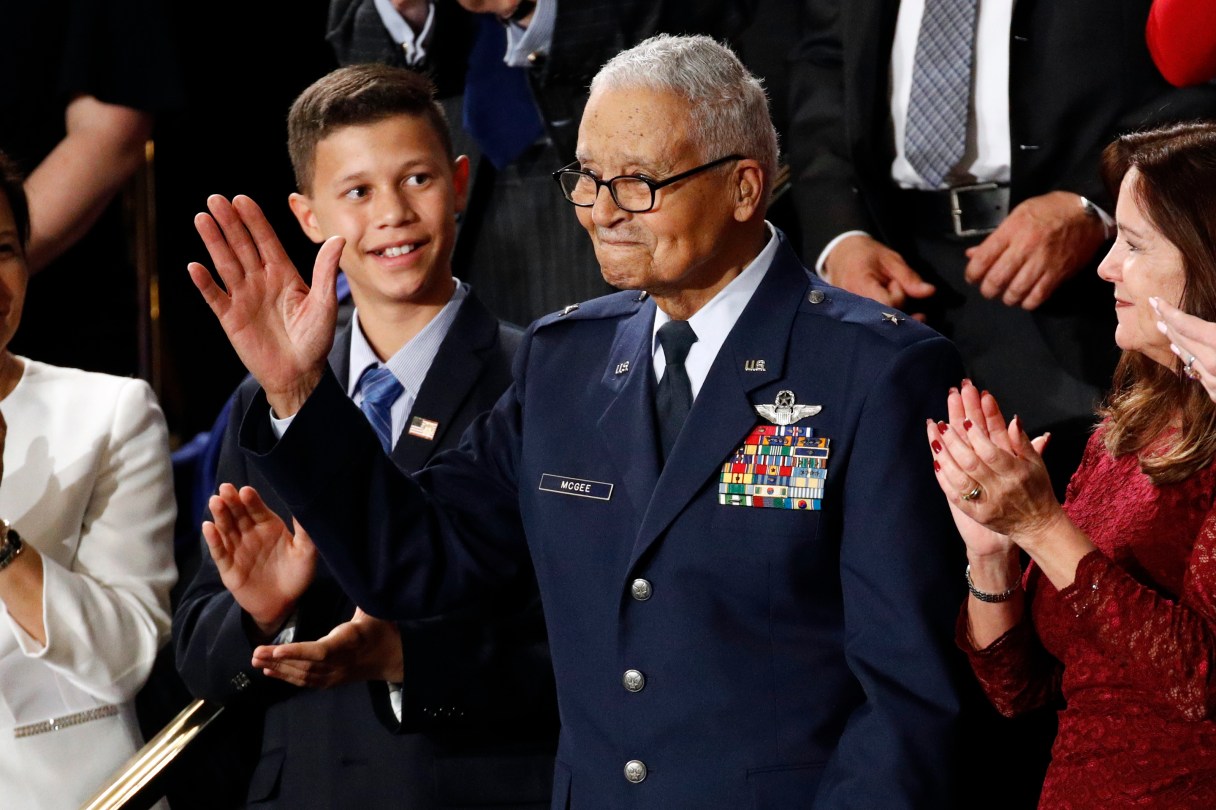
DETROIT – President Donald Trump took African American guests to his State of the Union speech, ran a Super Bowl ad boasting how he’s making the criminal justice system more equitable for black people and portrayed himself as the champion of education and job opportunities for people of color.
The overtures mean nothing to black voters like Jovan Brown, who loathes Trump’s record on race and sees the Republican president’s African American-heavy guest list at the State of the Union as his penchant for using “black people as a prop.”
“I don’t know too many black people who care for Donald Trump,” said the 21-year-old Brown, who favors Democratic presidential candidate Bernie Sanders. “I’m sure he has black friends, but he’s not a supporter of our community.”
Trump went out of his way to reach out to black voters during his speech Tuesday, touting several initiatives ahead of the November election. His guests included one of the last surviving Tuskegee airmen and his great-grandson, who dreams of traveling to space someday, and a black veteran who struggled with drug addiction and eventually put his life back together with a new job. Trump announced a scholarship for a black fourth-grader from Philadelphia to highlight what he sees as failing public schools.
He trumpeted low black unemployment and poverty rates, his investments in historically black colleges and universities, and the impact of Opportunity Zones.