
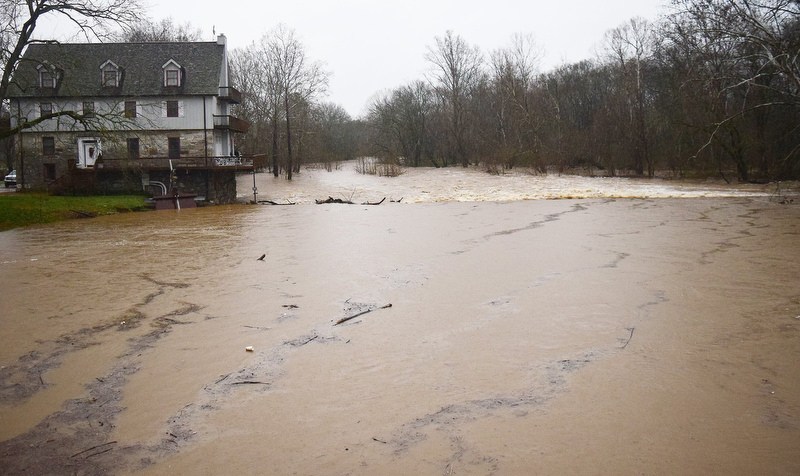
BIRMINGHAM, Ala. (AP) – A Tennessee hillside collapsed, roads were flooded and rivers were rising across the Southeast on Tuesday after a day of heavy rains that once again threatened a Mississippi lake where a dam previously was in danger of failing.
The National Weather Service said minor to moderate flooding was expected from central Mississippi to north Georgia following downpours. The Tennessee River was predicted to crest about 7 feet (2.1 meters) above flood level at Perryville, Tennessee, on Sunday.
Near Great Smoky Mountains National Park in eastern Tennessee, tons of rock and soil slid off a 70-foot-high hillside and blocked the northbound side of a U.S. 441 spur linking the tourist towns of Gatlinburg and Pigeon Forge, the National Park Service said.
At least 45 dump truck loads will be required to clear the road, officials estimated, but no injuires were reported.
Multiple roads were covered with water or washed out because of rainfall that exceeded 5 inches (7.6 centimeters) in spots across central Alabama, and forecasters said totals could reach 6 inches (15.2 centimeters) by nightfall.