
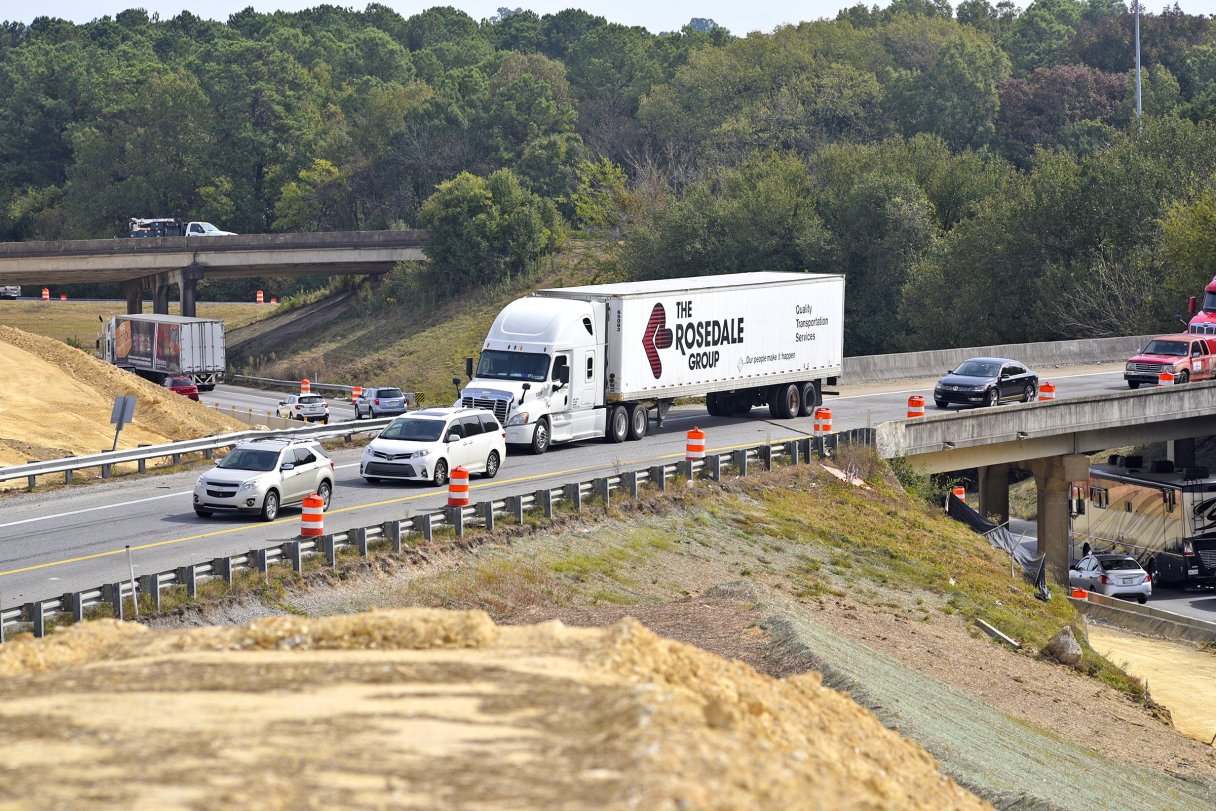
Chattanooga is home to a thriving freight and logistics industry – and two of the most bogged down intersections in the state when it comes to moving stuff by truck.
The intersection of interstates 75 and 24 and the intersection of Interstate 24 and U.S. 27 made the list of the country’s 100 worst bottlenecks from the the American Transportation Research Institute, though neither of them ended up in the national top 20.
“I’m a little surprised they aren’t ranked a little higher from a national scene,” said Andy Vanzant, senior vice president of operations for Covenant Transport.
The two local traffic-jam magnets sit just a few miles apart, with the dreaded Ridge Cut between them, but the big picture of bottlenecks is even more daunting at the regional level. Three intersections in and around Atlanta and one in Nashville made the top 10 list of the country’s worst bottlenecks.
“Chattanooga is the gateway to the Southeast, we’ve called it that for years and years, and with the explosion of Atlanta, it has exacerbated the truck traffic because people have to feed that demand for consumer goods” Vanzant said. “The infrastructure has not been able to keep up with the migration of Northerners moving South.”