
Tuesday, November 10, 2026Nov 10

Face masks with windows mean more than smiles to deaf people

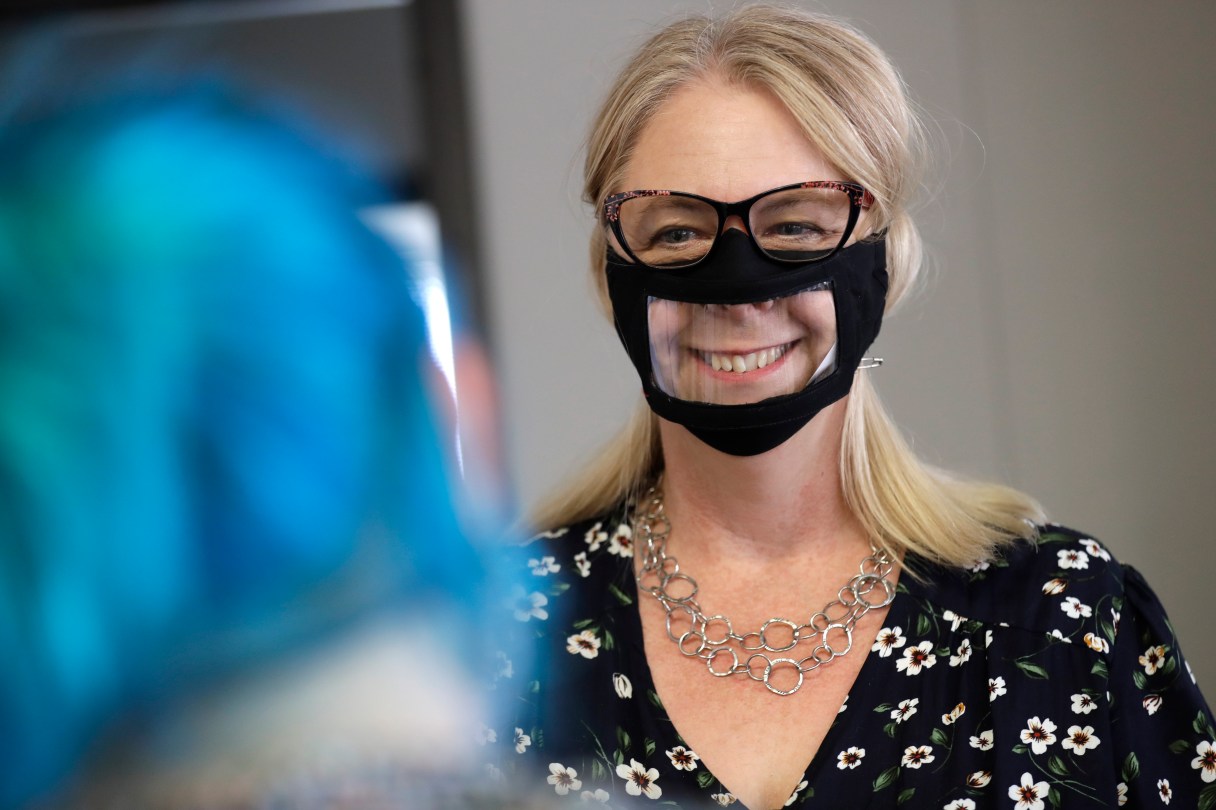
In this June 3, 2020, photo, Chris LaZich, of Fleet Science Center, wears a mask with a window as she talks with Delpha Hanson in San Diego. Face coverings to curb the spread of the coronavirus are making it hard for people who read lips to communicate. That has spurred a slew of startups making masks with plastic windows to show one's mouth. The companies are getting inundated with orders from family and friends of deaf people, people helping English learners see the pronunciation of words, and even hospitals that want their patients to be able to see smiles. (AP Photo/Gregory Bull)
In this June 3, 2020, photo, Chris LaZich, of Fleet Science Center, wears a mask with a window as she talks with Delpha Hanson in San Diego. Face coverings to curb the spread of the coronavirus are making it hard for people who read lips to communicate. That has spurred a slew of startups making masks with plastic windows to show one's mouth. The companies are getting inundated with orders from family and friends of deaf people, people helping English learners see the pronunciation of words, and even hospitals that want their patients to be able to see smiles. (AP Photo/Gregory Bull) In this June 3, 2020, photo, Chris LaZich, of Fleet Science Center, wears a mask with a window as she talks with Delpha Hanson in San Diego. Face coverings to curb the spread of the coronavirus are making it hard for people who read lips to communicate. That has spurred a slew of startups making masks with plastic windows to show one's mouth. The companies are getting inundated with orders from family and friends of deaf people, people helping English learners see the pronunciation of words, and even hospitals that want their patients to be able to see smiles. (AP Photo/Gregory Bull)

SAN DIEGO (AP) – Michael Conley felt especially isolated these past few months: A deaf man, he was prevented from reading lips by the masks people wore to prevent the spread of COVID-19.

But then he met Ingrid Helton, a costume designer who sewed him a solution – masks with plastic windows for hearing people to wear, allowing lip readers to see mouths move.

She has started a business to provide the windowed masks, and she’s not alone. A half-dozen startups are doing the same. They have been inundated with orders — and not only from friends and family of the roughly 48 million Americans who are deaf or hard of hearing.

“You can tell so much by a facial expression, so it’s proving that it can be helpful to everybody,” Helton said.

Teachers want them for English learners struggling without being able to see native speakers pronounce words. Hospitals and businesses want them to help improve communication, and so everyone can see the smiles of their workers.