
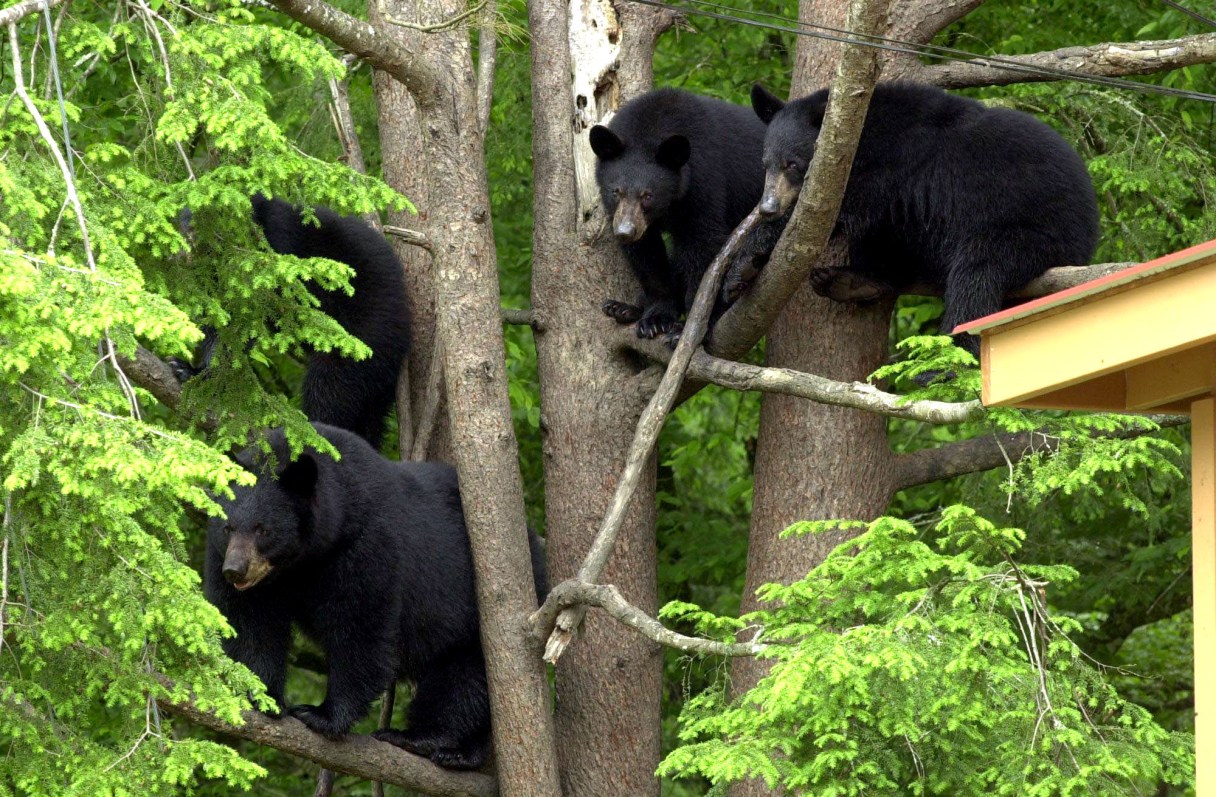

This is the time of year that young black bears across the Chattanooga region look for food, mates, shelter and new territory, while mother bears and cubs are hungry after a winter-long nap.
That means humans’ chances of encountering them will be much higher as spring leads into summer.
The best way to deal with bears – the region’s largest predator – is to be anything but friendly and eliminate anything that attracts them to your home, campsite or hiking group. And wildlife officials in the region want everyone to remember what to do when humans and bears cross paths.
That usually happens where human and bear territories overlap, like in suburban areas near forests, and where humans enter bear habitat for recreation.
Black bears, particularly females with cubs, have spent the months since Thanksgiving in a state of dormancy, referred to as “torpor,” according to the Georgia Department of Natural Resources. During this period of slumber, bears’ normal processes like eating, drinking and other bodily functions are dramatically slowed to allow them to endure the cold.