
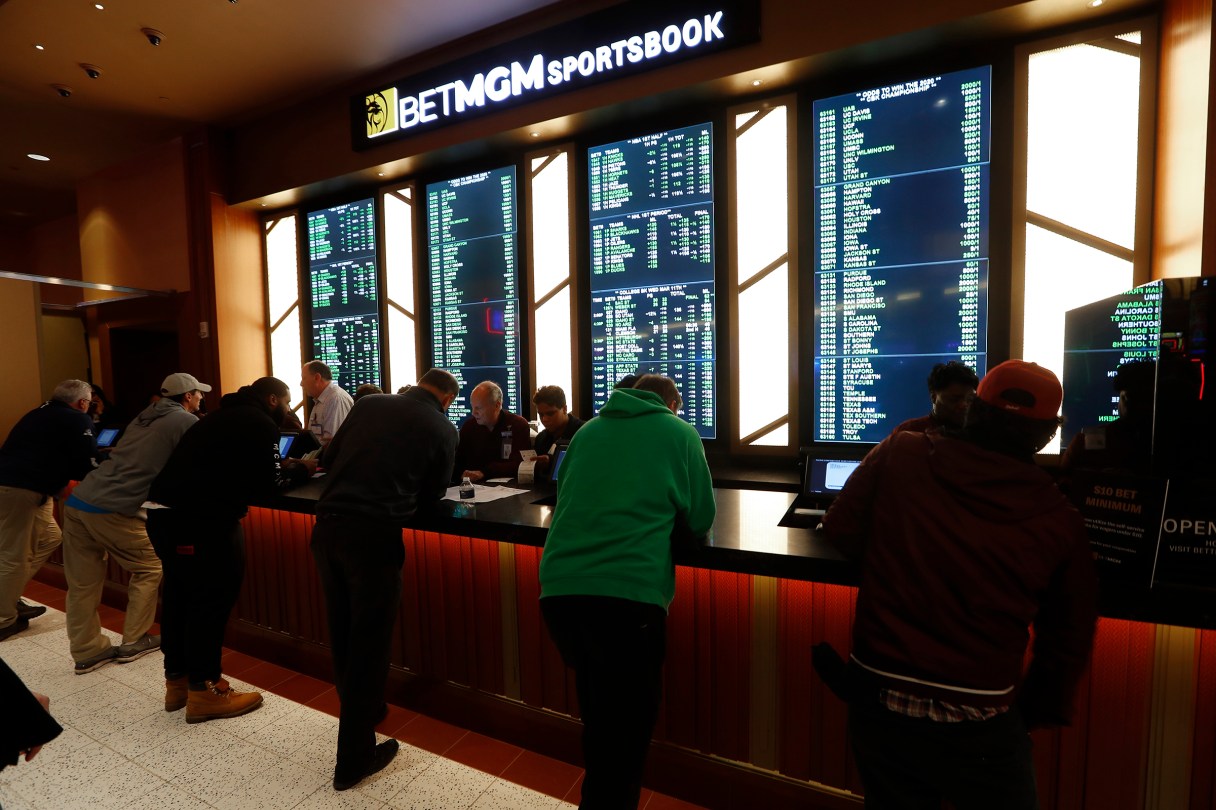
ATLANTA (AP) — Some Georgia lawmakers want to test the odds one more time on sports gambling this year.
The Senate Special Judiciary Committee voted Friday to amend House Bill 903 to allow online sports betting platforms such as DraftKings and FanDuel to be offered in Georgia under the umbrella of the state lottery. The committee includes only Democrats, making its prospects even more unclear as it moves to the Republican-controlled full Senate.
State Sen. Burt Jones, a Republican from Jackson, told committee members Friday that legalization could bring in an additional $60 million yearly under a “conservative” estimate.
Money from the lottery is spent on the state’s Hope Scholarship program that helps pay for some students to go to college and is also spent to subsidize preschool classes across the state. That means it couldn’t go to alleviate Georgia’s $2.6 billion budget shortfall for the coming year. However, Jones argued that growing costs for preschool and college scholarship programs could outstrip slowing lottery revenue growth over the long term, saying it’s on an “unsustainable” trajectory.
“The only way to keep that program viable for years to come is to do one of two things — cut cost or find ways to generate more revenue dollars,” Jones said.