
Friday, October 30, 2026Oct 30

This story is free to read.

What is the novel coronavirus and how does testing work?

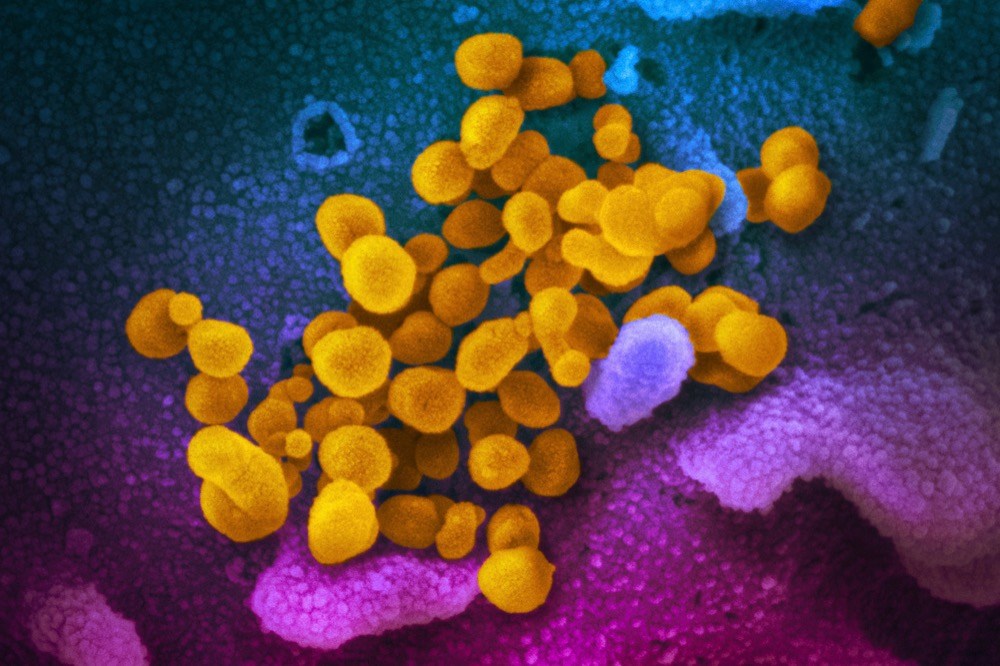
This undated electron microscope image made available by the U.S. National Institutes of Health in February 2020 shows the Novel Coronavirus SARS-CoV-2, yellow, emerging from the surface of cells, blue/pink, cultured in the lab. Also known as 2019-nCoV, the virus causes COVID-19. The sample was isolated from a patient in the U.S. (NIAID-RML via AP)
This undated electron microscope image made available by the U.S. National Institutes of Health in February 2020 shows the Novel Coronavirus SARS-CoV-2, yellow, emerging from the surface of cells, blue/pink, cultured in the lab. Also known as 2019-nCoV, the virus causes COVID-19. The sample was isolated from a patient in the U.S. (NIAID-RML via AP) This undated electron microscope image made available by the U.S. National Institutes of Health in February 2020 shows the Novel Coronavirus SARS-CoV-2, yellow, emerging from the surface of cells, blue/pink, cultured in the lab. Also known as 2019-nCoV, the virus causes COVID-19. The sample was isolated from a patient in the U.S. (NIAID-RML via AP)

Information provided below is compiled from various sources, including the Centers for Disease Control and Prevention, the Hamilton County Health Department and others.

What is the novel coronavirus?

Coronaviruses are a family of viruses, some of which cause respiratory illness in humans. The virus exhibits a crown-like halo, when viewed under an electron microscope, which is how it got its name.

Coronaviruses have been found circulating among animals, such as camels, cats and bats and a few have jumped to people – a spread that is defined by epidemiologists as “zoonotic.”

Prior to December 2019, there were four coronaviruses that were known to be circulating among people, two of which were discovered in the 1960’s and two more discovered in the past 2 decades. These coronaviruses caused about 25% of colds.