
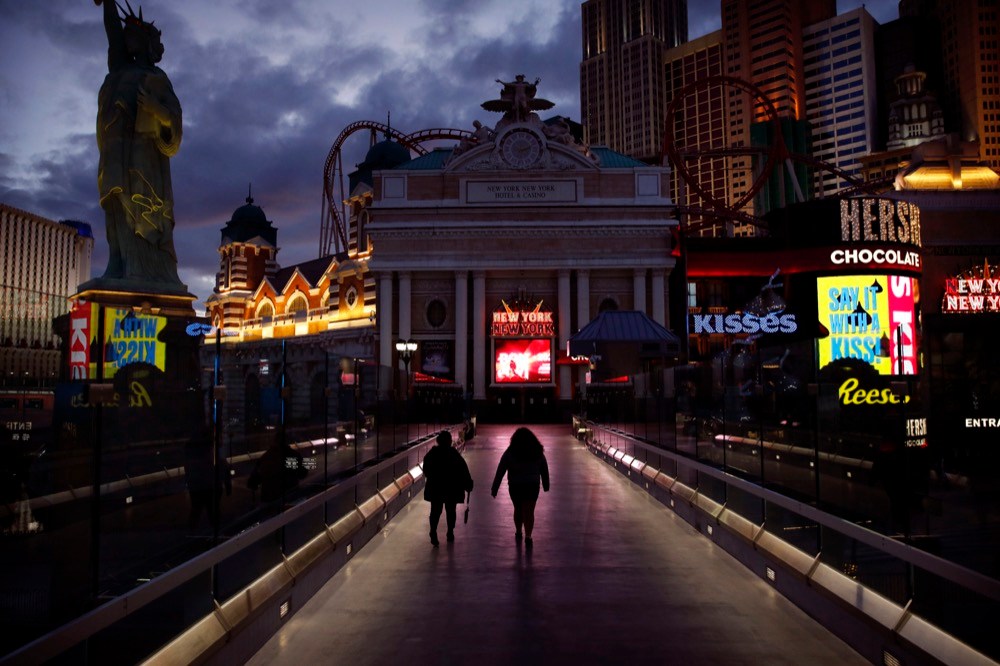
These are places meant for people.
New York’s Grand Central Terminal – a common metaphor for “busy” in much of the English-speaking world – dotted with only scattered commuters. The Grand Place in Brussels at twilight, its cobblestones so devoid of foot traffic that the streetlight reflections sprawl for yards at a time. The Eiffel Tower in Paris, abandoned, jutting into a lonely sky like some strange obelisk on a distant science-fiction planet.
When the world’s public places empty out as humanity cocoons in self-protection, Earth’s human-built and natural landmarks are freed to reveal some of their less frequently shared secrets.
They reveal their majesty: The curved, building-studded shoreline of Arpoador Beach in Rio de Janeiro, Brazil, seems all the more striking when framed by a single human being watching the surf.
They show how epic scale can become even more dramatic when stripped of the humans who usually populate it: A single heart, formed by the arms of two stranded South Korean tourists, frames the grandeur of the Pyramid of the Moon in Teotihuacan, Mexico, in a way no crowd ever could.