
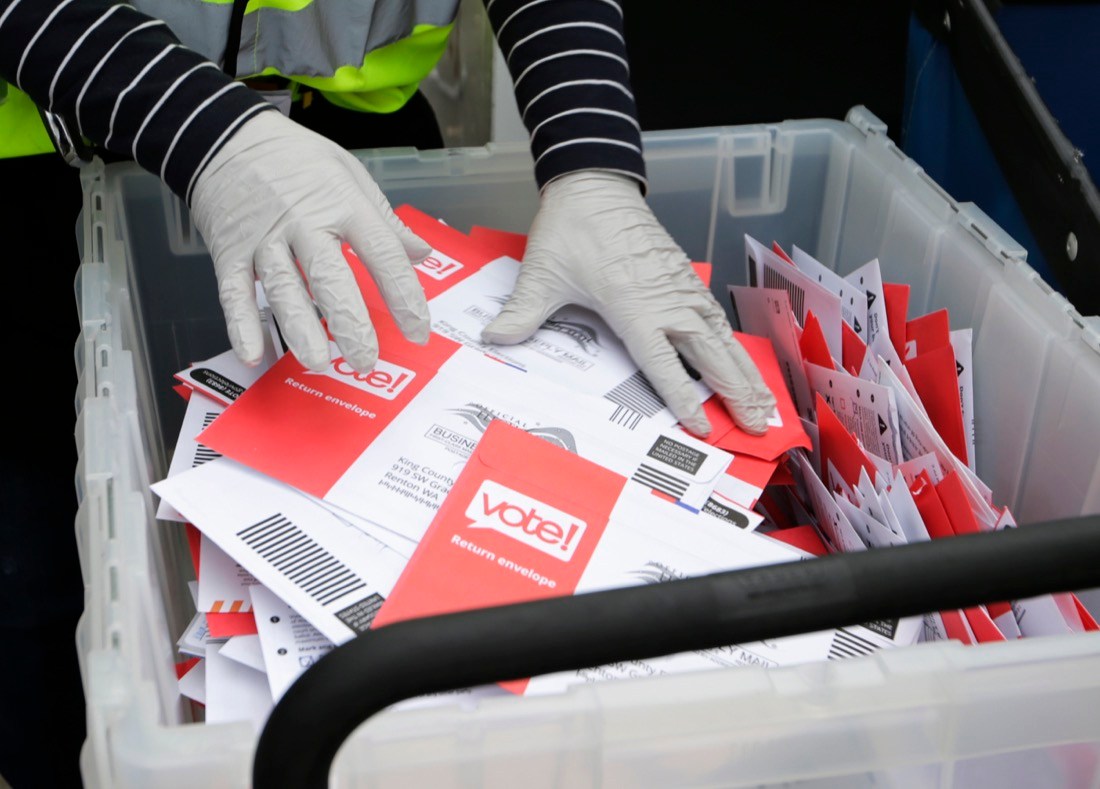
WASHINGTON (AP) – A bitterly partisan debate unfolding on whether more Americans should cast their votes through the mail during a pandemic is provoking online disinformation and conspiracies theories that could undermine trust in the results, even if there are no major problems.
With social distancing guidelines possibly curtailing in-person voting at the polls in November, states are drawing up plans to rely more heavily on a mail-in system that has until now seen only limited use.
Historically, there is no evidence of widespread voter fraud through mail-in voting. But social media users are already pushing grandiose theories casting doubt on the method. President Donald Trump has encouraged the skepticism, saying during a televised briefing that “a lot of people cheat with mail-in voting.” On Saturday, he tweeted: “Don’t allow RIGGED ELECTIONS!”
Justice Department officials are concerned foreign adversaries could exploit any vulnerabilities in the vote-by-mail process, especially since even minor tampering could trigger widespread doubts about the integrity of the vote.
“Is it possible, in particular for a foreign actor, to cause enough mischief in the vote-by-mail process to raise a question in the minds of Americans, particularly Americans perhaps whose candidate has lost, that somehow the result of this election is unfair?” Assistant Attorney General John Demers, the department’s top national security official, said in describing a key question confronting law enforcement.