
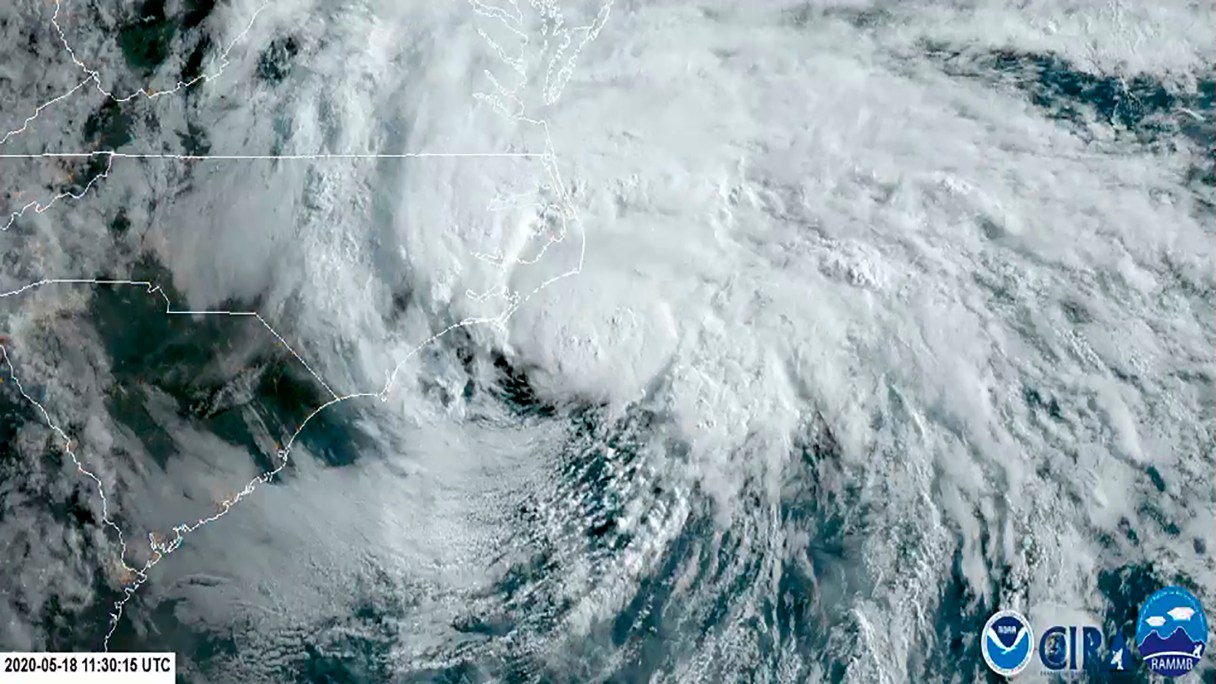
Tropical Storm Arthur moved out to sea Monday after dumping heavy rain on North Carolina as forecasters warned that the first named storm of the Atlantic hurricane season could continue to whip dangerous surf and rip currents for another day or more along the U.S. East Coast.
The storm represented another early start for the Atlantic hurricane season. Arthur formed Saturday in waters off Florida, marking the sixth straight year that a named storm has developed before June 1.
By late Monday, storm watches and warnings that had been in effect for parts of the North Carolina coast were canceled.
As Arthur’s center passed off North Carolina earlier in the day, a pocket along the coast that includes Newport and Havelock recorded more than 4 inches (10 cm) of rain, according to the National Weather Service. Other areas along the coast saw 2 inches (5 cm) or more, causing some secondary roads to flood. Wind gusts of 40 mph or more (64 kph) were recorded in at least two places on the Outer Banks, the weather service said.
The Hurricane Center said Arthur was moving northeast at 16 mph (26 kph) Monday afternoon as its center pulled away from the U.S. mainland.