
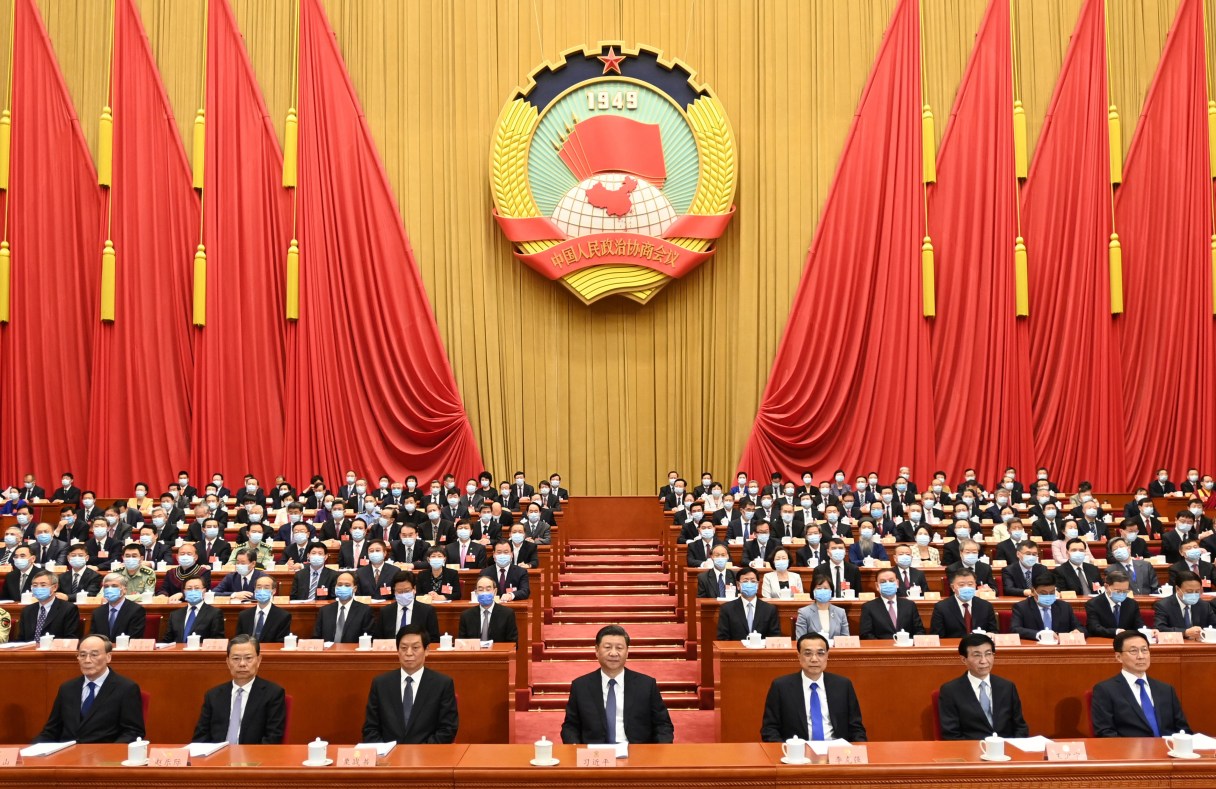
BEIJING (AP) – China’s legislature will take over long-stalled efforts to enact national security legislation in Hong Kong, a move that could limit opposition activity in the semi-autonomous territory and signals the central government’s determination to take greater control after months of pro-democracy protests last year.
The announcement drew sharp criticism from the U.S., which has threatened to withdraw preferential trade status for Hong Kong, and seems likely to prompt more protests in the short run.
The National People’s Congress, which starts a one-week annual session Friday, will deliberate a bill on “establishing and improving the legal system and enforcement mechanisms for the Hong Kong Special Administrative Region to safeguard national security,” spokesman Zhang Yesui said at a late-night news conference previewing the meeting.
Such a move has long been under consideration and was hastened by the months of anti-government protests last year in the former British colony that was returned to China rule in 1997.
Hong Kong’s government is bound by Article 23 of the Basic Law, its constitution, to enact laws to prohibit any act of treason, secession, sedition or subversion against China. It proposed legislation to do so in 2003, but withdrew it after hundreds of thousands of people came out to protest.